 WhatsApp 079 885 8806






THE COMMERCIAL CENTRIFUGAL
Juice to order, all day, without a queue forming
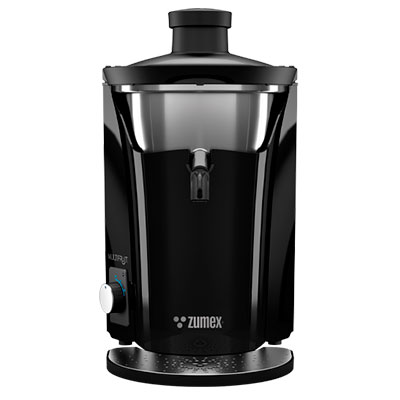
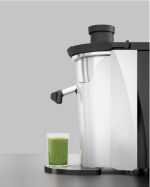
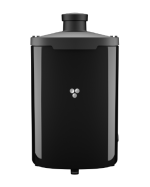
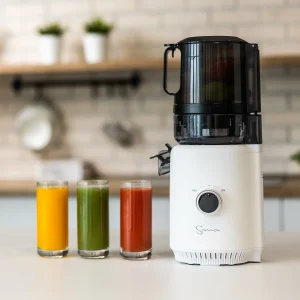
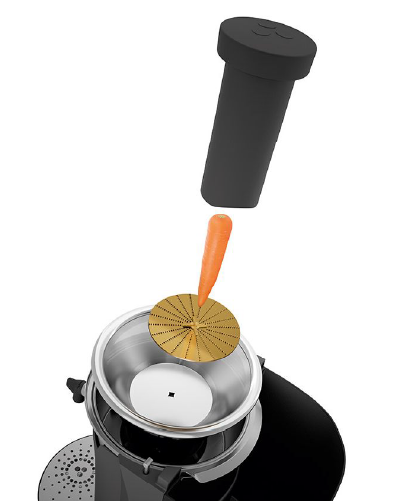
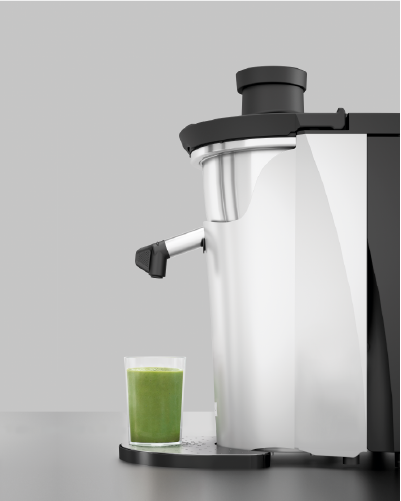
The Multifruit is Zumex’s answer to the busiest thirty minutes of your day. It takes 120 kg of fruit and vegetables an hour — about 1.8 litres of juice a minute — which means the machine is never the reason the queue stops moving. Produce goes down the chute, the pusher goes down after it, and the glass fills in roughly five seconds.
That throughput is the whole argument for a centrifugal machine in a commercial setting. A cold press extracts more and keeps the juice longer, but it works at a pace suited to bottling rather than to a customer standing at the counter. The Multifruit is built for the other job: juice made in front of the person drinking it, one order at a time, from breakfast through to close.
Zumex has been building juicing machines in Valencia since 1984, and the Multifruit is where most of their food-service customers start. It is the workhorse of the range rather than the showpiece — which, in a commercial kitchen, is usually the machine worth buying.

Every Multifruit we supply runs on 220–240 V with a South African plug, is covered for two years by Zumex — five if you register it within three months of purchase — and is serviced here rather than shipped back to Spain.
THE TITANIUM DISC
Hard enough for carrots and ginger, hour after hour
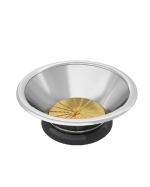
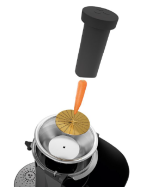
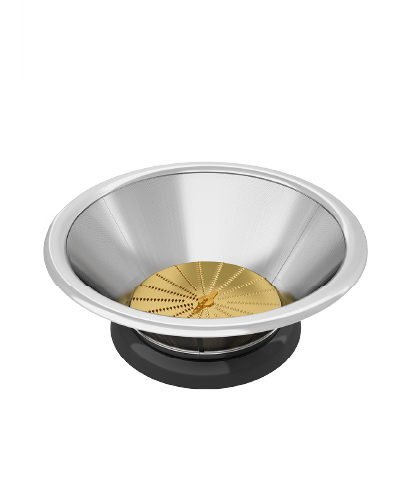
The part of a centrifugal juicer that wears out is the shredding disc. It does the actual work — spinning against whatever you feed it, thousands of times an hour — and on a cheap machine it goes blunt inside a season. The Multifruit’s disc is titanium, which is the reason Zumex is comfortable putting it in a restaurant rather than a kitchen.
The disc sits inside a stainless steel filter basket that lifts out without a tool. Unclip the handle, lift the cover away, and the whole grating-filter assembly comes out in one piece. Every part that touches food — pusher, cover, filter, basket, tank, tap and tray — is dishwasher safe.
The motor behind it is brushless. Conventional juicer motors use carbon brushes that wear down, throw heat into the juice and eventually need replacing; a brushless induction motor has none of that. Zumex rates it at four times the working life of a conventional motor, with no friction, no maintenance and noticeably less noise.
SPEED CONTROL
Two speeds, because a pineapple and a beetroot are not the same job
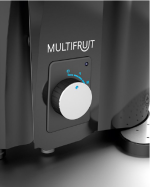
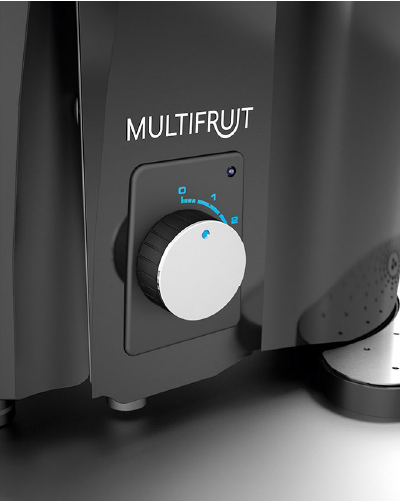
Soft fruit and hard vegetables want different treatment. Run a watermelon at the speed a carrot needs and you get foam; run a beetroot at the speed a strawberry needs and you leave juice in the pulp. The Multifruit’s dial gives you both — 3,500 rpm for soft produce, 4,500 rpm for hard — and the brushless motor holds whichever you pick under load.
The control is one dial on the front of the machine with three positions: stand-by, one dot for soft fruit, two dots for hard vegetables. There is nothing to learn, which matters when the person operating it is whoever is on shift rather than whoever bought it.
Stand-by is a real position rather than a label. Left there, the machine draws almost nothing between orders, so it can stay switched on through a quiet afternoon without the motor running.




ON THE MENU
What your counter can actually sell
The Multifruit takes everything except citrus and stone fruit — apples, pineapple, carrot, celery, cucumber, ginger, beetroot, watermelon, grapes. Citrus belongs on a dedicated press, and stones need to come out before anything goes down the chute. Beyond that the machine is genuinely indiscriminate.
In practice that is most of a juice bar menu from one machine. Carrot, orange and ginger. Celery, cucumber and green apple. Beetroot with berries. The pulp drops straight into the bucket underneath rather than onto your counter, so whoever is making the juice is not also cleaning up after it.
Juice from a centrifugal machine is best served immediately. The high speed introduces air, and air is what dulls the colour and the flavour within the hour. If you are bottling for tomorrow, a cold press is the better tool. If you are pouring for the person in front of you, this is the one.
75 MM FEED CHUTE
Less prep, less waste, fewer hands on the fruit
The chute takes produce up to 75 mm across, which covers most apples, a trimmed beetroot and a length of cucumber whole. Less cutting before service means less labour, less oxidation on cut surfaces and less fruit left behind on a chopping board.
Underneath, the waste bucket holds 13 litres and is built into the machine rather than bolted onto it — and it converts for counter dumping if you would rather empty straight into a bin. On a busy morning that is the difference between stopping once and stopping five times.
Two microswitches, one on the locking handle and one on the waste bucket, cut the motor the moment either is disturbed, and the machine will not start without the stainless steel tank fitted. A thermal overload relay means a jam stops the motor rather than cooking it.
MADE FOR SOUTH AFRICAN POWER
220–240 V, a South African plug, and service you can reach
Commercial juicers are a category where grey imports are common, and a 115 V machine bought on price becomes an expensive transformer problem the week it arrives. The Multifruit we stock is the 220–240 V, 50–60 Hz version with a South African plug, drawing 1.8 A — it runs off an ordinary wall socket.
It is made in Spain and carries NSF, CE and ETL certification, which is what a health inspector and a landlord’s insurer will each want to see. The IPX1 rating covers the splashing that happens around any juicing station.
Zumex covers the machine for two years against manufacturing defects, extended to five if you register it on their site within three months of purchase — worth doing the day it is installed. Wear parts, transport and damage from incorrect use are excluded, as they are on every commercial machine.
The Multifruit in operation
Zumex’s own walkthrough of the machine, start to finish.
Zumex Multifruit specifications
| Extraction method | Centrifugal, continuous feed |
| Motor type | Brushless induction — no carbon brushes to replace |
| Shredding disc | Titanium |
| Filter basket and juice tank | Stainless steel |
| Speeds | 3,500 rpm (soft fruit) / 4,500 rpm (hard vegetables) |
| Noise level | Below 70 dB, with Silent-Block anti-vibration mounting |
| Safety | Microswitch on the locking handle and on the waste bucket, safety detection system, thermal overload relay; will not run without the stainless steel tank fitted |
| Moisture protection | IPX1 |
| Cleaning | Filter-grating unit removes without tools; all food-contact parts dishwasher safe |
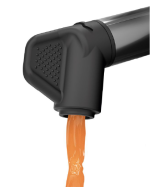
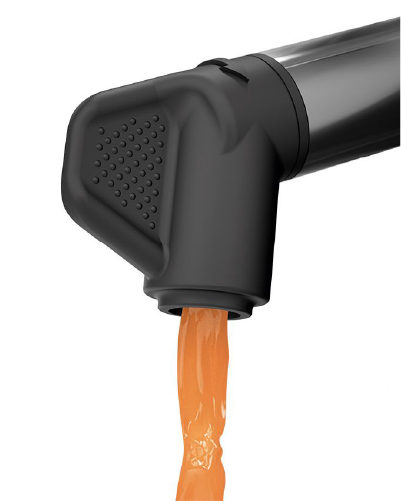
| Tap | Non-drip rotating tap, removable drip tray |
| Not suitable for | Citrus and stone fruit — remove stones before juicing |
| Certifications | NSF, CE, ETL |
| Country of manufacture | Spain |
| In the box | Machine, pusher, cover, locking handle, stainless steel tank, non-drip tap, peel bucket, coaster and trim, filter driver and nut, filter, grating disc |
Zumex publishes the full documentation for this machine, and we host their current copies here: the specification sheet (PDF, 1.6 MB), the user manual (PDF, 6.3 MB) and the cleaning instructions (PDF, 1.3 MB).
How the Multifruit sits against the alternatives
The closest machine we stock is the Santos 50, and it is the more affordable of the two. It is also a commercial centrifugal, French-built, and on paper they are closer than the price gap suggests: the Santos runs at a single 3,000 rpm against the Zumex’s 3,500 and 4,500, its feed chute is actually the wider of the two at 79.5 mm, and it puts out 100 litres an hour against the Multifruit’s 108. If budget is the deciding factor, the Santos is the honest recommendation. What the Multifruit adds for the difference is the brushless motor, the second speed and the 13-litre integrated waste bucket — three things that matter most to whoever runs the machine eight hours a day rather than two. Above both sits the Santos 58, a larger body for higher-volume sites.
If your juice is going into bottles to be sold over the next two or three days, none of those is the right machine. The Kuvings CS600 and the Hurom H22 MK2 are commercial cold-press juicers: they turn slowly, introduce far less air, extract more from the same weight of produce, and give you juice that holds its colour and flavour for a day or more in the fridge. They are also considerably slower per glass, which is why they suit a production run rather than a counter with someone waiting at it.
So the question is not which machine is better but which shift you are running. Juice poured to order, in front of a customer, with a queue behind them — the Multifruit. Juice made once and sold over the following days — cold press. Plenty of busy sites end up with one of each, and where that is the direction of travel the Multifruit is usually bought first, because the counter is what pays for the bottling.
Questions we are asked about the Multifruit
What does the warranty cover?
Zumex covers the Multifruit for two years against manufacturing defects and construction faults, extended to five years if you register the machine on the Zumex site within three months of purchase. It is worth doing on installation day rather than leaving it. Excluded, as on any commercial machine, are labour and transport, parts that have worn through normal use, and damage caused by incorrect use or installation. Opening the machine yourself, or having anyone other than the authorised technical service work on it, voids the cover — so keep the serial number from the ID label to hand when you call. Service is handled locally; the machine does not go back to Spain.
Can it juice oranges and lemons?
No, and you should not try. The Multifruit is built for everything except citrus and stone fruit — the rind carries bitter oils that a centrifugal disc drives straight into the juice. Citrus belongs on a dedicated press. If you need both on the same counter, pair this with a citrus machine rather than asking one machine to do both jobs badly.
How loud is it?
Zumex publishes it as below 70 dB, and the brushless motor with Silent-Block anti-vibration mounting is the reason. That is quiet enough to run behind a service counter without raising your voice over it. Zumex does not publish a figure for each speed separately, and we would rather say so than invent one — the 4,500 rpm setting on hard vegetables is audibly the louder of the two.
Is it dishwasher safe?
Every part that touches food is: the pusher, cover, locking handle, stainless steel tank, filter, grating disc, non-drip tap, coaster and trim. The filter-grating assembly comes out without a tool. The body itself is wiped down with a soft cloth and dish soap, then rinsed with a clean damp cloth. Take care with the grater — the shredding points are sharp.
How long does the juice keep?
Serve it immediately. A centrifugal juicer spins fast, and fast means air, which is what dulls flavour and colour. Expect the juice to be at its best within the first few minutes and noticeably flatter after an hour. This is not a flaw in the Multifruit; it is the trade-off every centrifugal machine makes in exchange for speed. If shelf life is what you need, a cold-press machine is the right purchase.
Do I need to cut the fruit up first?
Much less than on a domestic juicer. The chute takes produce up to 75 mm across, so most apples, a trimmed beetroot and a length of cucumber go in whole. Anything wider than 75 mm gets chopped; anything smaller can go in several pieces at a time. Peel anything with an inedible skin — pineapple, watermelon, mango, kiwi — and take the stones out of peaches, plums and cherries before they reach the disc.
Will it handle ginger, beetroot and celery all day?
That is what the 4,500 rpm setting and the titanium disc are for. Hard, fibrous produce is the job that blunts a cheaper disc and overheats a brushed motor, and the Multifruit is specified to avoid both. Zumex rates its brushless motor at four times the working life of a conventional one, running with no friction, no heat release and no scheduled maintenance.
What happens if it jams or someone opens it mid-run?
It stops. There is a microswitch on the locking handle and another on the waste bucket, so lifting the handle or pulling the bucket cuts the motor immediately, and the machine will not start at all without the stainless steel tank fitted. A thermal overload relay protects the motor if it is working too hard. To restart after a safety cut-off, fix the cause, return the dial to stand-by, then select the speed again.
Is it a 220 V machine, and does it come with a South African plug?
Yes to both. The unit we supply is the 220–240 V, 50–60 Hz version with a South African plug fitted, drawing 1.8 A from an ordinary wall socket. Zumex does build a 115 V version for other markets, which is what turns up in grey imports and then needs a transformer. Ours does not.
What is a brushless motor and why does it matter here?
A conventional motor uses carbon brushes to transfer current to the spinning part. They wear down, they generate heat and friction, and eventually they have to be replaced. A brushless induction motor does the same job magnetically, with nothing in physical contact. In a machine that runs for hours a day that means a longer working life — Zumex puts it at four times a conventional motor — less noise, no heat thrown into the juice, and no brush replacement on the service schedule.
Why Buy From EcoHub
Backed by a local warranty
Every appliance we sell is supported here in South Africa, with after-sales help and spare parts held locally.
Made for South African power
Correct 220-240 V models with South African plugs, not 110 V units brought in on demand and run through a transformer.
Fast nationwide delivery
Delivered across South Africa in 1-3 days, with same-day dispatch on cleared payments ordered before 14:00.
Authorised dealer
Expert advice from a specialist store that has been helping South Africans choose blenders and juicers since 2012.



Reviews
There are no reviews yet