

Air Purifiers
Improve the air you breathe at home or work with a high-quality HEPA air purifier designed to capture airborne dust, pollen, pet dander, mould spores, fine smoke particles and other pollutants.
Our range includes H13 HEPA air purifiers, models with activated carbon for odours and VOCs, and advanced systems from Daikin and GMC. Several models are approved by the Allergy Foundation of South Africa (AFSA).
Choose the right air purifier for your bedroom, living area, office or larger indoor space below.
Showing all 15 resultsSorted by popularity
-
Ozone Air & Water Purification
Original price was: R2 900.R2 299Current price is: R2 299. incl VATAdd to cart


Showing all 15 resultsSorted by popularity
Why Use an Air Purifier?
Even a clean home can contain large amounts of airborne material that you cannot easily see.
Outdoor pollution enters through doors and windows, while everyday indoor activities add dust, pet allergens, cooking particles, smoke and other contaminants to the air.
A correctly sized air purifier continuously draws room air through its filtration system, reducing airborne particles as the air circulates through the unit.
Air purifiers are particularly useful for homes affected by:
- Pollen and seasonal allergens
- Dust and fine airborne particles
- Agricultural and field dust
- Pet dander
- Mould spores
- Smoke and fine combustion particles
- Cooking and household odours
- Traffic and outdoor air pollution
- VOC emissions from some household products
The type of filtration matters, because no single filter removes every type of pollutant.
Air Purifiers for Allergies, Pollen and Dust
One of the main reasons people buy an air purifier is to reduce the amount of airborne pollen, dust and other allergens circulating through bedrooms and living areas.
This can be particularly useful in areas surrounded by farms, fields, dry vegetation or dusty roads, where outdoor particles can continually enter the home.
Pet owners may also benefit from filtration of airborne pet dander and other small particles that become suspended in the room.
For these applications, we recommend choosing a properly sized purifier with a high-quality HEPA or H13 HEPA filter and running it regularly in the room where cleaner air is most important.
What Does a HEPA Air Purifier Remove?
HEPA stands for High Efficiency Particulate Air.
A HEPA filter works mechanically by trapping extremely small airborne particles as air passes through the filter.
High-quality HEPA air purifiers can capture particles including:
- Dust
- Pollen
- Pet dander
- Mould spores
- Fine smoke particles
- Other fine airborne particulates
Many of the EcoHub air purifiers use H13 HEPA filtration, making HEPA performance one of the most important features to compare when choosing an air purifier.
Allergy Foundation South Africa Approved Air Purifiers
Several air purifiers available from EcoHub have received approval from the Allergy Foundation of South Africa (AFSA).
AFSA’s Seal of Approval is not simply a marketing badge. Products carrying the seal must provide evidence showing that they are effective at reducing or removing allergens from the environment according to AFSA’s certification requirements.
AFSA-approved models in the ranges we sell include air purifiers from Daikin and GMC.
If allergies are one of your main reasons for buying an air purifier, look for the AFSA approval information on the individual product page.
Air Purifiers for Pollen and Agricultural Areas
Living close to farmland, open fields or agricultural activity can mean noticeably more pollen and airborne dust entering the home, particularly at certain times of year or during dry and windy conditions.
Closing the windows may reduce some exposure, but fine particles still enter through normal movement in and out of the building.
A HEPA purifier provides an additional layer of control by continuously filtering airborne particles once they are inside the room.
For allergy-prone households, a purifier in a bedroom or main living area can be especially useful because these are spaces where people spend many hours.
Air Purifiers for Pets
Cats, dogs and other animals contribute more than visible hair.
Pet dander consists of tiny particles of shed skin, and pet allergens can remain airborne or settle onto bedding, carpets, furniture and other surfaces.
A HEPA purifier can reduce the portion that remains suspended in the air, while regular cleaning remains important for material that has already settled.
For pet homes, we generally favour a purifier that combines HEPA filtration with activated carbon, because the carbon stage can also help reduce everyday pet-related odours.
Air Purifiers for Smoke and Braai Areas
Smoke contains very fine airborne particles that can remain in indoor air long after the visible smoke has disappeared.
A HEPA air purifier is useful for capturing fine smoke particles, while an activated-carbon filter can help with some of the gaseous compounds responsible for lingering smells.
This distinction matters:
HEPA is primarily for particles. Activated carbon is primarily for gases, VOCs and odours.
For homes affected by braai smoke, cooking smells or smoke entering from outdoors, a purifier combining both technologies is usually more appropriate than relying on HEPA alone.
What About Strong Household Odours?
Odour control requires different technology from particle filtration.
An activated-carbon filter adsorbs many gaseous pollutants and odour-producing compounds, making it useful for:
- Cooking smells
- Pet and litter-box odours
- Smoke smells
- Some household VOCs
- General stale indoor odours
The amount and quality of activated carbon can vary significantly between air purifiers, so customers buying primarily for odour control should compare the filtration system rather than simply choosing on room size.
HEPA vs Carbon vs Ozone – What Is the Difference?
Different air-cleaning technologies perform different jobs.
HEPA filtration
Best suited to airborne particles such as dust, pollen, pet dander, mould spores and fine smoke.
Activated carbon
Designed to adsorb gases, VOCs and odour-producing compounds that a HEPA filter cannot capture effectively.
Advanced purification technologies
Some models add technologies such as Daikin Streamer, UV-C or other treatment stages alongside conventional filtration.
Ozone treatment
Ozone is fundamentally different from normal HEPA filtration. It can react with some odour-producing compounds and is sometimes used for specialist odour treatment, but ozone is also a respiratory irritant and ozone-generating equipment should not be treated as an ordinary purifier for continuous use in occupied rooms.
For normal everyday air purification in bedrooms and living spaces, HEPA filtration should be the starting point.
Daikin Air Purifiers
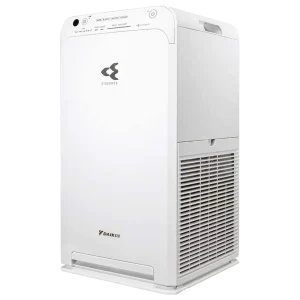
The Daikin MC55W Streamer Air Purifier combines high-performance particulate filtration with Daikin’s Streamer technology and a deodorising system.
It is also approved by the Allergy Foundation of South Africa, making it one of our preferred premium choices where allergens and indoor air quality are major concerns.
Daikin’s long-life filtration system also makes it worth considering when comparing the ongoing filter-replacement costs of different air purifiers.
GMC H13 HEPA Air Purifiers
Our GMC range offers H13 HEPA filtration at more accessible price points, with different capacities available for bedrooms, living areas and larger rooms.
Models such as the GMC AP300 and AP500 combine high airflow with HEPA filtration, activated carbon and smart air-quality monitoring.
Both models are also listed among the air purifiers approved by the Allergy Foundation of South Africa.
What Size Air Purifier Do I Need?
Air-purifier performance should be matched to the volume of the room and the amount of air the purifier can clean each hour.
This is why EcoHub pays attention to CADR – Clean Air Delivery Rate – and air changes per hour, rather than relying only on a manufacturer’s maximum room-size claim.
A larger room, or a room with a heavier pollutant or allergen load, generally requires more airflow.
Bedrooms may also benefit from a model with a quiet sleep mode, while large living areas require considerably higher airflow.
If you are unsure which air purifier will suit your room, EcoHub can help you compare the available models based on room size, filtration requirements and the particular air-quality problem you are trying to solve.
Which Air Purifier Should I Choose?
For pollen, dust and allergies, start with a high-quality HEPA purifier, particularly an AFSA-approved model.
For pets, choose HEPA filtration combined with activated carbon.
For smoke, look for strong HEPA filtration for fine particles plus carbon filtration for odours.
For larger rooms, prioritise CADR and airflow rather than choosing on filter technology alone.
For premium filtration and long filter life, consider the Daikin MC55W.
For high-performance H13 HEPA filtration at a more accessible price, compare the GMC range.
The best air purifier is ultimately the one that combines the right filter technology, airflow and room coverage for the problem you actually need to solve.