














HANDS-FREE BATCH JUICING
Fill it, start it, walk away
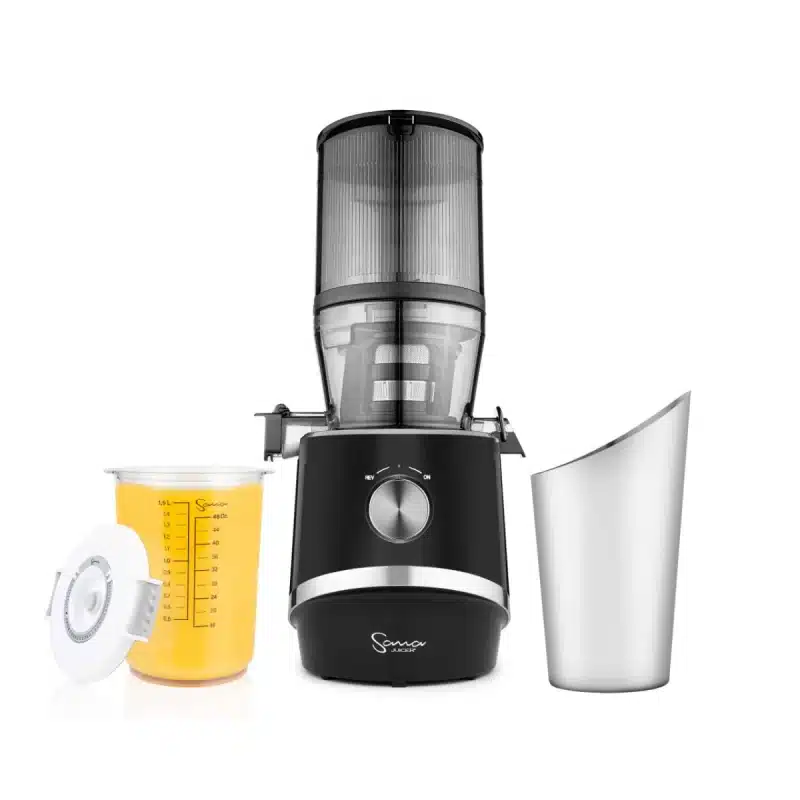
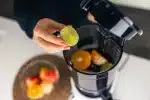
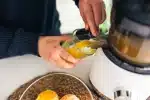
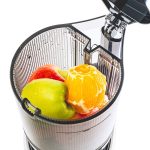
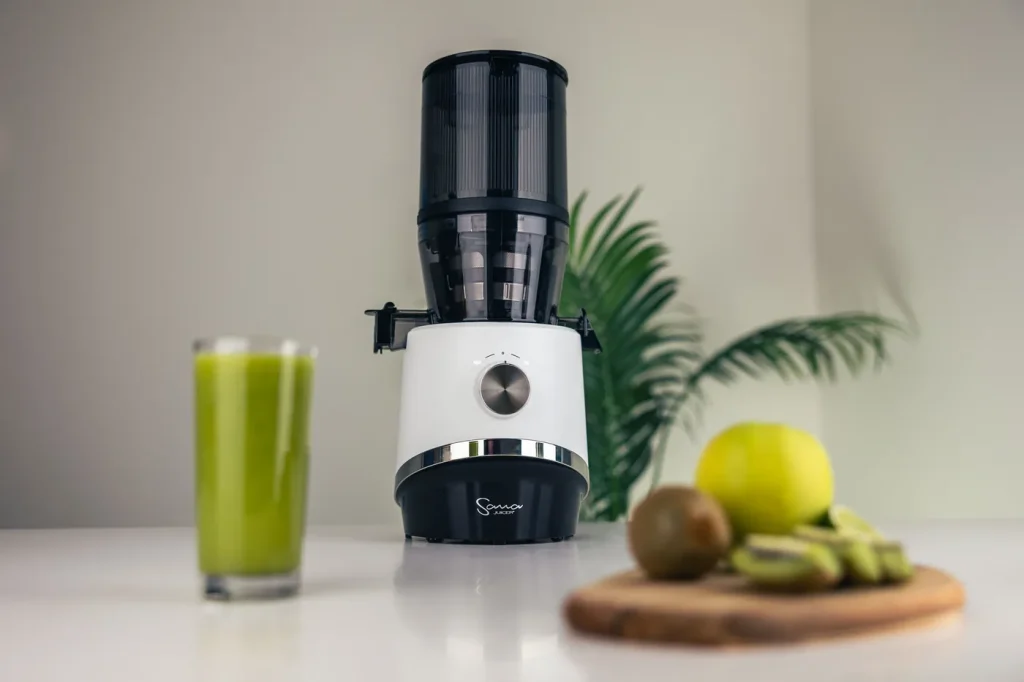
The Sana 878 does the feeding for you. Load its 2-litre hopper with washed fruit and vegetables, switch it on, and two blades at the base of the hopper sort, cut and feed the produce down to a slow-turning auger. You come back to a full jug of juice and a stainless-steel container of pulp.
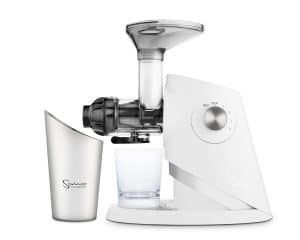
What sets it apart from other hands-free juicers is what happens after the juicing. The 878 comes with a 1.5-litre vacuum juice container and hand pump, so one batch can cover the next few days, and a polished stainless-steel pulp container that holds far more than the plastic cups most juicers ship with.
It is a vertical, single-auger cold press juicer turning at 50 RPM on a 200 W induction motor, made in South Korea. EcoHub is the official Sana importer for South Africa, so the warranty, spare parts and advice come from us directly.
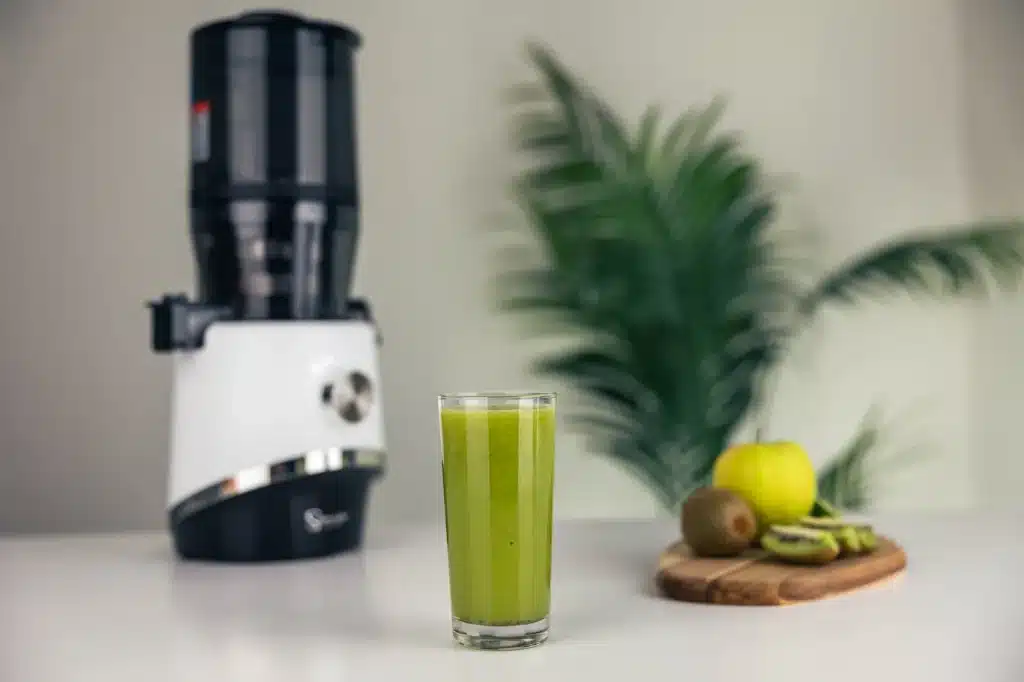
“Why juice every day when you can do it just twice a week?”
Sana
THE 2-LITRE HOPPER
A whole recipe goes in at once
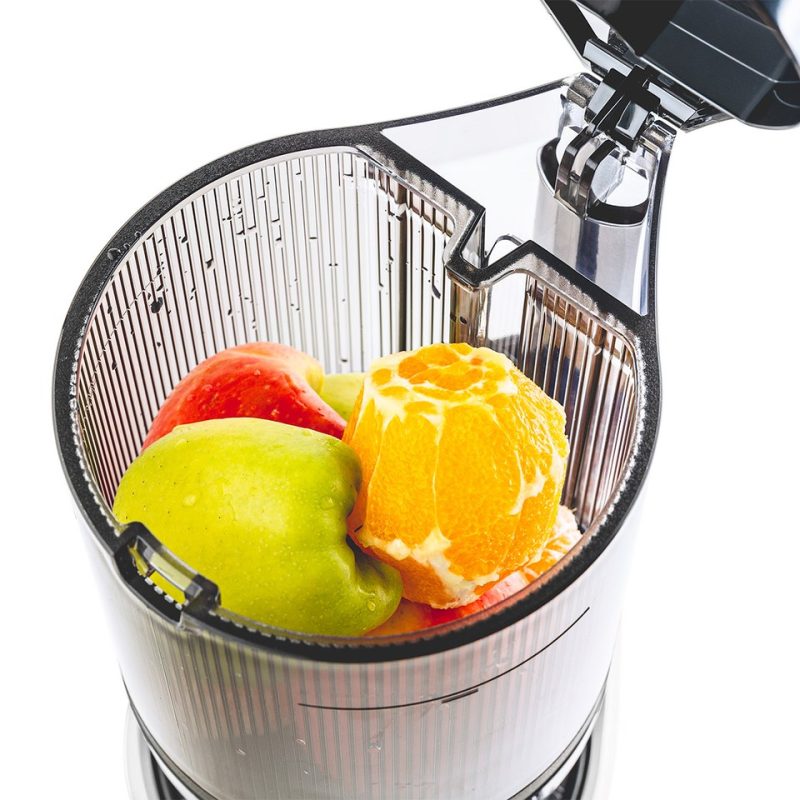
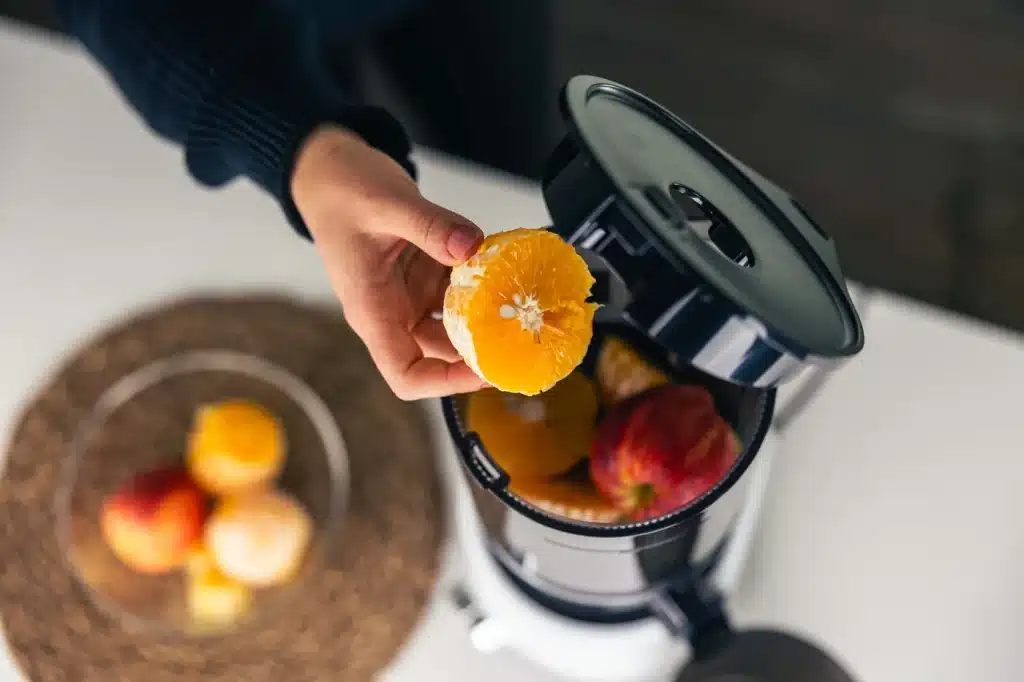
Two litres takes a full breakfast batch: apples, oranges, carrots, a beetroot and a piece of ginger, loaded together. Peeled oranges and small apples go in whole, and the blades cut them on the way down. Larger fruit only needs cutting to fit, and apples need their cores out.
A circular opening in the lid lets you drop in one more ingredient while the 878 is running, without stopping it or lifting the lid. Lift the hopper lid and the motor stops; it will not start at all unless every part is locked in place.
Handles on both the hopper and the juicing assembly make it easy to lift the two halves apart for emptying and cleaning, which you notice every time you use it.
WHAT IT MAKES
Fruit-led juice, plus sorbet and almond milk
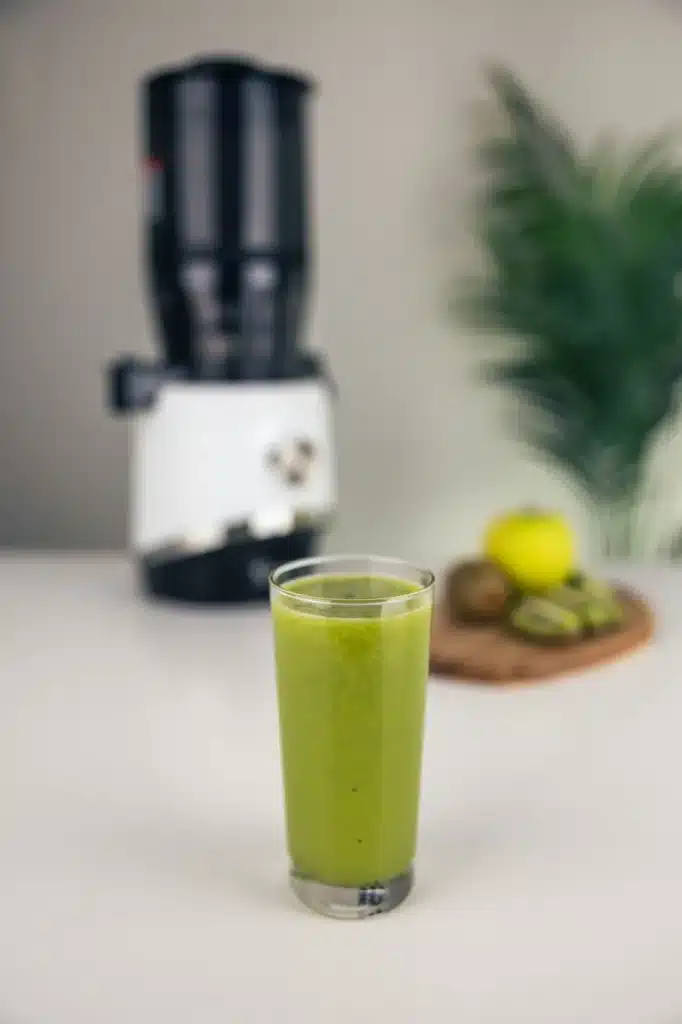
Like every vertical self-feeding juicer, the 878 is at its best with juicy, firm produce: apple, orange, carrot, pineapple, beetroot, cucumber, pear and berries. That covers the everyday family juice most households make.
Celery, leafy greens and ginger work when they are mixed in and cut short; Sana recommends 3 cm pieces for celery and greens. If your juice is mostly celery, wheatgrass or kale, the horizontal Sana 727 or Sana 707 is the better tool for that kind of fibre.
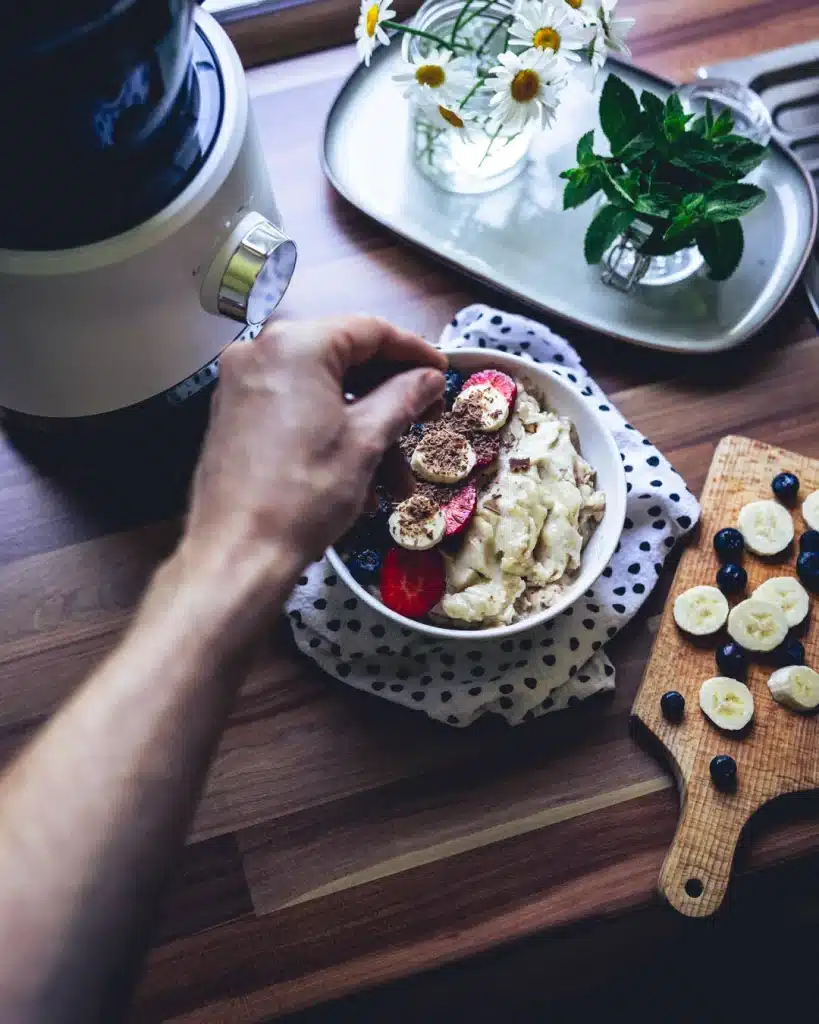
Three screens come in the box. The fine screen gives the clearest juice, the coarse screen suits soft fruit such as pineapple, berries and soft apples, and the sorbet screen turns frozen banana, mango or berries into soft-serve.
VACUUM STORAGE
Make it once, drink it for three days
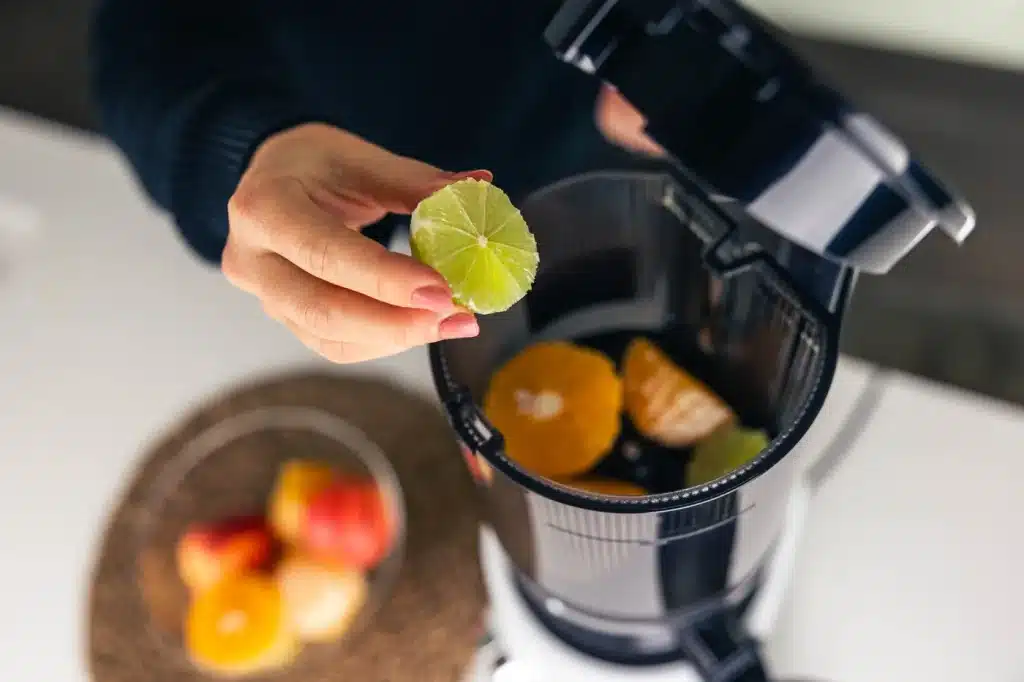
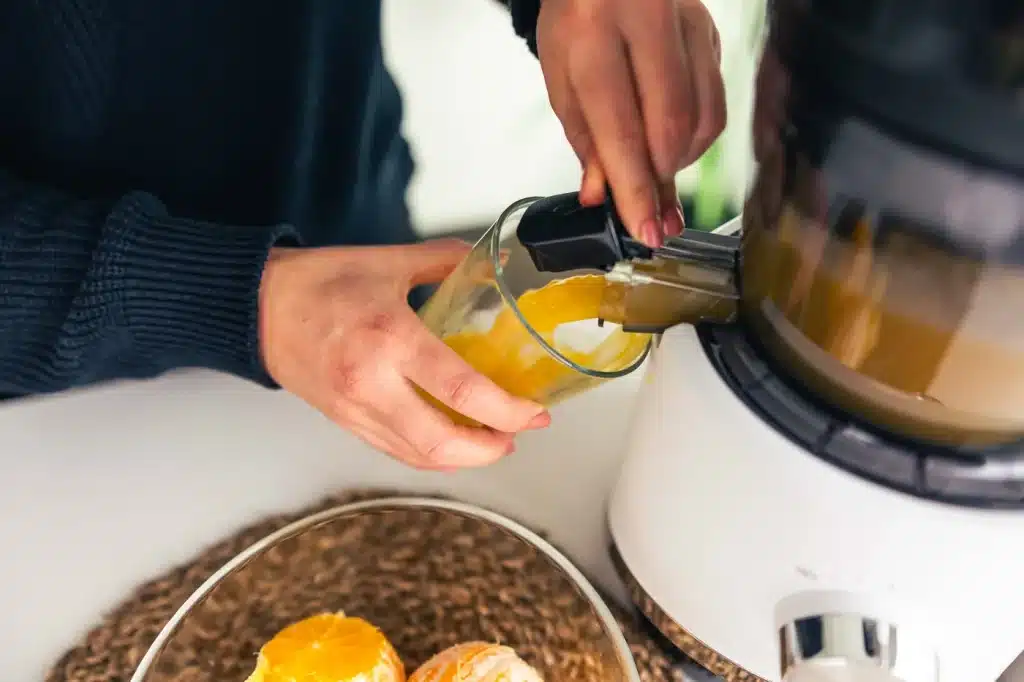
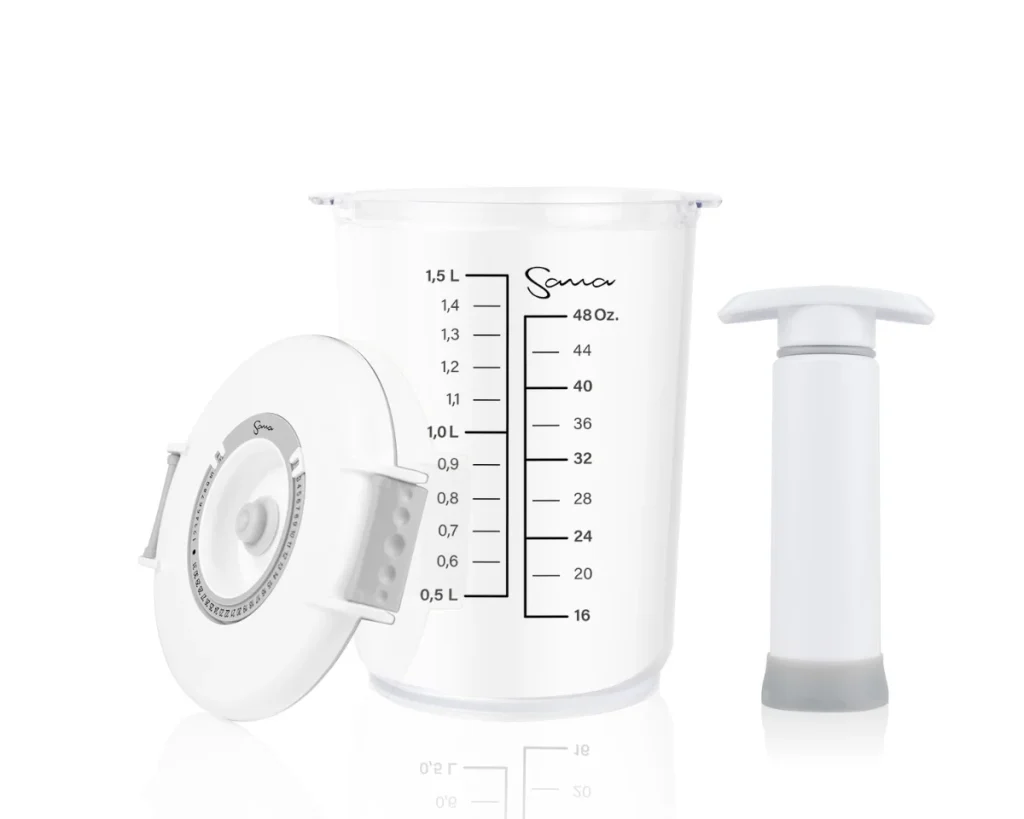
The 878 comes with Sana’s 1.5-litre vacuum juice container. Snap on the lid, pump the air out with the hand pump, and Sana says the juice stays fresh for up to three days in the fridge, without the browning and loss of flavour that oxidation causes.
A calendar dial built into the lid records the day you made it, so there is no guessing which jug is which. Sana’s own example: make 500 ml of celery juice for today, then vacuum-seal enough for the next three days, and juice twice a week instead of every morning.
Most juicers, the Kuvings AUTO10 included, come with an open plastic jug. The vacuum container is the biggest practical difference between the 878 and other hands-free juicers.
STAINLESS-STEEL PULP CONTAINER
A pulp container that doesn’t overflow
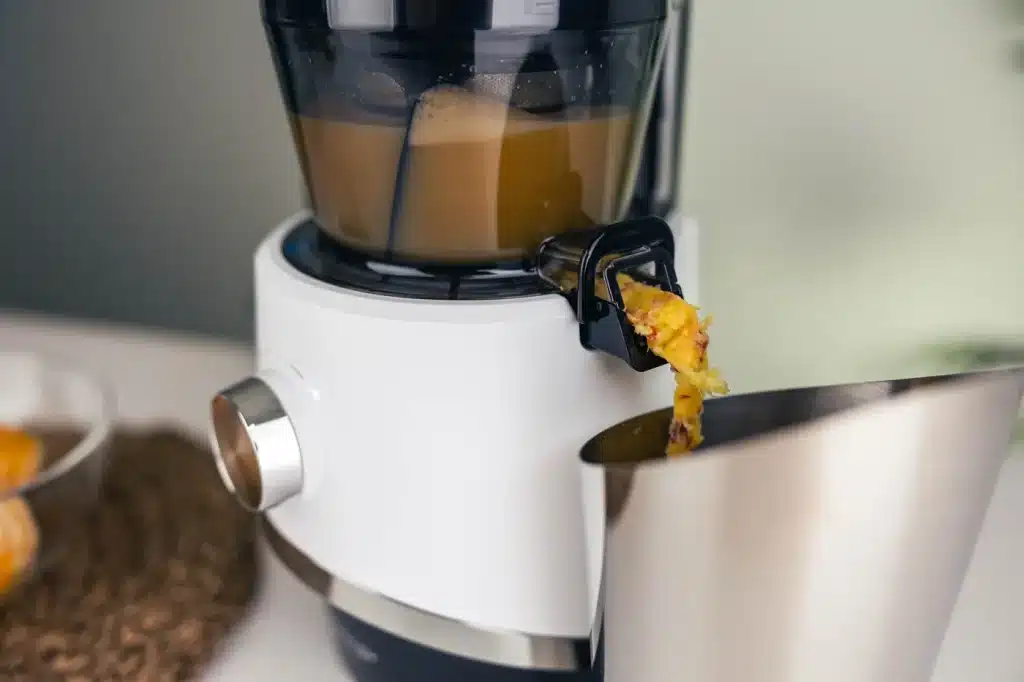
A hands-free juicer runs through a full hopper without you, so the pulp container has to keep up. The 878’s polished food-grade stainless-steel container holds far more than the small plastic cups other juicers supply, so you won’t come back to pulp spilling onto the counter.
Stainless steel is also the best way to keep pulp if you use it: carrot pulp in muffins, vegetable pulp in soups, or fruit pulp dried into crackers in a dehydrator.
It looks good left out on the counter and rinses clean with the rest of the parts.

MADE FOR SOUTH AFRICAN POWER
Imported by EcoHub, backed in South Africa
EcoHub is the official Sana importer, and every 878 we sell is the 220–240 V model for South African mains. A juicer bought from an overseas marketplace may be a different-voltage model and carries no local warranty.
The 878 is covered for 15 years on the motor and 5 years on parts. Warranty claims come to us and are handled here, not sent overseas.
Spare parts are available in South Africa, from screens and augers to the hopper assembly and the vacuum jug set, so a lost or worn part is a quick order rather than a long wait.
The Sana 878 in operation
Sana’s own walkthrough: loading the hopper, juicing, vacuum storage and cleaning.
Sana 878 specifications
| Juicing system | Single auger, vertical, self-feeding, with two cutting blades in the hopper |
| Screens | Fine juicing, coarse juicing and sorbet, all included |
| Juice storage | 1.5-litre vacuum container with hand pump and calendar lid |
| Pulp container | Polished food-grade stainless steel |
| Continuous use | Up to 30 minutes, then rest for 10 minutes |
| Safety | Will not run unless every part is locked in place; lifting the hopper lid stops the motor; automatic stop if it jams (clear with reverse); overheat protection |
| Cleaning | Hand wash in water below 80 °C. Not dishwasher-safe |
| In the box | Motor base, hopper with lid and blades, auger, rotating brush frame, fine, coarse and sorbet screens, juicing chamber, 1.5-litre vacuum container with pump, stainless-steel pulp container, pusher, cleaning brush and manual |
Sana’s user manual (PDF): Sana 878 manual.
How the Sana 878 sits against the alternatives
The closest alternative is the Kuvings AUTO10. Both are hands-free, both press at 50 RPM on a 200 W motor, and the AUTO10’s 3-litre hopper is larger than the 878’s 2 litres. The 878 gives you more once the juice is made: a 1.5-litre vacuum container that keeps juice for up to three days, a stainless-steel pulp container instead of a plastic cup, three screens including a coarse screen for soft fruit, and a longer warranty, 15 years on the motor and 5 on parts. If you juice in batches and drink it over the following days, the 878 is the one to buy.
Within Sana, the Sana 818 is the entry self-feeding model: a 1.6-litre hopper, a 150 W motor and a compact body, without the vacuum container or stainless pulp container. It suits one or two people juicing for the day.
For juice built mainly on greens, celery, wheatgrass and ginger, look at the horizontal Sana 727, Sana’s flagship, or the simpler Sana 707. You feed them by hand, but a horizontal auger handles fibrous leaves better than any vertical machine. The Sana 929 sits above the 727, with solid stainless-steel juicing parts.
Questions we are asked about the Sana 878
Less than with most juicers. Peeled oranges and small apples can go in whole, and the blades cut them as they feed. Cut larger fruit to fit the hopper, take the cores out of apples and pears, remove hard pits and seeds, and peel thick-skinned fruit such as pineapple and melon. Sana recommends cutting celery and leafy greens into 3 cm pieces and peeling fibrous roots such as ginger.
Sana says up to three days in the fridge. Fill the 1.5-litre container, put the lid on, pump the air out with the hand pump and set the calendar dial to the day you made it.
Yes, if you cut celery and greens into 3 cm pieces and put soft, leafy ingredients at the bottom of the hopper. It makes a good daily celery juice, and the vacuum container lets you make several days’ worth at once. If your juice is mainly wheatgrass, kale or spinach, a horizontal juicer such as the Sana 727 or Sana 707 extracts that kind of fibre better.
The fine screen gives the clearest juice and the highest yield from most fruit and vegetables. The coarse screen has larger holes for soft fruit such as pineapple, berries and soft apples, which can clog a fine screen, and gives a pulpier juice if you prefer it. The sorbet screen has no holes and turns slightly thawed frozen fruit into a soft-serve dessert, as in Sana’s video.
Yes. Soaked almonds and water go through the juicer and come out as fresh almond milk, with the almond pulp in the stainless-steel container. Sana’s short recipe video shows how.
Up to 30 minutes of continuous juicing, then let it rest for 10 minutes before the next run. Overheat protection switches the motor off if it runs too long, and it stops automatically if produce jams; run it in reverse for a few seconds to clear it.
Clean it straight after juicing, before pulp dries on the screen. Rinse the parts under running water and use the cleaning brush on the screen. For a deeper clean, soak the parts in warm water with a little baking soda or vinegar. Don’t use the dishwasher, water hotter than 80 °C, or abrasive pads, and wipe the motor base with a damp cloth.
Choose the 878 if you want to juice in batches and drink it over a few days: it comes with a 1.5-litre vacuum container, a stainless-steel pulp container, three screens and a 15-year motor warranty, and EcoHub imports it directly. Choose the Kuvings AUTO10 if the biggest possible load per run matters most, as its hopper holds 3 litres against the 878’s 2.
The Sana 818 is Sana’s entry self-feeding juicer, with a 1.6-litre hopper and a 150 W motor, and suits one or two people juicing for the day. The 878 is the step up: a larger hopper, a 200 W motor, the vacuum container for juicing ahead, the stainless-steel pulp container and three screens.
Yes, for light commercial use such as breakfast service in a guest house, lodge or small café. Plan around the 30-minute run time: it suits batches made ahead, and the vacuum container helps keep them fresh, rather than juice made to order all day. Boutique hotels and lodges that serve health-led juice with greens and ginger often choose the Sana 929.
The Sana 878 is covered for 15 years on the motor and 5 years on parts. EcoHub is the official Sana importer, so warranty claims come straight to us and are handled in South Africa. Spare parts, from screens and augers to the vacuum jug set, are available locally.
Why Buy From EcoHub
Backed by a local warranty
Every appliance we sell is supported here in South Africa, with after-sales help and spare parts held locally.
Made for South African power
Some premium machines sold here are 110 V US models, with the voltage in the fine print. Ours are 220–240 V South African models with SA plugs, so no transformer is needed.
Fast nationwide delivery
Delivered across South Africa in 1-3 days, with same-day dispatch on cleared payments ordered before 14:00.
Authorised dealer
Expert advice from a specialist store that has been helping South Africans choose blenders and juicers since 2012.


The machine is working like a charm. Now looking around for different juice mixes and what is best for us. But so far we enjoy the product and juices a lot
Good for bulk juicing. Mostly fruit.
Thank you, Franciska! The Sana 878 really comes into its own when you’re juicing larger quantities, particularly fruit, so it’s great to hear it’s working well for your bulk juicing. We appreciate you taking the time to share your experience.
Thanks again,
Dylan