Lithium Batteries
Shop lithium batteries for solar, inverter and backup power systems from established brands including REVOV, Hubble and Blue Nova.
Buy with confidence from EcoHub. We have supplied lithium batteries to customers across South Africa for many years, with extensive customer feedback and reviews on many of our most popular battery models.
EcoHub is an authorised REVOV distributor and registered Hubble dealer, with written confirmation from our suppliers. We deliberately work with battery brands that have established South African technical, warranty and after-sales support.
View REVOV Distributor Confirmation →
View Hubble Dealer Confirmation →
Showing 1–18 of 37 resultsSorted by popularity
-

-
One battery, 2.5 kW output, expands to 15 kWh
Original price was: R59 999.R37 999Current price is: R37 999. incl VATAdd to cart -
Two batteries, full 5 kW output, waist-high tower
Original price was: R103 999.R57 999Current price is: R57 999. incl VATAdd to cart -
Three batteries in one 1.48 m tower, 5 kW output
Original price was: R119 999.R77 999Current price is: R77 999. incl VATAdd to cart -
Adds 5 kWh to any Power-M, up to three per tower
Original price was: R25 999.R21 899Current price is: R21 899. incl VATAdd to cart -
-
Inverter & Battery Combo Deals
Original price was: R44 999.R32 400Current price is: R32 400. incl VATAdd to cart -
-
Two parallel 10kWh units, double the output
Original price was: R207 998.R112 999Current price is: R112 999. incl VATAdd to cart -
Two parallel 15kWh towers, for large homes and offices
Original price was: R240 000.R151 999Current price is: R151 999. incl VATAdd to cart







Showing 1–18 of 37 resultsSorted by popularity
Lithium Batteries for Solar, Inverters and Backup Power
A good lithium battery is at the heart of a reliable solar, inverter or backup power system. It stores electricity for use when grid power is unavailable and can also store excess solar generation for use later in the evening, overnight or whenever household demand exceeds current solar production.
EcoHub supplies LiFePO4 lithium batteries in South Africa for homes, businesses and larger energy-storage systems. Our range includes popular 5kWh-class batteries as well as 10kWh, 16kWh and expandable battery solutions from established manufacturers including REVOV, Hubble and Blue Nova.
What Size Lithium Battery Do I Need?
The right battery capacity depends on how much electricity you use, what you want to keep running and how long you want the system to operate from stored energy.
5kWh Lithium Batteries
A 5kWh-class lithium battery is one of the most common starting points for residential inverter and solar systems. Depending on the loads and system configuration, this capacity can be well suited to essentials such as lighting, fibre or WiFi equipment, televisions, computers, refrigeration and selected household appliances.
Current options in this class include batteries such as the REVOV E100 and Hubble AM5+ 5.12kWh, together with Blue Nova and other battery options.
10kWh Lithium Batteries
A 10kWh lithium battery provides substantially more stored energy and can be a better option for homes wanting longer backup periods, greater overnight solar usage or more usable battery capacity.
The Hubble AM10+ provides 10kWh at 51.2V in a single battery, while many modular systems can also reach approximately 10kWh by installing compatible smaller batteries in parallel.
15kWh to 16kWh Lithium Batteries
Larger 15kWh to 16kWh battery systems are particularly relevant for homes with higher electricity consumption, larger solar arrays and customers wanting to make substantially greater use of stored solar energy.
Current high-capacity options include the REVOV E300 16kWh and Hubble AM16+ 16kWh.
It is important to distinguish between battery capacity in kWh and inverter output in kW. A larger battery gives you more stored energy and potentially longer runtime, but it does not by itself increase the maximum load that the inverter can supply.
LiFePO4 Batteries for Home Energy Storage
Most modern batteries in this category use lithium iron phosphate (LiFePO4 or LFP) chemistry. These batteries are designed for repeated charging and discharging and incorporate a battery management system (BMS) that monitors and protects the battery during operation.
LiFePO4 batteries are well suited to both daily solar cycling and backup-power applications and have become a popular choice for modern residential energy-storage systems.
Lithium Batteries for Solar Systems
Adding battery storage to a solar installation allows excess electricity generated by the solar panels to be stored instead of being available only while the sun is shining.
During the day, solar panels can supply household loads while surplus generation charges the battery. Stored energy can then be used in the evening, overnight or when grid electricity is unavailable.
A correctly designed system can therefore increase the amount of your own solar generation that you use and reduce reliance on grid electricity. The ideal balance between solar panel capacity, inverter size and battery storage depends on your electricity consumption, peak loads and what you want the system to achieve.
Replacing or Expanding an Existing Lithium Battery System
Many South African homes already have lithium batteries that are no longer manufactured. In some cases, newer battery generations provide a supported replacement or expansion path for these older installations.
This is particularly relevant with brands such as REVOV and Blue Nova, where earlier battery generations developed a large installed base.
Compatibility should never be assumed simply because two batteries have a similar voltage or capacity. Battery communication, BMS configuration, firmware and the manufacturer’s approved installation requirements must also be considered when expanding an existing battery bank.
REVOV Lithium Batteries
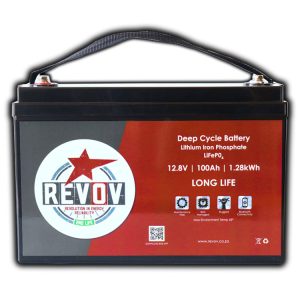
REVOV has been one of EcoHub’s most important lithium battery brands for many years. Earlier models such as the REVOV R100, B100 and R200 became widely used in residential inverter and solar installations, and EcoHub supplied large numbers of these batteries.
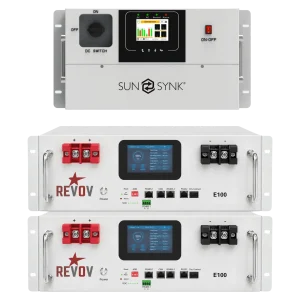
REVOV E100 – Replacement for the R100 and B100
The REVOV R100 became an extremely popular 5kWh-class battery and used second-life lithium cells.
The later REVOV B100 moved to first-life, new battery cells. Both models have now been discontinued.
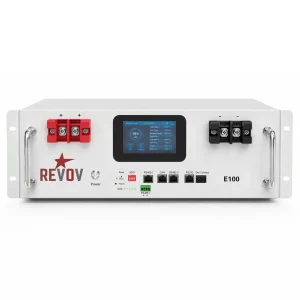
The current REVOV E100 replaces both the R100 and B100 and is backwards compatible with both earlier models. This provides an important replacement and expansion path for customers who already have REVOV battery banks installed.
EcoHub keeps information on these older battery models available because many customers still have R100 and B100 batteries in service and may need to identify the correct current replacement when expanding an existing system.
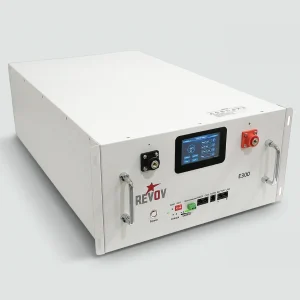
REVOV E300 – Replacement for the R200
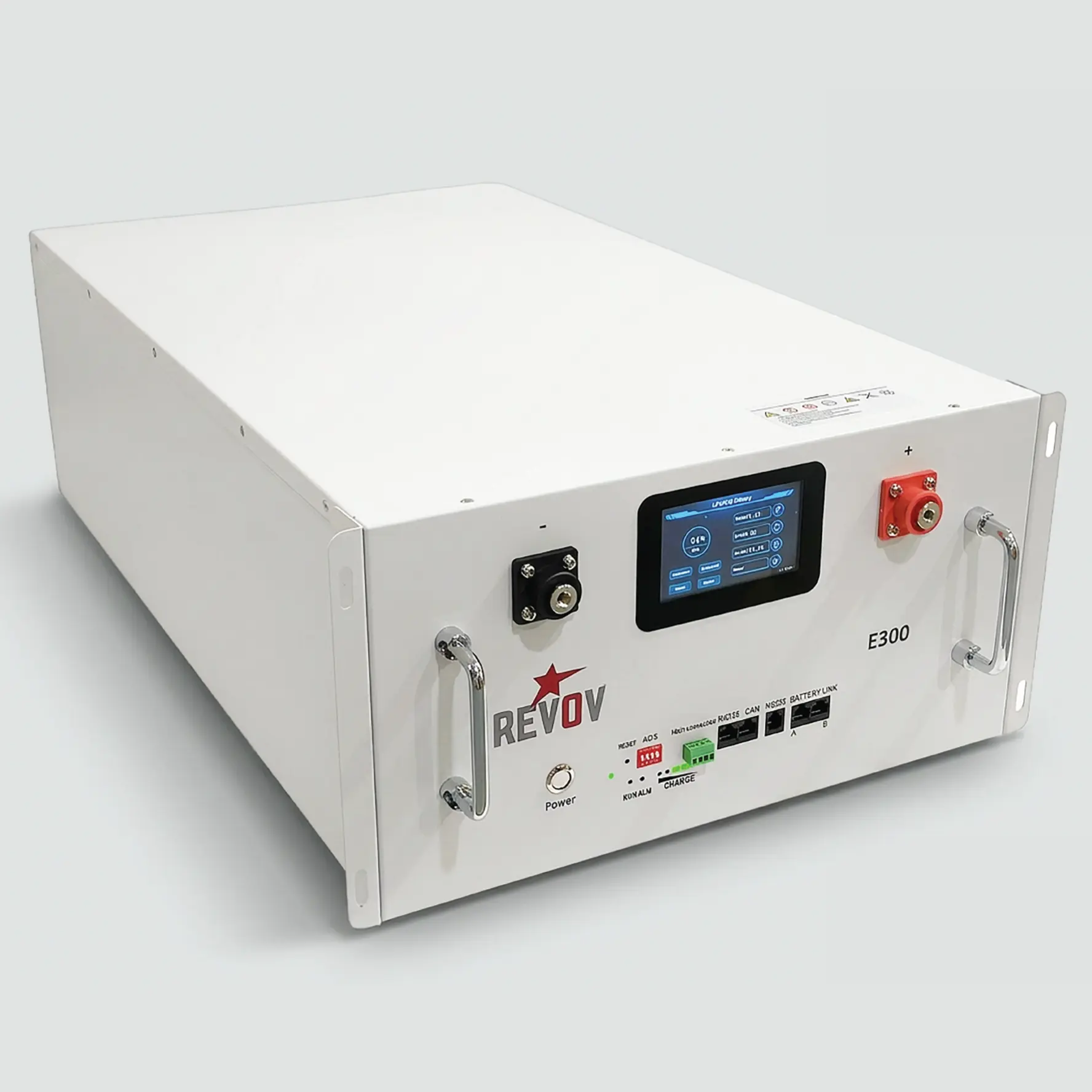
For larger energy-storage systems, the REVOV E300 16kWh lithium battery replaces the discontinued REVOV R200.
The E300 is compatible with existing REVOV R200 installations, providing a current expansion and replacement option for customers who already have R200 batteries installed.
Its 16kWh capacity also makes the E300 well suited to larger residential solar installations, higher electricity consumption and systems moving beyond basic backup power towards greater energy independence.
Hubble Lithium Batteries
Hubble offers a broad range of first-life lithium batteries for solar, inverter and backup-power systems. The range now provides useful options across several capacities, allowing battery storage to be matched more closely to the requirements of the installation.
Hubble AM5+ – 5.12kWh
The Hubble AM5+ is a 5.12kWh, 51.2V lithium battery designed for residential solar and backup systems. It uses LFP prismatic cells, supports parallel expansion and communicates with compatible inverter systems through CAN integration.
Hubble AM10+ – 10kWh
The Hubble AM10+ provides 10kWh of storage at 51.2V. It is particularly useful where more battery capacity is required in a single unit rather than building the system from several smaller batteries.
The AM10+ uses LFP prismatic cells, has a 1C rating and can be expanded in parallel for larger storage requirements.
Hubble AM16+ – 16kWh
The Hubble AM16+ provides 16kWh at 51.2V and is designed for larger residential and small-business energy-storage systems.
It is a floor-standing battery and can also be installed in parallel where substantially greater battery capacity is required.
Hubble Cloudlink Remote Monitoring
Compatible Hubble systems can use Hubble Cloudlink for remote monitoring and diagnostics. Cloudlink can provide access to battery information, system status, alarms and historical data while also providing useful diagnostic information for technical support.
Selected Hubble batteries including the AM5+, AM10+ and AM16+ are supplied with a 10-year unlimited-cycle warranty, subject to Hubble’s warranty terms and conditions.
Blue Nova Lithium Batteries
Blue Nova is another established South African lithium battery manufacturer with a significant installed base in residential solar and backup-power systems.
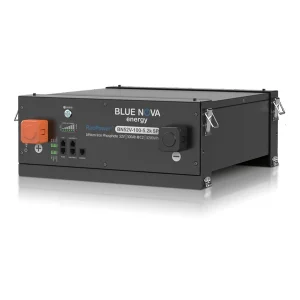
Blue Nova RacPower SP – Successor to the RacPower BP and DU
The Blue Nova RacPower BP and RacPower DU became popular 5.2kWh-class batteries and many remain in service in existing solar and inverter systems.
The newer Blue Nova RacPower SP succeeds these earlier RacPower models and is compatible with the RacPower BP and DU platform, providing an expansion path for existing installations.
EcoHub keeps information and customer reviews for important discontinued Blue Nova models available because these pages remain useful to customers who already own the batteries and need to identify the appropriate current-generation option.
When combining different Blue Nova battery generations or ranges, the exact communication and system requirements should be checked before installation.
Battery and Inverter Compatibility Matters
Choosing a lithium battery involves more than simply matching voltage and capacity. The battery management system must communicate correctly with the inverter, and manufacturers may specify particular CAN protocols, firmware versions, communication cables, charge settings or installation limits.
This becomes especially important when replacing a discontinued battery or expanding an older battery bank.
Before adding battery capacity, confirm the exact model numbers of the existing batteries and inverter and make sure the proposed configuration is supported by the manufacturer.
Why Battery Brand and After-Sales Support Matter
A lithium battery is a long-term component of an energy system, so the purchase decision should involve more than simply comparing the lowest advertised price per kWh.
EcoHub prefers established manufacturers that provide South African technical support, warranty support and after-sales infrastructure. This becomes particularly valuable if a battery or inverter system later requires diagnostics, firmware assistance, configuration support or warranty assessment.
We have also sold many earlier-generation batteries that are still operating in homes and businesses today. Keeping these older product pages and their customer reviews available helps customers researching an existing battery identify its history, replacement model and available upgrade path.
Whether you are building a new solar system or expanding an existing one, choosing a compatible battery from an established manufacturer with dependable local support can be just as important as choosing the battery capacity itself.