







TWO SYSTEMS, ONE SUPPLY
10 kW of output and 20 kWh of storage
This is two Huawei Power-M 10kWh systems working as one. Each unit has its own 5 kW power module and 2 battery modules of 5 kWh, and the two run in parallel to give 10 kW of output from 20 kWh of lithium iron phosphate storage.
It is the Power-M for homes where 5 kW is not enough: a larger house that wants most of its circuits backed up, a home with a borehole pump or a well-used kitchen, or a small office or practice that has to keep working through a long outage. Each tower is about 1.09 m tall, 70 cm wide and 16 cm deep.
Huawei designs the Power-M for exactly this: up to three power modules can run in parallel, provided each carries the same number of batteries. Huawei’s own AC parallel box is not sold in South Africa, so your installer supplies the parallel switchgear as part of the installation.

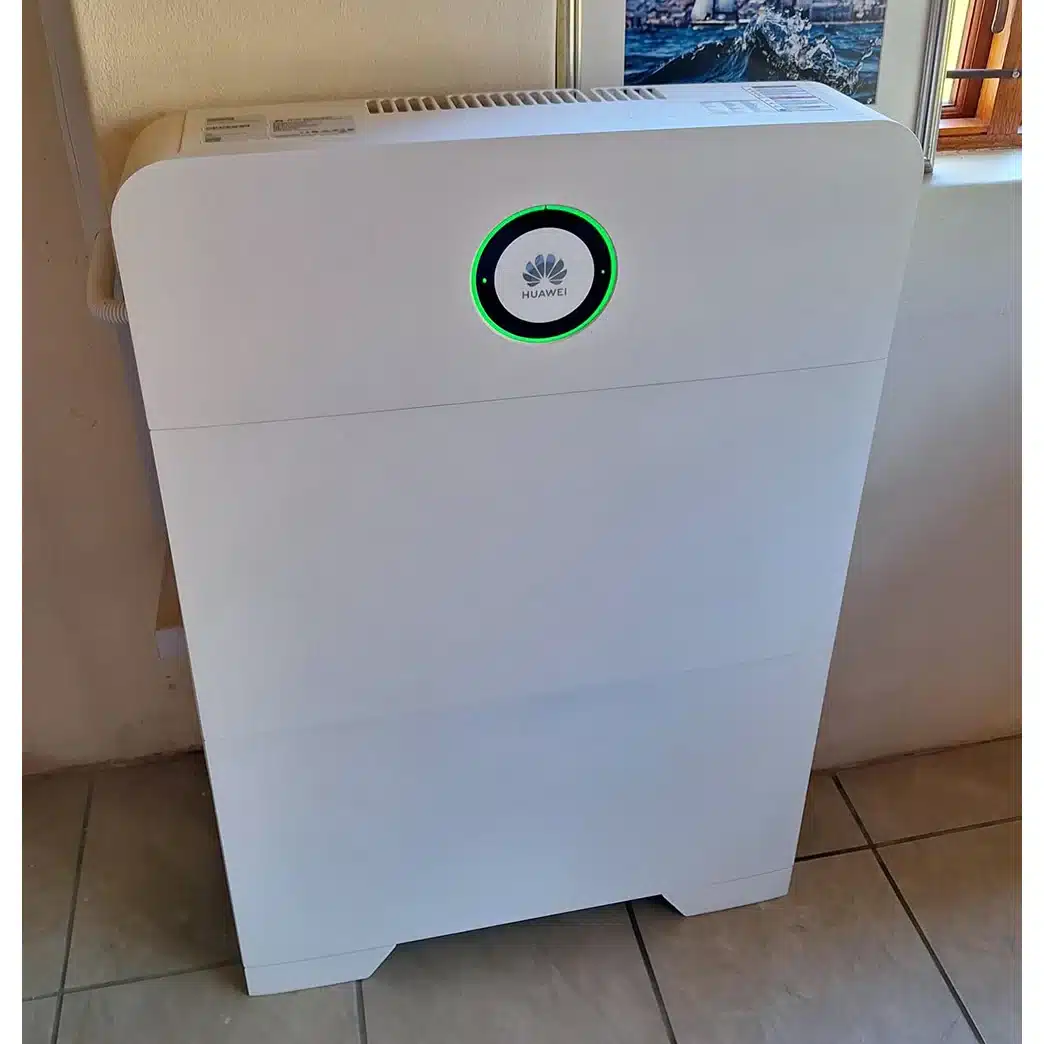
I installed the Huawei Power-M at my house in 2022 when we had regular stage 6 load shedding. Having started with one battery, I later upgraded to two batteries, then added solar panels, and eventually a third battery. With the current setup, which includes eight solar panels, my house is virtually off grid. The system is installed in my dining and music room. It’s virtually silent and looks great.
Dylan Phelan, EcoHub director
HOW IT’S BUILT
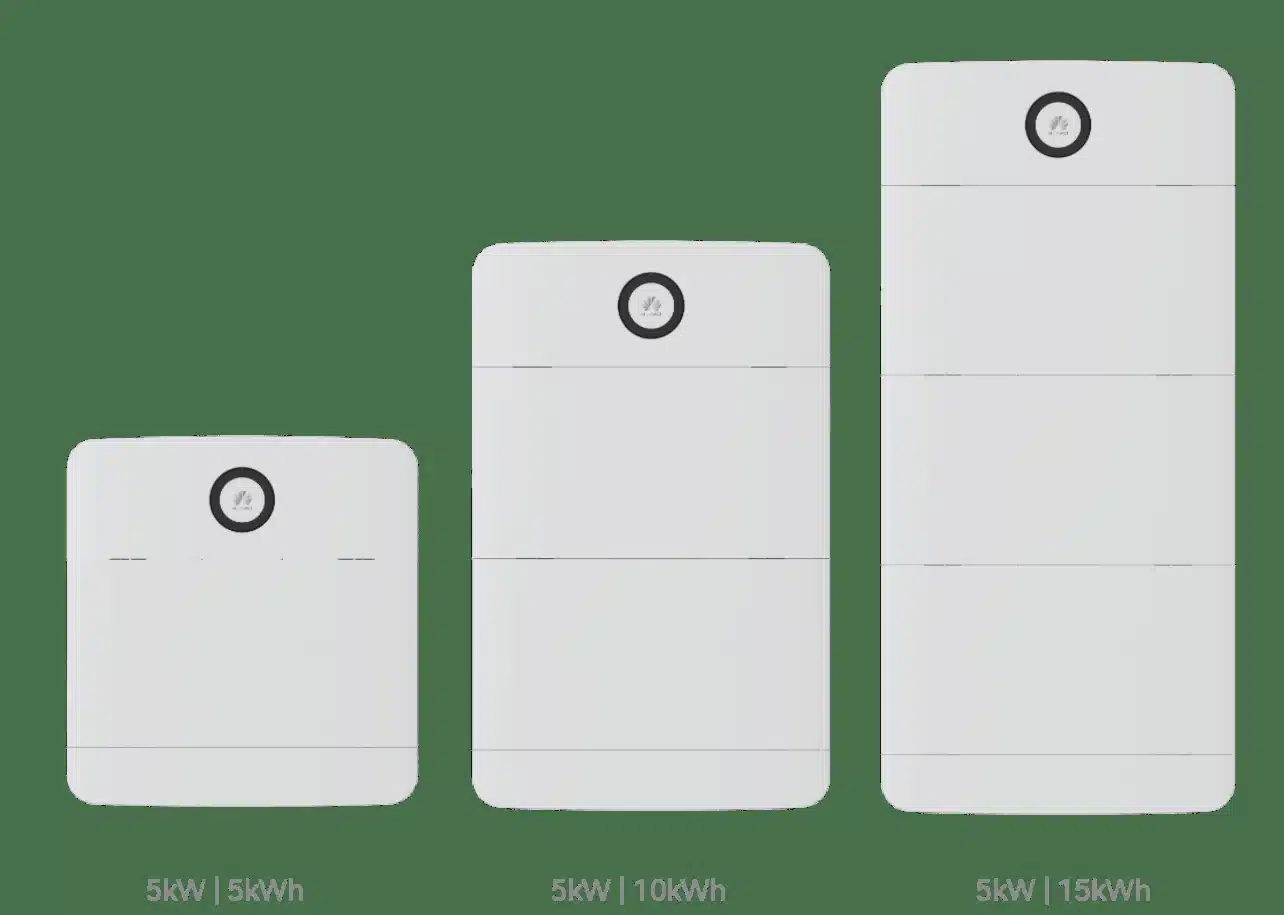
Two identical towers of 2 batteries each
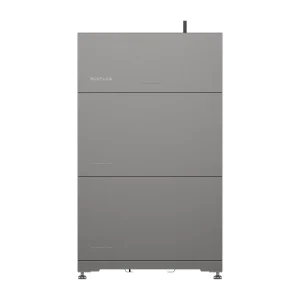
Each tower is the same as our single Power-M 10kWh: a power module on top holding the inverter, the solar charge controller and the controls, with two battery modules beneath it on a floor base.
Huawei’s parallel figures for two power modules are 10.8 kVA and 10 kW. Both units share the load and charge together, and both appear in the FusionSolar app as one system.
Each tower has room for a third battery, so the pair can grow to 10 kW / 30 kWh with two more battery modules; Huawei requires both units to carry the same number.
QUIET ENOUGH FOR THE LOUNGE
Built to live in the room, not hidden from it
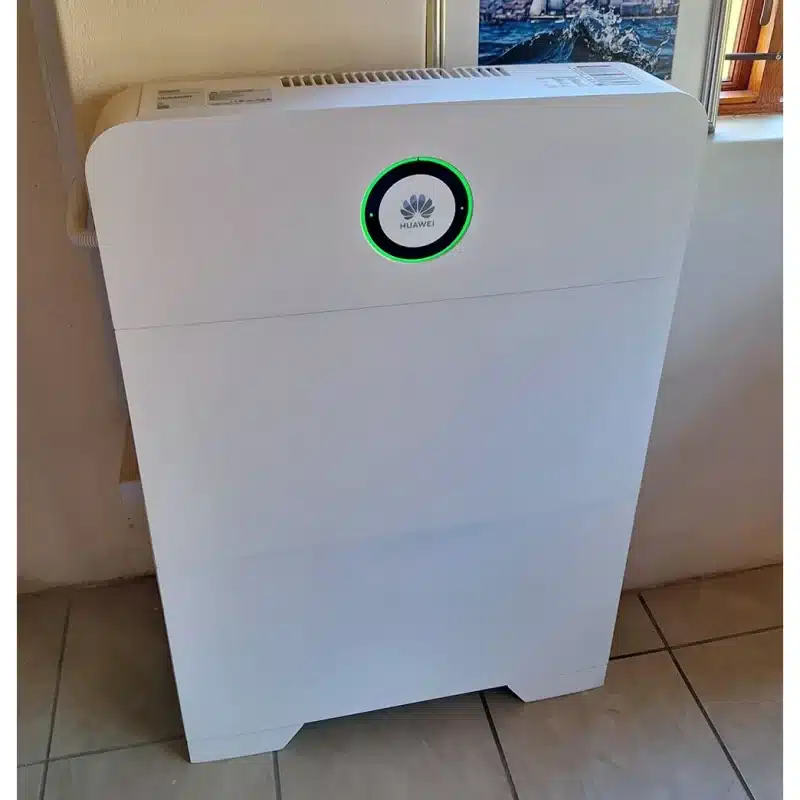
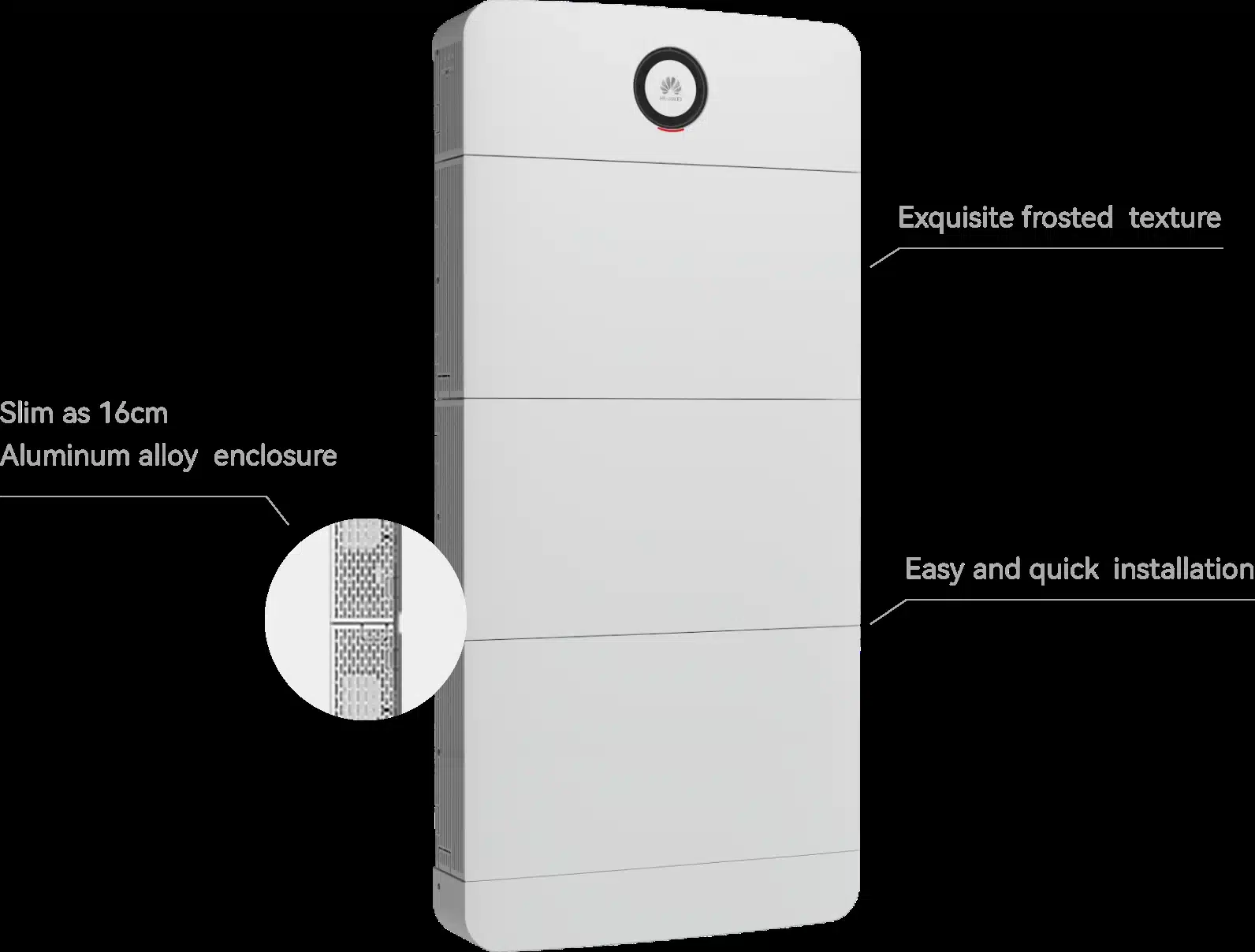
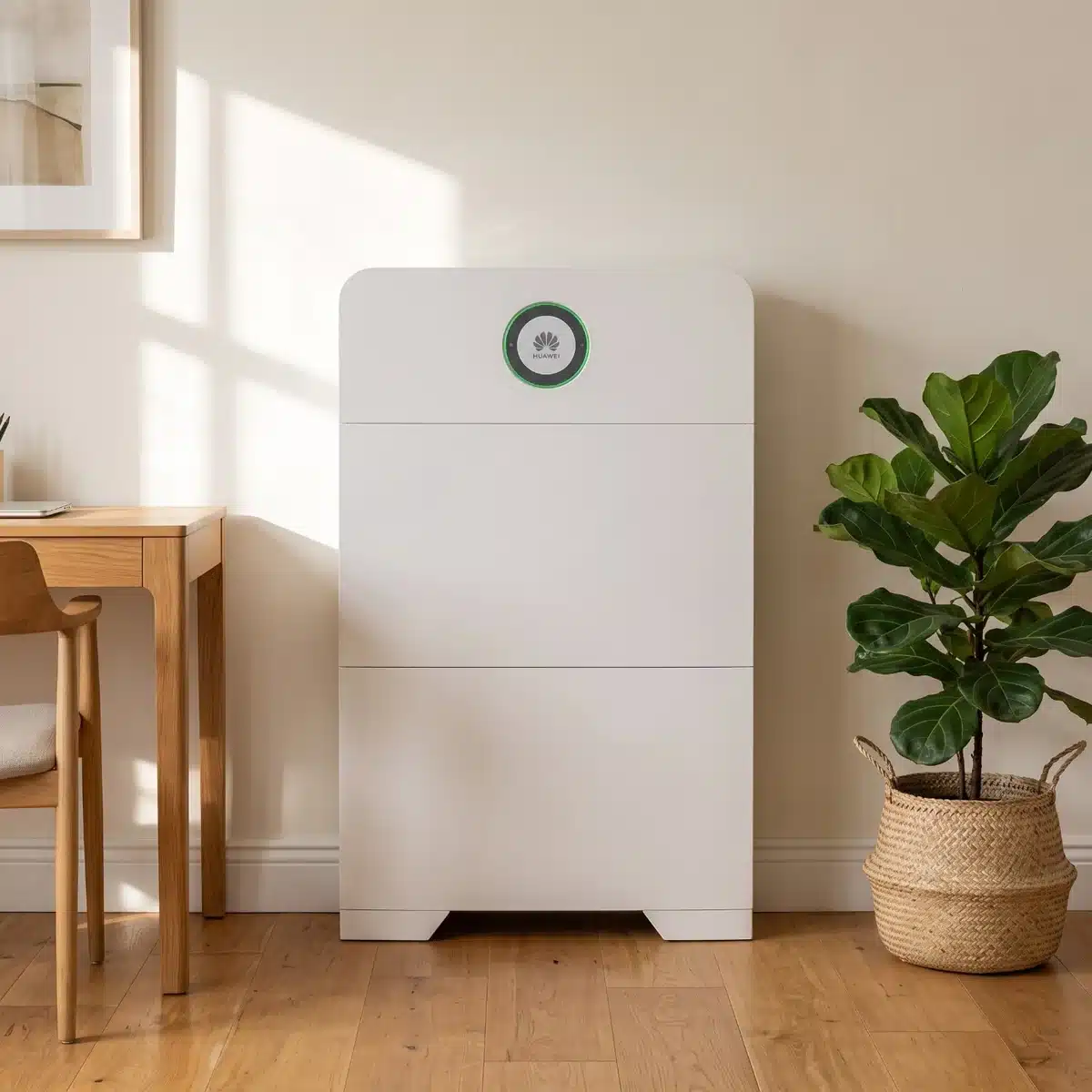
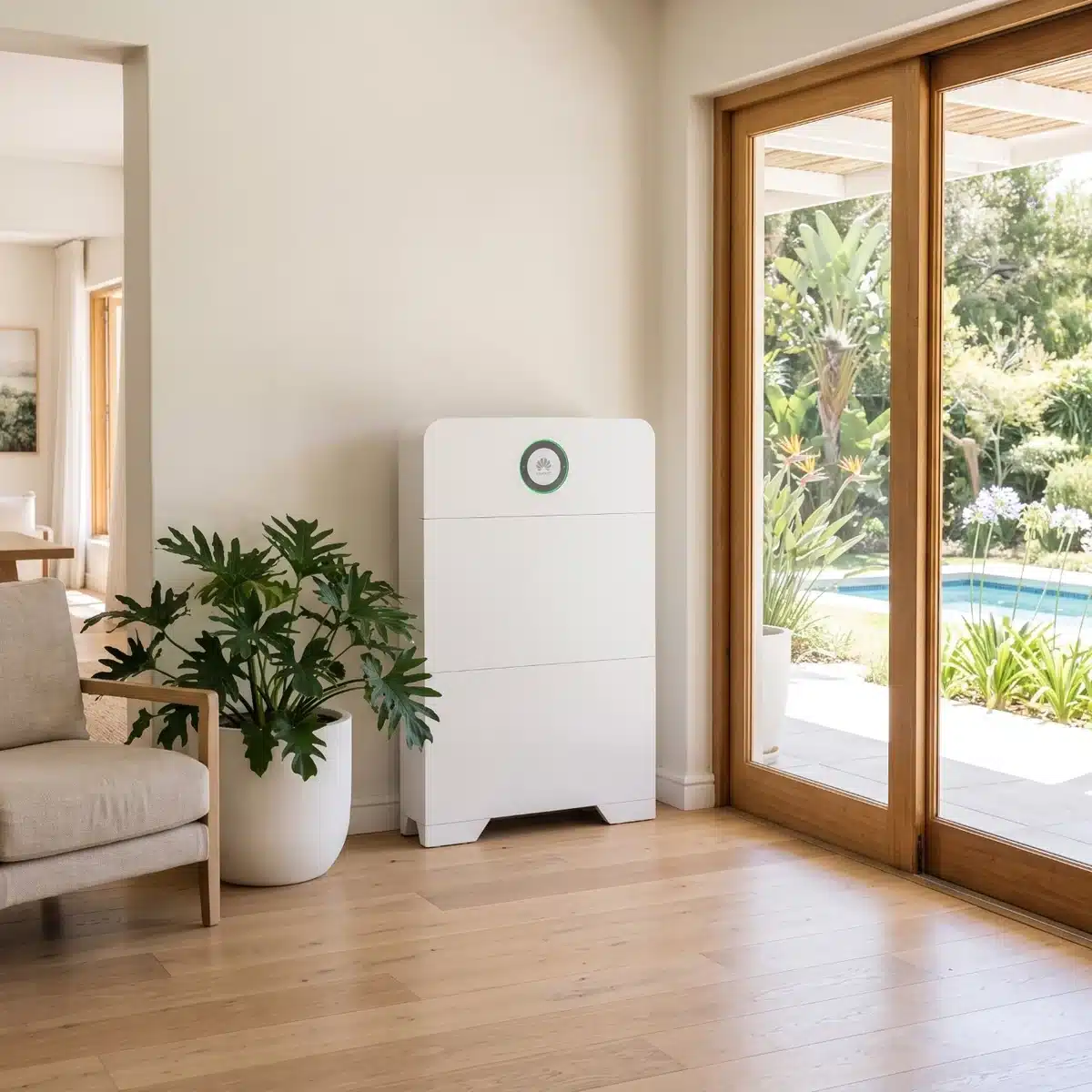
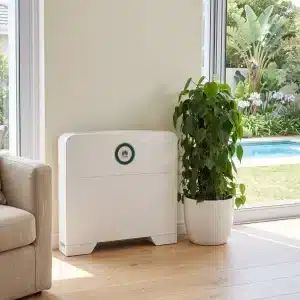
Most inverter and battery combinations end up in a garage because of how they look and sound. The Power-M was designed the other way round: a matt white aluminium enclosure only 16 cm deep, rounded corners, no visible cabling once installed, and a single round status display with a green LED ring.
Huawei rates it at 40 dBA or less at one metre, about the level of a quiet library, and it relies on natural heat dissipation rather than a fan that runs all evening. Two units take about 1.6 m of wall between them and still only 16 cm of depth, so they fit along the back of a garage without taking a parking bay.
The modules carry an IP66 rating on Huawei’s specification sheet, so the cabinet can also go on a sheltered patio or in a garage if that suits your wiring better. It mounts on the supplied floor base or on a wall.

WHERE IT LIVES
Usually in the garage, beside the distribution board
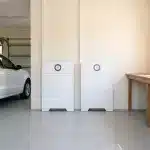
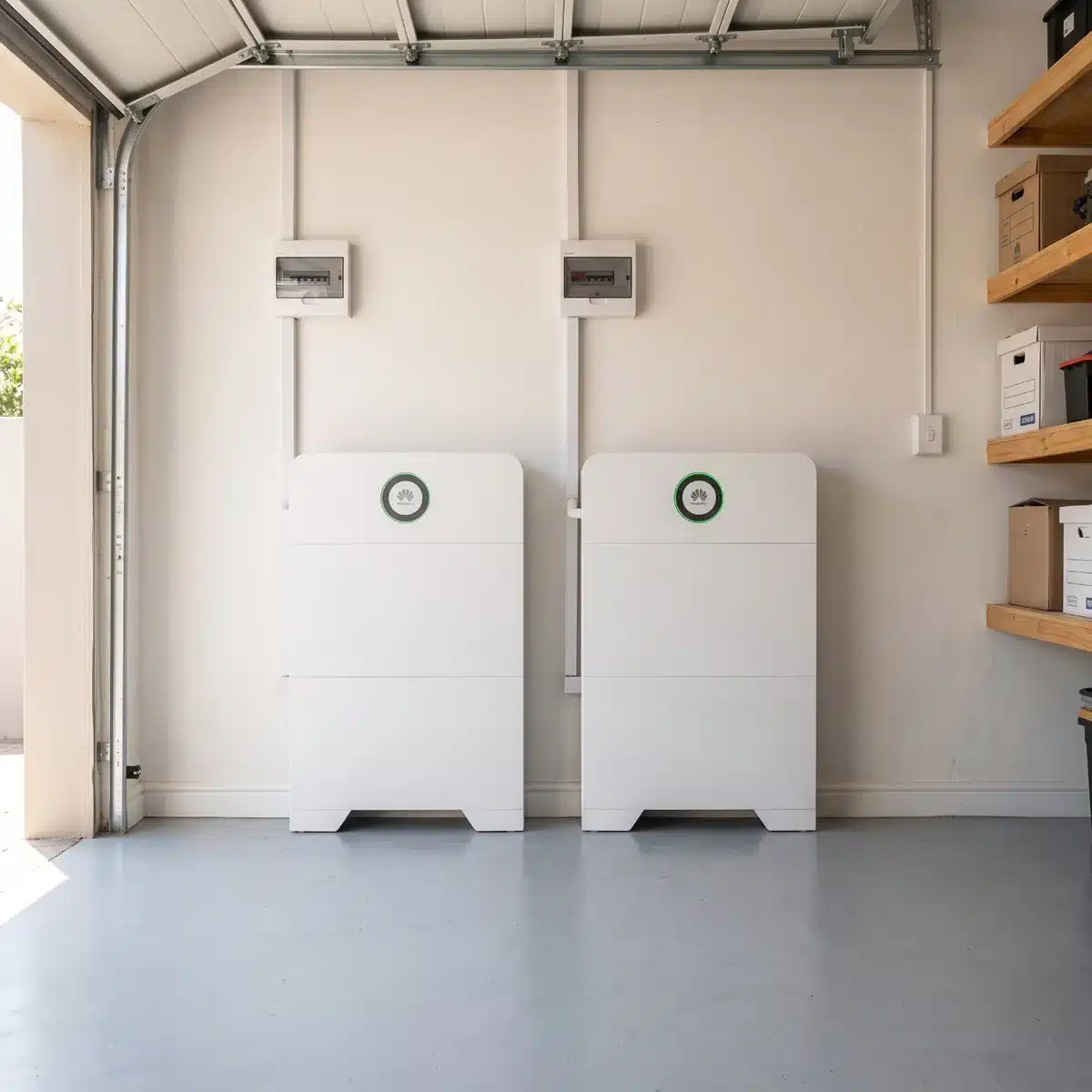
A two-unit system is most often installed in a garage or utility room, close to the distribution board, where the parallel wiring is short and neat. The cabinets are quiet and slim enough for a living area too, if that is where the board is.
The first two pictures show the pair in typical garages. The last two show a single Power-M 10kWh, one half of this system, in a home.
Plan for about 1.6 m of wall, clearance for cabling between and beside the units, and a spot out of direct sun.
SOLAR WHEN YOU’RE READY
Add panels on day one or a year later
The Power-M is a hybrid system: the solar charge controller is built into the power module, so panels connect directly with no extra hardware. Huawei rates the input at up to 5.5 kWp across two strings on one MPPT, which suits most residential roofs.
Without panels it works as a backup system, charging from the grid between outages. With panels, the sun runs the house during the day and refills the batteries for the evening, and the grid becomes the fallback rather than the main supply. With two power modules, each takes its own panels, so the pair can accept up to twice the solar of a single Power-M.
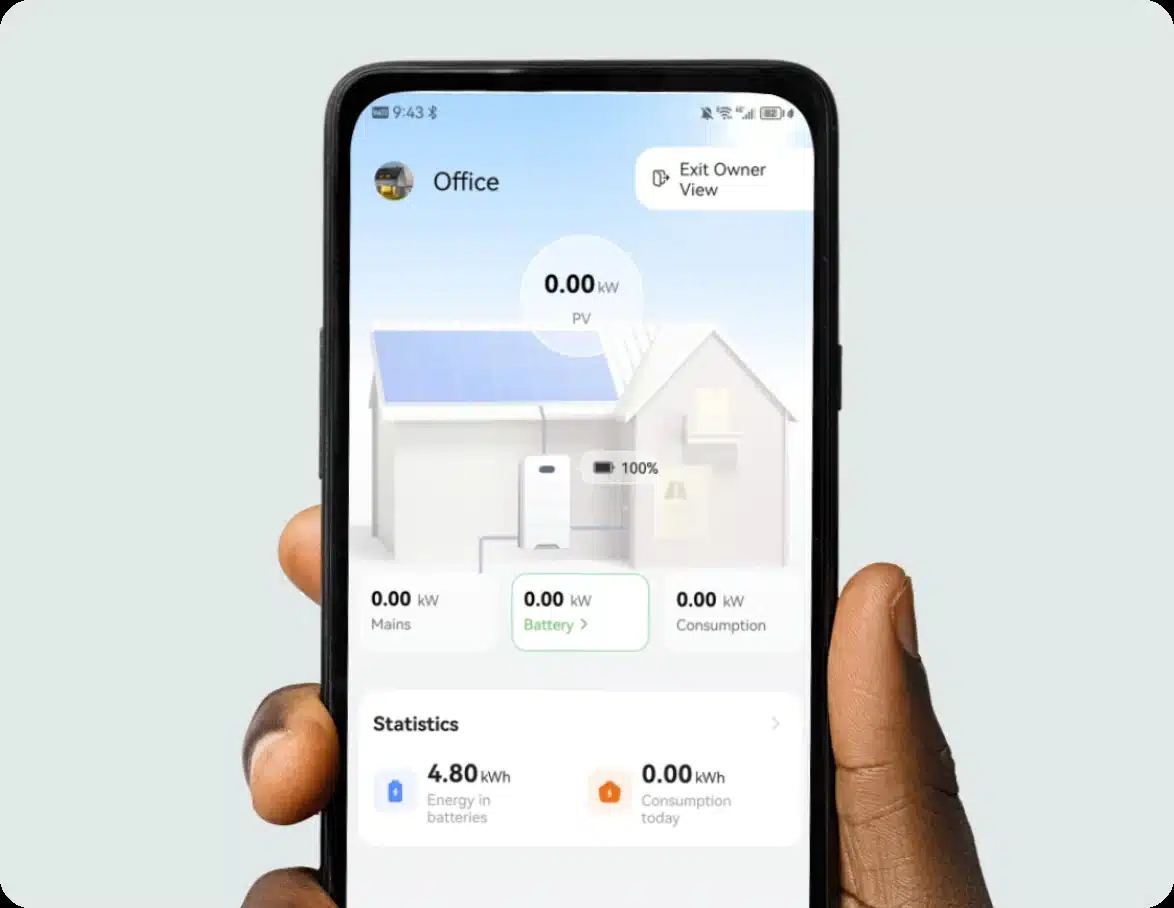
Everything is visible in Huawei’s FusionSolar app: battery level, solar production, what the house is drawing and where the power is coming from, at home or remotely.
MADE FOR SOUTH AFRICAN POWER
Load-shedding, load reduction and municipal outages
When the grid drops, the Power-M takes over the backed-up circuits automatically, and Huawei quotes the switchover at 0.02 seconds. Clocks don’t reset, the Wi-Fi stays up and the TV keeps playing. When supply returns it switches back and recharges.
With 10 kW available, the pair can carry most of a household’s circuits rather than only the essentials. Pool and borehole pumps are no problem on 10 kW of output. A standard 3 kW geyser element runs comfortably on 10 kW too, provided solar panels are up: put it on a timer from mid-morning, when the panels are near full output, so they heat the water and the batteries stay full for the evening.
This is Huawei’s 220 to 240 V single-phase model, supplied through Huawei’s South African distribution with a local 10-year warranty. Grey imports and on-demand overseas listings do not carry that warranty, and some are built for other markets.
What the Power-M 10kW / 20kWh will run, and for how long
Two numbers decide what a backup system does for you: its output, which limits what can run at the same time, and its storage, which decides how long it lasts. The Power-M 10kW / 20kWh delivers up to 10 kW across its two units from 20 kWh of usable storage. The tables below use typical South African household figures; check the rating plate on your own appliances, and your installer will size the backed-up circuits with you.
How long it lasts
| Average load | What that looks like | Runtime on 20 kWh |
|---|---|---|
| 300 W | a light essentials load: lights, Wi-Fi, TV, laptops | about 60 hours |
| 500 W | typical essentials, adding the fridge-freezer, gate and alarm | about 36 hours |
| 1 000 W | a larger home with most plugs and lights backed up | about 18 hours |
| 2 000 W | essentials plus regular kettle, microwave and appliance use | about 9 hours |
Runtimes allow about 10% for conversion losses. If the system has had no solar input for 24 hours, Huawei keeps a 15% reserve to protect the cells, so expect a little less after a long overcast spell. With solar panels connected, the batteries refill during the day.
What it will run
| Appliance | Typical draw | On the Power-M 10kW / 20kWh |
|---|---|---|
| LED lights, ten bulbs | 100 W | Yes |
| Wi-Fi router and fibre box | 20 W | Yes |
| TV and decoder | 150 W | Yes |
| Laptop | 60 W | Yes |
| Fridge-freezer (average over a day) | 150 W | Yes |
| Gate motor and alarm (average) | 50 W | Yes |
| Microwave | 1 200 W | Yes, alongside the essentials |
| Air fryer | 1 500 W | Yes, alongside the essentials |
| Kettle | 2 200 W | Yes, alongside the essentials |
| Hair dryer | 2 000 W | Yes, alongside the essentials |
| Pool or borehole pump | 1 100 W | Yes; best run in daylight on solar, since 8 hours at 1.1 kW uses 8.8 kWh |
| Oven or stove plate | 2 500 W | Yes |
| Geyser element | 3 000 W | Yes, with solar panels and a daytime timer |
With 10 kW available, the pair runs most of a household at once, including the kitchen. With solar panels up, a standard 3 kW geyser element runs comfortably on a timer from mid-morning, when the panels are near full output, leaving the batteries full for the evening.
The Power-M in operation
Huawei Digital Power’s South African team demonstrates the Power-M’s features and how the modules fit together.
Power-M 10kW / 20kWh specifications
| Configuration | 2 power modules (MAP05A1), 4 battery modules (MAB05B1), 2 floor bases |
| Parallel output | 10.8 kVA / 10 kW (Huawei quick guide, two power modules) |
| Parallel rules | Up to 3 power modules; each must carry the same number of batteries |
| Output per unit | 5 kW (6 kVA) with 2 or more batteries |
| Solar input detail | 90–420 V DC MPPT range, 2 strings, 1 MPPT, up to 8 optimisers |
| AC input | 200–240 V, 50/60 Hz, 30 A maximum, 6 kW bypass |
| Switchover | Not on Huawei’s spec sheet; Huawei marketing quotes 0.02 s |
| Noise | 40 dBA or less at 1 m (30 °C ambient) |
| Ingress protection | IP66 (Huawei spec sheet; IP65 in its 2021 brochure) |
| Operating range | 0 to 45 °C, 5–95% relative humidity |
| Cycle life | 6,000 cycles at 25 °C and 80% depth of discharge (Huawei brochure) |
| Module sizes (W × H × D) | Power module 700 × 246 × 152 mm, 17 kg. Battery 700 × 390 × 158 mm, 50 kg. Floor base 700 × 65 × 147 mm |
| Monitoring | Huawei FusionSolar app over Wi-Fi, Ethernet or 4G |
| Certification | IEC 62619, IEC 62109-1/-2, IEC 62920, UN 38.3 |
Huawei’s documentation: Power-M brochure (PDF) and the FusionSolar app guide (PDF).
How the Power-M 10kW / 20kWh sits against the alternatives
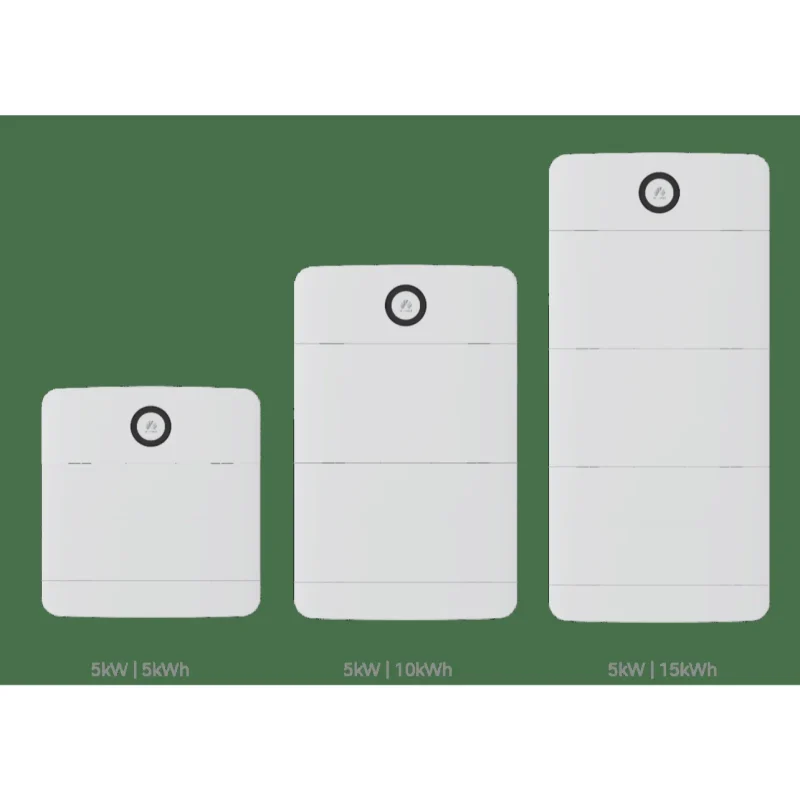
Within the range, a single Power-M 15kWh gives 5 kW from 15 kWh in one tower. If your essential load fits within 5 kW, it is the simpler and more economical choice; the pair makes sense when you need the 10 kW.
The 10kW / 30kWh uses the same two power modules with a third battery in each tower, for longer runtime at the same 10 kW output.
Among the other systems we stock, the EcoFlow PowerOcean 6kW gives 6 kW from up to 15 kWh in a single installation, more than one Power-M but less than this pair. For a home that needs 10 kW, two Power-M units remain the neatest all-in-one route we offer.
Questions we are asked about the Power-M 10kW / 20kWh
Divide the capacity by what you are running and allow about 10% for conversion losses. A larger home with most circuits backed up might average around 1 kW through an outage, so 20 kWh lasts roughly 18 hours. At a 500 W essentials-only load it lasts twice as long.
Huawei rates each battery module at 5 kWh usable. If the system has had no solar input for 24 hours it keeps a 15% reserve, so plan on about 17 kWh in that situation.
The oven and a pool pump, yes. A standard 3 kW geyser element runs comfortably on 10 kW too, provided you have solar panels up. On its own it would use 20 kWh in under seven hours, so set its timer for the daylight hours; panels are near full output from about 10am. Without solar, heating water from the batteries makes little sense: they would only be storing grid power to burn later.
Huawei’s own AC parallel box is not sold in South Africa, so your installer supplies the parallel switchgear and wiring that link the two units to your distribution board, and includes it in the installation quote. Each unit must carry the same number of batteries, and the installer sets one unit as the master and the other as the slave during commissioning.
Yes. The solar charge controller is built into the power module, so panels connect straight to it with no separate charger. Huawei rates the input at up to 5.5 kWp across two strings on one MPPT, within a 90 to 420 V DC window, and it supports up to eight Huawei optimisers. In practice that is roughly eight to ten modern panels per power module, depending on their wattage and how your installer strings them. With two power modules, each takes its own panels.
Plenty of owners start with backup only and add panels a year later. Nothing on the Power-M changes when you do; your installer runs the cables to the PV input and enables solar in the app.
Yes. It is wired into your distribution board, so it must be installed by a qualified electrician who issues a Certificate of Compliance. We supply the equipment and can refer you to one of our trusted, Huawei-trained installers, who cover all major cities and most areas of South Africa; the installer quotes and carries out the work, and is responsible for it.
You can also use your own installer. They supply the cabling, isolators, changeover switch and earth leakage, then commission the system and connect it to your Wi-Fi through Huawei’s FusionSolar app.
Huawei rates the modules IP66 (its 2021 brochure says IP65), and the cabinet is approved for indoor or sheltered outdoor installation, on the floor or on a wall. It runs between 0 and 45 °C. Huawei’s South African installation guide asks for a spot out of direct sun and rain, away from taps, drains and sprinklers, and rules out outdoor installation within 500 m of the sea, where salt air corrodes the enclosure. Indoors, at the coast, is fine.
Because it is rated at 40 dBA or less at one metre, most owners put it inside: a passage, a study, a dining room or the garage.
Fast enough that lights, TVs, Wi-Fi and laptops carry on without a flicker in normal use. Huawei’s own marketing material quotes 0.02 seconds. Its published specification sheet does not list a transfer time, so we give that figure as Huawei’s rather than our own measurement. If you run something that cannot tolerate any interruption at all, such as a server, keep a small UPS in front of it as well.
The Power-M carries Huawei’s 10-year warranty, supported in South Africa through Huawei’s local distributor. If a module develops a fault, contact us with your order number: we log the claim, follow it up and keep you informed until it is resolved.
The warranty covers the equipment. Faults caused by the installation itself, such as wiring or protection errors, are the installer’s workmanship and are taken up with them, which is one reason a Certificate of Compliance matters.
Fake online stores have advertised the Power-M at prices no genuine seller can match, then disappeared with the payment. EcoHub has sold Huawei backup systems since the Power-M arrived in South Africa in 2022 and has traded as an online store since 2012. Our stock comes through Huawei’s South African distribution, which is what makes the local warranty valid. If a price looks too good to be true, check the seller’s history before you pay.
Yes. You can collect from our Kempton Park warehouse or have it delivered; choose at checkout and the delivery cost is shown before you pay. Each battery module weighs about 50 kg and the power module about 17 kg, so this system weighs about 237 kg before packaging. Bring a second person, or have your installer collect it.
Why Buy From EcoHub
Power-M market leaders
We have sold the Huawei Power-M since it reached South Africa in 2022 and are one of its largest suppliers in the country. Our director runs one in his own home.
Trusted by installers
Installers and electrical contractors across South Africa buy their Power-M systems from us, and we refer customers to experienced Power-M installers in most areas.
The right system, first time
Every system comes through Huawei’s South African distribution with the local 10-year warranty, and advice on sizing comes from a specialist store trading since 2012.
Delivery or collection
Collect from Kempton Park or have it delivered across South Africa in 1–3 working days. Orders are generally ready within 24 hours of payment.




Reviews
There are no reviews yet