

EcoFlow
EcoFlow PowerOcean home battery and solar systems
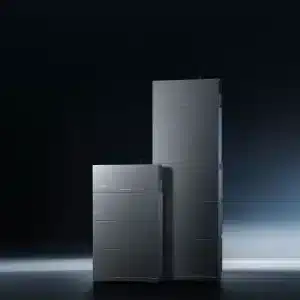
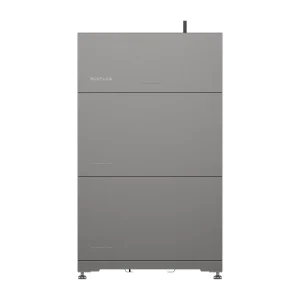
The inverter and lithium batteries sit in one slim, quiet stack, rated for indoors or out. No separate battery rack, isolators or cable trunking on the wall. Wired into your distribution board, it switches the house to backup by itself when the power goes, and runs it on solar when panels are added.
Supplied through EcoFlow South Africa with the local warranty, delivered nationwide, and installed by installers in our network.

Showing all 14 resultsSorted by popularity


Showing all 14 resultsSorted by popularity
EcoFlow PowerOcean and OCEAN 2 in South Africa
EcoFlow PowerOcean is EcoFlow’s home battery system: a hybrid inverter, stackable lithium iron phosphate (LFP) batteries and the EcoFlow app in one design. It works as a home backup system from day one and as a solar system the moment panels are connected. OCEAN 2 is the second generation, and the OCEAN 2 Plus Single-Phase backs up the whole house through a 72 A bypass built into the inverter, with switchover EcoFlow rates at 0 ms.
EcoFlow launched PowerOcean in Germany in 2023, and it has since gone on sale across Europe, the UK and Australia. In South Africa it is still new, and every system on this page comes through EcoFlow South Africa with its local warranty.
A backup system you would want to see
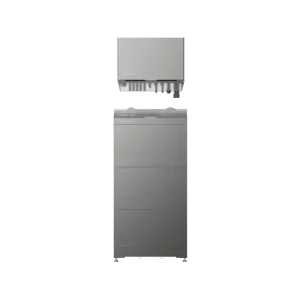
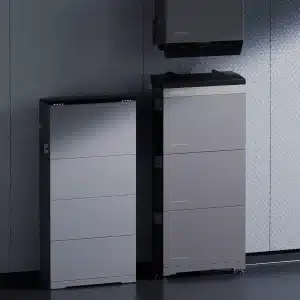
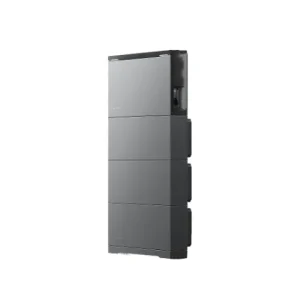
A conventional installation is a collection of boxes: an inverter, a battery rack, DC isolators, a changeover switch, and the trunking that joins them. PowerOcean replaces that with a single column. The batteries stack one on top of the other with the inverter on top (or on the wall above, on the three-phase system), and the stack is under 21 cm deep, so it sits close to the wall in a passage, a scullery or the side of a garage.
On OCEAN 2, each battery connects to the one below through built-in terminals, so there is no cable loom inside the stack. On the OCEAN 2 Plus, the backup changeover and the smart meter are inside the inverter as well, which means fewer separate boxes on the wall and less wiring for your installer.
The design has been recognised in Europe: OCEAN 2 won a Red Dot product design award in 2026, and PowerOcean a German Design Award.
Quiet, and at home indoors or out
The first-generation PowerOcean inverter is rated at 40 dB and each battery at 35 dB or less, cooled naturally with no fans, about the level of a quiet room. The OCEAN 2 5 kWh battery is fanless too; the 8 kWh model uses a fan to hold its output on hot days.
Every PowerOcean and OCEAN 2 unit is rated IP65 or IP66 against dust and water, so the system can go on a covered patio or an outside wall rather than taking up space inside. EcoFlow rates the bottom OCEAN 2 battery to stand in water for up to 72 hours.
Made for apartments, townhouses and open-plan homes
A system that is slim, fanless and finished like an appliance can go where a conventional inverter installation cannot: a passage, a scullery, a store room, a covered balcony or the corner of an open-plan living area. That suits apartments, townhouses and cluster homes, where there is no garage to hide the equipment in and the system will be seen every day.
For a living area, the first-generation PowerOcean 6kW is the one to choose: inverter and batteries are cooled naturally with no fans. Two practical checks first: the stack is heavy (about 136 kg with two batteries), and sectional-title schemes and estates usually need body corporate or HOA approval for electrical work and any panels on a shared roof. Without a roof of your own, PowerOcean still works as a backup system charged from the grid.
Whole-home backup with no blink
With an OCEAN 2 Plus, the whole distribution board sits behind the inverter. When the grid fails, the house carries on at up to 8, 10 or 12 kW, and EcoFlow rates the switchover at 0 ms, provided the load stays within the inverter’s rating. The TV, router and computer simply stay on. The first-generation PowerOcean backs up the essential circuits your electrician connects to it.
Smarter than a battery on the wall
- One app for everything: solar production, battery level, what the house is drawing and where the power is coming from, at home or away.
- Solar first: the system runs the house on solar during the day, fills the battery for the evening and draws on the grid last.
- Grows with you: start with one or two batteries and add more later, up to twelve on an OCEAN 2 Plus.
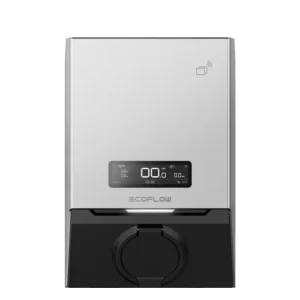
- Part of an ecosystem: the PowerPulse 2 EV charger can charge the car from surplus solar, and the PowerInsight 2 puts the whole system on an 11-inch screen on the kitchen wall.
- Safety built in: LFP cells, battery management in every pack, arc-fault detection on the OCEAN 2 Plus and PowerOcean Plus inverters, and a fire-suppression module in each first-generation battery.
Already own an EcoFlow DELTA or RIVER?
Many EcoFlow owners started with one portable power station and ended up with two or three, each on its own extension cord, unplugged when the power fails and plugged back in when it returns. Wall-plug setups can also trip the earth leakage when grid power comes back, a problem DELTA owners have raised on South African forums.
A PowerOcean system replaces that routine: wired in by an electrician, automatic changeover, no cables across the floor and no units to recharge one by one. Keep the DELTA for camping, the holiday house and the bakkie.
Which PowerOcean system suits your home
- EcoFlow PowerOcean 6kW Single-Phase: the first-generation system, 6 kW with 5 to 20 kWh of batteries, backing up the essential circuits.
- EcoFlow OCEAN 2 Plus Single-Phase: 8, 10 or 12 kW with 16 to 32 kWh to start and room for up to twelve batteries. Whole-home backup built in, for houses that want the geyser, pool pump and air-conditioning on backup too.
- EcoFlow PowerOcean Plus Three-Phase: 25 or 29.9 kW for large homes, farms and small businesses on a three-phase supply, with up to 40 kW of solar.
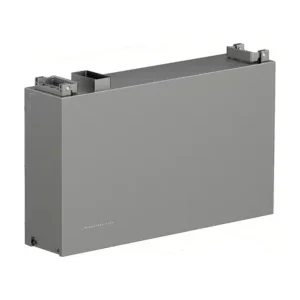
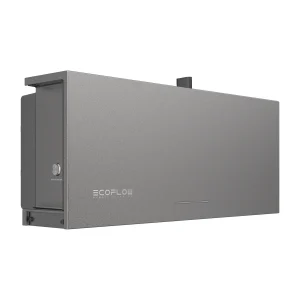
The PowerOcean and OCEAN 2 batteries, inverters and bases are also sold separately for installers and for owners adding storage.
Why South Africans are still installing home backup and solar
Load-shedding has been paused since 2025, and the Western Cape is off load reduction. Power cuts have not gone away: cable theft, substation faults and storms still take suburbs off the grid, and load reduction continues in parts of Johannesburg, the rest of Gauteng and KwaZulu-Natal.
The bigger reason now is the electricity bill. NERSA approved municipal tariff increases of 11.32% in July 2025 and 9.01% in July 2026, and a further increase is proposed for July 2027. A home battery charged by solar during the day runs the house in the evening on power that has already been paid for, which is why we suggest planning for panels even if you start with backup alone.
What testers and installers say
- German magazine home&smart rated PowerOcean “Sehr gut”, 92 out of 100, in its hands-on test (November 2024), praising the build, the app and the quick installation.
- UK installers voted EcoFlow an EUPD Research Top Brand PV 2026 for storage and inverters.
- OCEAN 2 won a Red Dot product design award in 2026, and PowerOcean a German Design Award.
Two points to know before you buy: PowerOcean works only with EcoFlow’s own batteries, and its app and remote monitoring run through EcoFlow’s cloud. Ask us if either matters for your installation.
Buying EcoFlow PowerOcean from EcoHub
EcoHub has sold all-in-one home backup systems for years, including the Huawei Power-M, and has traded as a specialist online store since 2012. We size PowerOcean systems to your loads before you buy, supply the equipment through EcoFlow South Africa, and refer you to installers in our network who handle the installation, the Certificate of Compliance and registration with your municipality. We deliver nationwide, from Johannesburg and Pretoria to Durban and Cape Town. Prices on this page are for the equipment, shown in full; installation is quoted by the installer.
Installers, electrical contractors and solar retailers: we supply EcoFlow PowerOcean to the trade across South Africa. Contact us for trade pricing and stock.
Is PowerOcean a UPS?
It does the job of one for the whole house. When the grid fails, the circuits it backs up switch to the battery automatically. EcoFlow rates the OCEAN 2 Plus at 0 ms switchover on its backup side; it does not publish a figure for the first-generation PowerOcean.
Is it noisy?
No. The first-generation inverter is rated at 40 dB and its batteries at 35 dB or less, with no fans. The OCEAN 2 8 kWh battery has a fan for hot days; for a bedroom wall, the fanless 5 kWh model is the quieter choice.
Can it run my geyser?
The OCEAN 2 Plus and PowerOcean Plus can, as can a two-battery PowerOcean 6kW, but a geyser empties a battery quickly. Most homes heat the geyser from solar during the day and keep the battery for the evening.
Can I add batteries later?
Yes. PowerOcean takes up to four batteries on one single-phase inverter, and the OCEAN 2 Plus up to twelve.
Do I need to register it?
A system wired into the distribution board has to be installed by a registered electrician with a Certificate of Compliance, and in Cape Town, as in many municipalities, it must be registered with the electricity supplier. The PowerOcean single-phase inverter range (EF HD-P1, 3 to 6 kW) is on the City of Cape Town’s list of inverters approved under NRS 097-2-1 (September 2026 edition). Plug-in portable power stations are treated differently. Your installer handles the paperwork.