 WhatsApp 079 885 8806
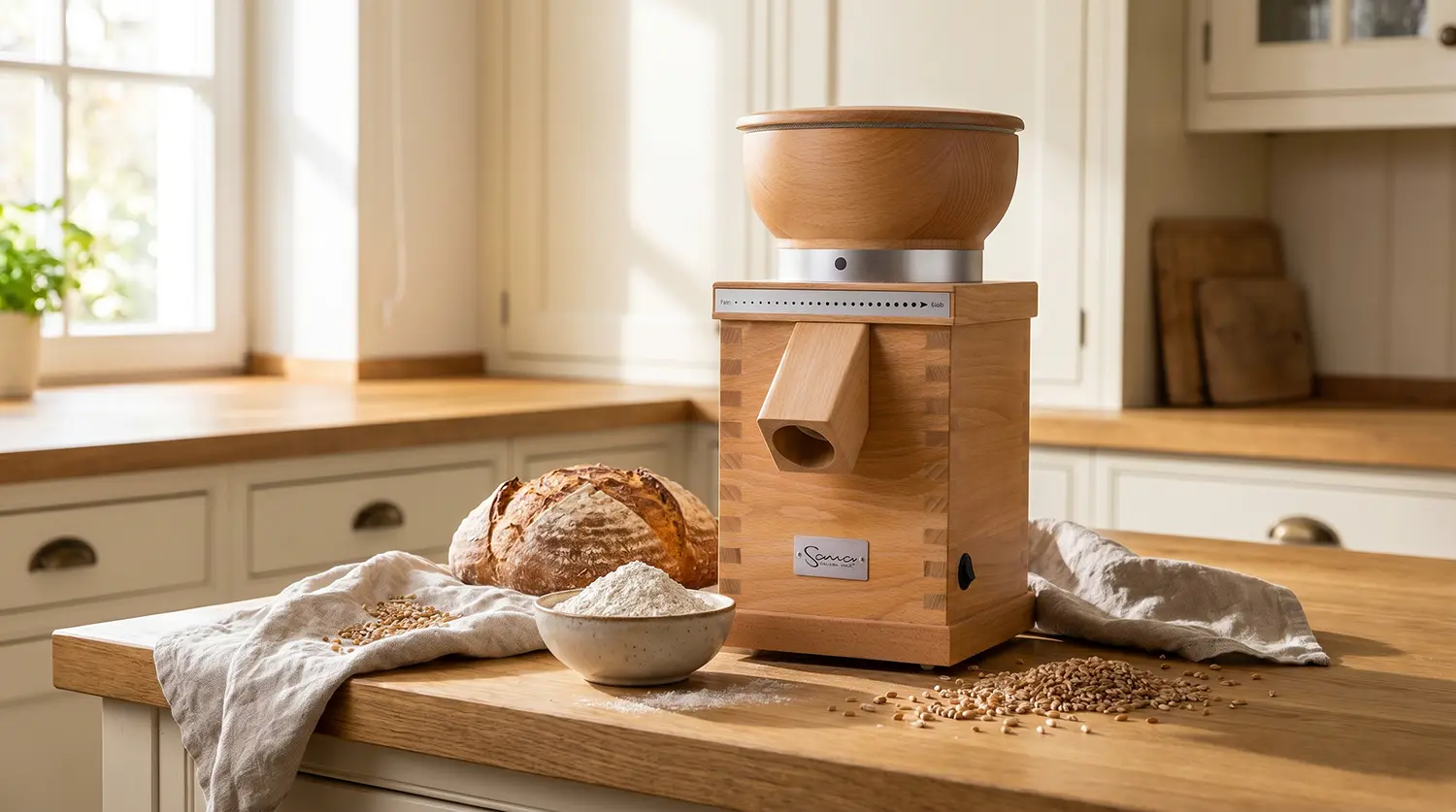
If you’ve been looking for a way to grind fresh flour at home, the appliance you need is an electric stone grain mill. A grain mill turns whole dry grains — such as wheat, rye, spelt, buckwheat and millet — into fresh flour for bread, sourdough, pancakes, pastries and everyday wholefood baking.
Freshly milled flour has become especially popular with home bakers and sourdough enthusiasts, but many people still do not know what the appliance is called or where to start. That is why we are excited to introduce the Sana grain mill range at EcoHub.
These are beautifully made Austrian stone mills for customers who want fresh flour at home, reliable performance, and an appliance that looks good enough to keep on the kitchen counter.
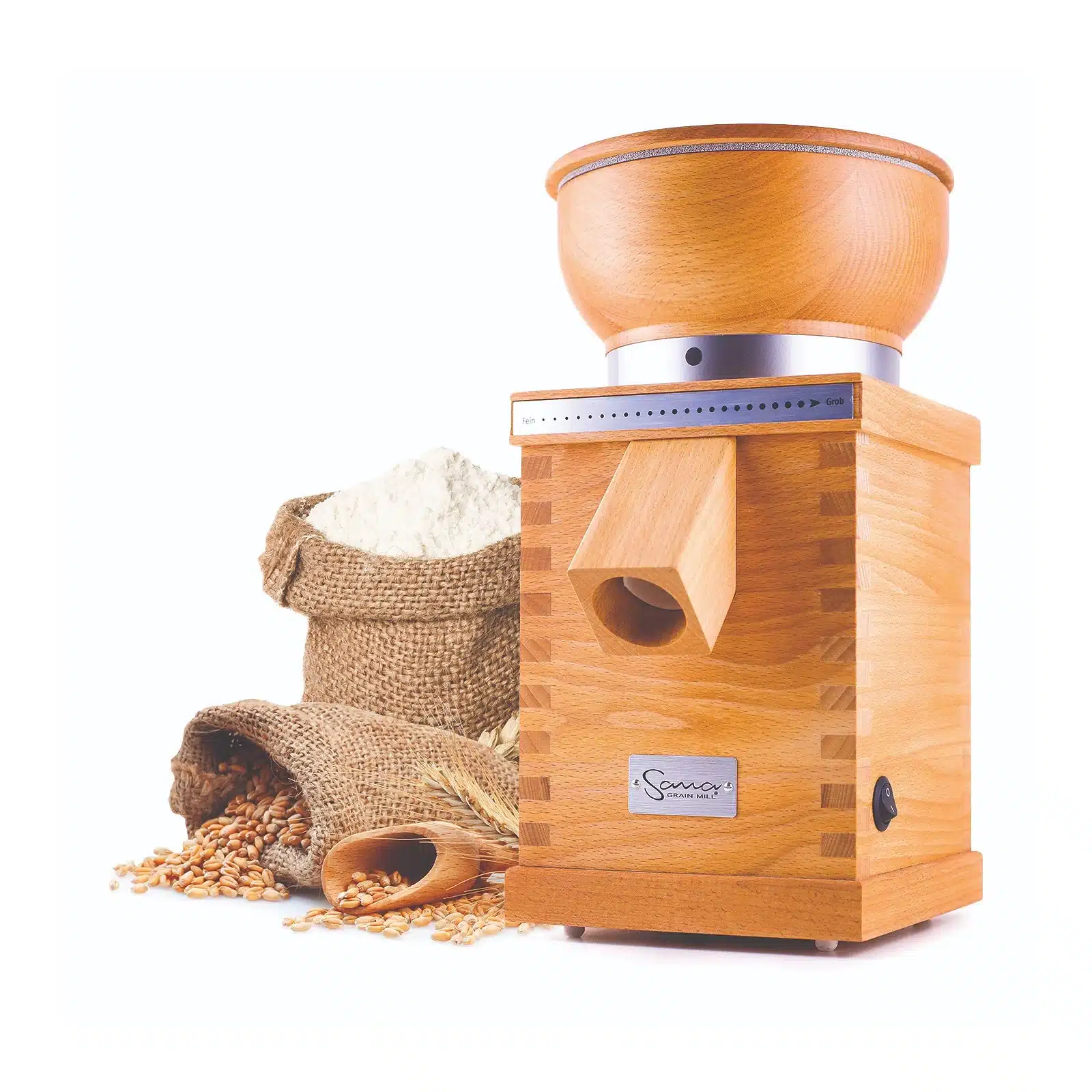
Both mills are stocked locally in South Africa, with EcoHub advice and support behind every purchase. View the launch offers: Sana Grain Mill 360W · Sana Grain Mill MAX 600W
What Is a Grain Mill, and Why Does It Matter?
A grain mill — also called a stone mill, flour mill, or wheat grinder — is a dedicated kitchen appliance for turning whole dry grains into fresh flour. You pour whole grains into the hopper at the top (wheat berries, rye, spelt, buckwheat, millet and more), turn it on, and fresh flour comes out the bottom into a bowl.
That might sound simple, but what it produces is something quite different from what you get in a bag of flour from the supermarket.
When grain is milled and packaged, some of that character does fade over time — particularly the aroma. It’s not that shop-bought flour is bad; it’s that freshly milled flour at home is something different. For bakers who are particular about flavour and who want full control over what goes into their bread, milling your own is a meaningful step.
For sourdough bakers especially, this is significant. Freshly milled flour — particularly rye or spelt — feeds your starter differently and adds a layered, complex flavour to the crumb that’s difficult to achieve any other way.
What Can You Actually Do With a Grain Mill?
This is where a lot of people are surprised. A grain mill is far more versatile than it first seems. Here are some of the most common uses:
Mill fresh wheat, rye or spelt for your starter and dough. The difference in flavour and fermentation activity is noticeable.
Mill your own wholemeal flour for sandwich loaves, tin bread, or rustic free-form loaves. A good option for everyday wholegrain loaves.
Fresh wholegrain flour makes pancakes richer and more satisfying. Works beautifully with spelt or wheat.
Mill a blend of wheat and spelt for pizza dough with more body and flavour than standard flour allows.
Mill rice, buckwheat, quinoa and millet into fresh flour for gluten-free baking with real flavour and freshness.
Coarsely milled grain makes exceptional crackers, rye crispbreads, lavash and flatbreads.
Set the mill to coarse and you get cracked grain for porridge — richer and more textured than rolled oats from a packet.
Finely milled spelt or wheat produces soft wholegrain flour ideal for muffins, banana bread, scones and pastry.
Mill dried chickpeas, lentils and beans into fresh legume flour for gluten-free flatbreads, batters and high-protein baking.
Mill field maize into fresh mealie meal or polenta — the flavour is noticeably fresher than packet mealie meal or polenta.
Freshly milled rye is a favourite for feeding and reviving sourdough starters — it ferments vigorously and adds depth.
Grains that have been sprouted and then fully dried can be milled into fresh sprouted flour for sprouted-grain baking.
You can also use a grain mill to mill dried pulses like lentils and chickpeas into flour — useful for gluten-free flatbreads or batters. The key is always that the ingredients are dry and non-oily. A stone grain mill isn’t a general-purpose grinder; it’s purpose-built for dry grains, and that specificity is part of what makes it so good at the job.
Introducing the Sana Grain Mills
We’ve added two Sana grain mills to EcoHub. You can browse the full grain mill range here — but if you’re new to stone milling, read on first.
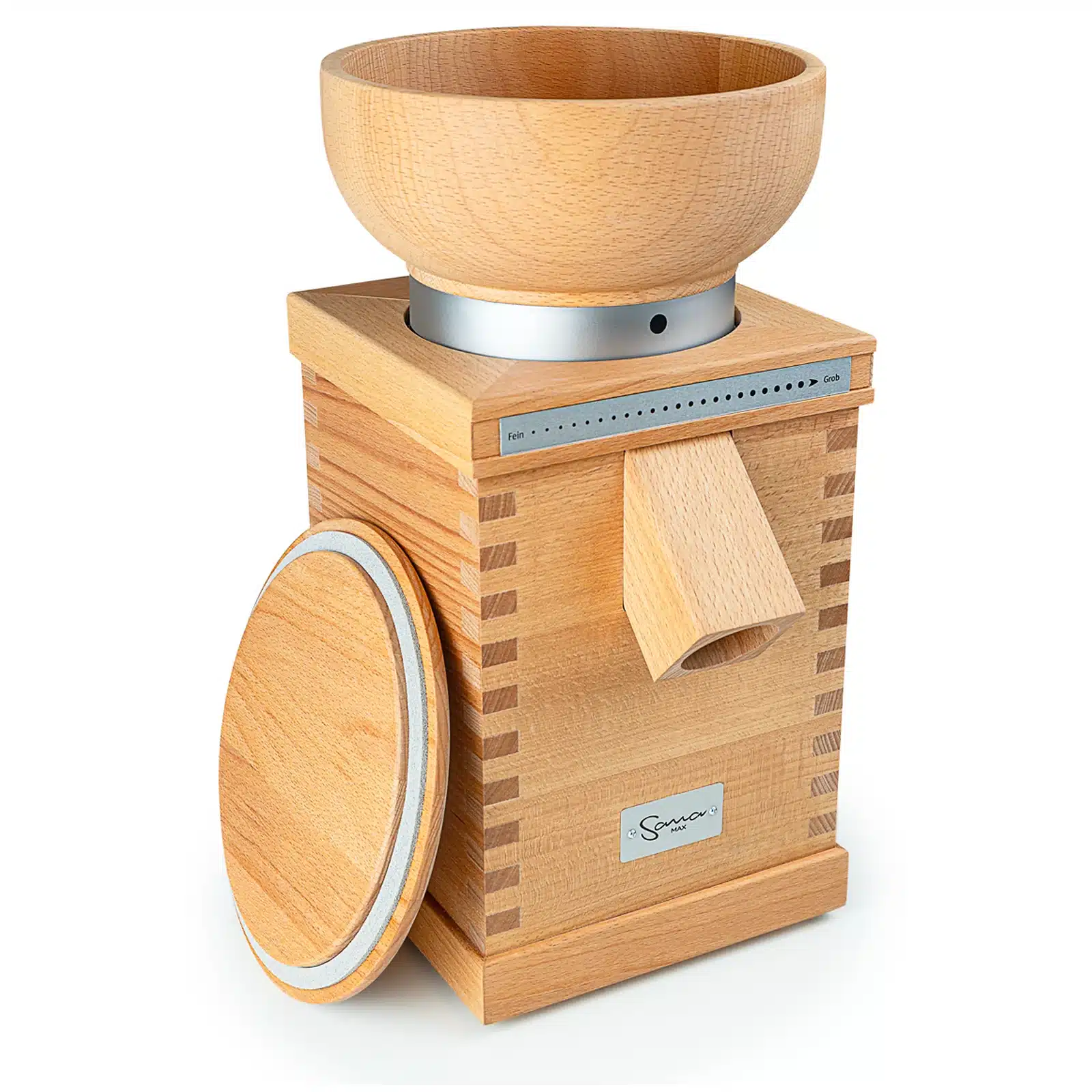
The Sana Grain Mills are made in Austria and reflect the kind of quality we look for in a premium kitchen appliance: solid beechwood housing, durable ceramic-corundum millstones, precise grind adjustment and a long 12-year warranty. Sana works with experienced European manufacturers, and the result is a stone mill that feels refined, practical and built for regular use.
The design is a major part of the appeal. The solid beechwood housing gives the Sana mills the warmth and presence of a heritage kitchen piece, while the clean shape keeps them refined and modern. They are beautiful machines — not because they are decorative, but because the craftsmanship is visible in the materials, finish and simplicity of the design.
Sana Grain Mill 360W
- 360W motor
- ~100g flour per minute
- 85mm ceramic-corundum stones
- Solid beechwood housing
- Coarse to fine grind adjustment
- 12-year warranty
- Made in Austria
incl VAT · Natural premium beechwood or anthracite
View & Shop →Sana Grain Mill MAX 600W
- 600W motor
- ~200g flour per minute
- 85mm ceramic-corundum stones
- 1200g wooden hopper
- Solid beechwood housing
- 12-year warranty
- Made in Austria
incl VAT · Natural premium beechwood
View & Shop →Which Sana Grain Mill Is Right for You?
This is the question we get most often, so here’s a straightforward way to think about it.
| Sana 360W | Sana MAX 600W | |
|---|---|---|
| Motor power | 360W | 600W |
| Milling output | ~100g per minute | ~200g per minute |
| Best for | Everyday home baking, occasional milling, one or two loaves | Regular bakers, sourdough, multiple loaves, home bakery use |
| Millstones | 85mm ceramic-corundum | 85mm ceramic-corundum |
| Housing | Solid beechwood | Solid beechwood |
| Warranty | 12 years | 12 years |
| Current price | R10,999 (launch offer) | R15,999 (launch offer) |
If you’re new to home milling or bake for a household of one to four people, the 360W is an excellent starting point — and the current launch offer makes it a very attractive entry into stone milling at this quality level. You get Austrian manufacture, solid beechwood housing, ceramic-corundum millstones and a 12-year warranty at a strong launch price.
If you bake multiple loaves each week, maintain an active sourdough practice, or want to make milling a fast and fluid part of your kitchen routine, the MAX 600W is worth the step up. Doubling the output matters when you’re preparing flour for several bakes at once — what might take ten minutes on the 360W takes five on the MAX.
Both Sana mills are dedicated stone grain mills — designed specifically for dry, non-oily whole grains. They will not grind coffee beans, nuts, oily seeds (like flaxseed or sesame), frozen or moist ingredients, or anything that isn’t a dry grain or dried pulse.
That focus is the point: grinding dry grain into flour is a different job from chopping or blending, which is why a dedicated mill produces flour no blender or food processor can match.
A Few Things Home Millers Always Notice First
If you’ve never milled your own flour, a few things tend to catch people off guard in the best way.
The smell. This is the part people mention most. Wheat smells almost sweet and nutty, rye is earthier, and spelt is mild and slightly sweet — each grain has its own character that comes through clearly when freshly milled.
The colour. Freshly milled wholegrain flour is noticeably creamier and more complex in colour than refined white flour. That’s simply the bran and germ present in the whole grain — the parts that are sifted out when producing white flour. Whether that matters to you depends on what you’re baking and what you prefer.
The fermentation. For sourdough bakers, freshly milled flour behaves differently in a starter. The wild yeasts and bacteria in a sourdough culture respond vigorously to fresh grain — a well-fed starter made with freshly milled rye can be noticeably more active than one fed with aged shop flour.
The grind control. Both Sana mills offer adjustable grind from coarse cracked grain through to fine flour. Finding your preferred setting for different recipes — finer for delicate pastry, coarser for rustic breads — is one of the small pleasures of owning a stone mill.
On Quality, Longevity and the 12-Year Warranty
These are not cheap appliances — they’re a considered purchase. But they’re built to last, and the 12-year warranty reflects that. It’s backed by local support at EcoHub for the life of the product.
The millstones in both models are ceramic-corundum, chosen for their durability and ability to produce consistent flour without overheating the grain during grinding. The beechwood housing is solid, not veneer. These are machines built for long-term use, not occasional novelty.
For South African customers, the mills arrive plug-ready for standard 220–240V household power, with South African plug fitments. Nationwide delivery in one to three days, same-day dispatch on cleared payments before 14:00.
The Launch Offer
For the launch of the Sana grain mill range at EcoHub, both models are available with introductory launch pricing. The Sana Grain Mill 360W is available at R10,999, down from R14,800, while the Sana Grain Mill MAX 600W is available at R15,999, down from R18,999. Both models are made in Austria and include ceramic-corundum millstones, solid beechwood housing and a 12-year warranty.
Launch pricing is available while launch stock lasts. If you’ve been considering fresh flour at home, the launch offer makes this a good time to choose a Sana stone mill.
Get the Sana grain mills at their launch offer
Both mills are available now from EcoHub — South Africa’s official Sana importer — and from SanaStore.co.za, the official home of Sana Products in South Africa. The Sana Grain Mill 360W is R10,999 (was R14,800) and the MAX 600W is R15,999 (was R18,999), with limited launch stock at both. Prefer to spread the cost? SanaStore offers PayJustNow — 3 zero-interest instalments, from R3,666/month on the 360W and R5,333/month on the MAX 600W.
Common Questions About Home Grain Mills
The appliance you need is a grain mill — also called a stone mill, flour mill, or wheat grinder. It’s a dedicated kitchen appliance designed specifically for turning dry whole grains into fresh flour. A standard food processor, blender, or spice grinder won’t produce the same result. Electric stone grain mills like the Sana 360W and Sana MAX 600W use ceramic millstones to grind grain into fine flour, adjustable from coarse meal to fine baking flour.
A high-powered blender can grind some dry grains into a rough flour, but the result is inconsistent — the texture is uneven, the grind heats up quickly, and fine baking flour is very difficult to achieve. A dedicated stone grain mill is purpose-built for this: the millstones grind evenly, cool running prevents the grain from overheating, and the grind can be adjusted precisely from coarse to fine. For occasional rough milling it’s fine to experiment with a blender, but for consistent, fine flour for bread and sourdough, a grain mill is the right tool.
Both Sana mills are suited to a wide range of dry whole grains: wheat (including wheat berries and heritage varieties), spelt, rye, barley, oat groats, rice, buckwheat, millet, quinoa and field maize/corn. You can also mill dried pulses such as lentils and chickpeas into flour. The grains must be fully dry and non-oily.
Do not mill nuts, oily seeds (flaxseed, sesame, sunflower, chia), coffee beans, wet or moist grains, frozen ingredients, popcorn, sweet corn, or anything sticky or moist. Stone grain mills are designed exclusively for dry, non-oily grains. Using unsuitable ingredients can damage the millstones and void the warranty.
Many sourdough bakers consider it one of the most impactful upgrades they’ve made. Freshly milled rye and wheat flour can improve starter activity, add depth of flavour to the crumb, and give you far more control over the character of your bread. That said, plenty of excellent sourdough is made with good shop-bought flour — a grain mill is a step for bakers who want to go further, not a requirement.
A typical loaf uses around 400–500g of flour. On the Sana 360W (approx. 100g/min), that takes around 4–5 minutes. On the Sana MAX 600W (approx. 200g/min), around 2–3 minutes. For regular baking, neither is a significant time investment — and many bakers mill a larger batch at once and store fresh flour in the fridge for up to a week.
Yes. Both Sana mills adjust from coarse meal to fine flour, and the finest setting produces flour suitable for cakes and pastries. Bear in mind that home-milled flour is always wholegrain unless you sift it — the bran and germ are still present. For a lighter, “whiter” flour closer to commercial cake flour, mill on a fine setting and then sift (bolt) out the larger bran particles. Many bakers keep the bran aside for muffins, toppings or porridge rather than discarding it.
It’s best to weigh by grams rather than measuring by cups. Freshly milled wholegrain flour has a different density to refined shop flour, so a cup of each weighs differently — measuring by volume is a common reason a first loaf turns out dense. Weigh your grain before milling: it produces very close to the same weight in flour. Fresh wholegrain flour also tends to absorb more water, so you may need to add a little extra liquid to your dough.
Fresh flour is best used soon after milling for maximum aroma. For short-term storage, keep it in an airtight container in a cool place for up to a week, or in the fridge for a little longer. For longer storage, freeze it. Many home millers simply mill what they need for each bake — one of the advantages of having a mill on hand. Whole grains themselves store extremely well, so it’s the grain you stock up on, not the flour.
Stone mills make a steady grinding sound while running — comparable to a coffee grinder or food processor, though lower-pitched. The Sana mills are well-built and run smoothly, but like any milling appliance they are not silent. Most milling for a loaf takes only a few minutes, so noise is brief.
If you bake occasionally or are new to home milling, the 360W is an excellent starting point — especially at the current launch price. If you bake bread or sourdough regularly, prepare flour for multiple loaves, or want faster milling, the MAX 600W is worth the step up. Both mills share the same millstone technology and 12-year warranty. The 360W is available in natural premium beechwood or anthracite; the MAX 600W is available in natural premium beechwood.
Not sure which model suits your baking? Call us on 079 885 8806 and we’ll help you choose.