 WhatsApp 079 885 8806

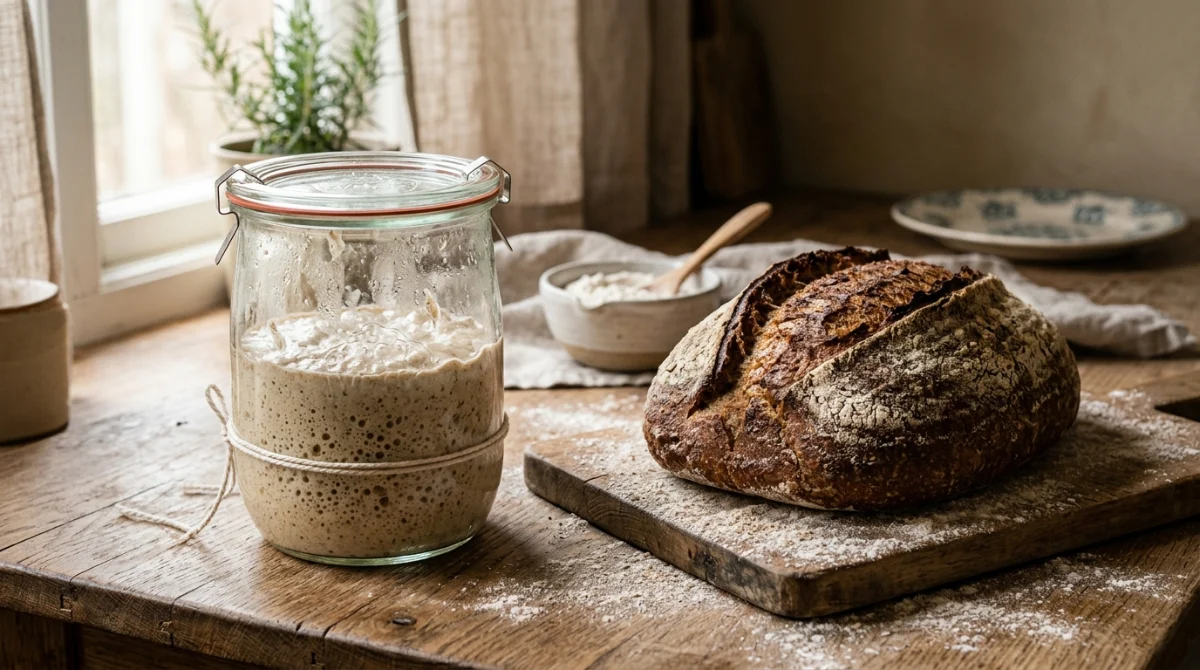
Sourdough fermentation can cut the phytic acid in whole grain bread substantially. In the best-known study, a sourdough reduced it by 62% against 38% for a yeasted dough over the same fermentation. That matters because phytic acid is the main reason whole grain sometimes gets a bad nutritional reputation, and once you understand the mechanism, you realise that how bread is made matters as much as which flour it’s made from.
This is the companion piece to Is fresh-milled flour actually healthier? If you haven’t read that one yet, it covers the broader picture: fibre, vitamins, and the glycaemic response of whole grain versus white. This post is about one thing only: the phytic acid story, what’s true, what’s overstated, and what you can actually do about it.
On this page
- What is phytic acid, and should you be worried about it?
- Which minerals does phytic acid actually bind?
- How does sourdough actually reduce phytic acid? The phytase mechanism
- Does fresh-milled flour make a difference?
- How much does fermentation time actually matter?
- Temperature: why a warm bulk ferment is part of the equation
- Why does rye help?
- Is whole grain sourdough actually more nutritious than white bread?
- Practical takeaways
- Frequently asked questions
What is phytic acid, and should you be worried about it?
Phytic acid, also written as inositol hexaphosphate or IP6, is the form in which cereal grains store phosphorus for the seedling. It’s concentrated in the bran and aleurone layer, the outer shell of the grain that commercial milling strips away. When you eat whole grain, you eat phytic acid along with the fibre and nutrients. That’s unavoidable.
The concern isn’t toxicity. Phytic acid doesn’t damage your body. The concern is that it binds to certain minerals in your digestive tract and reduces how much of them you absorb. You eat a mineral-rich whole grain loaf; the phytic acid grabs some of those minerals before your gut can take them up; you absorb less than the nutrition label suggests. This is called reduced bioavailability.
How big a problem is this in practice? That depends enormously on how the bread was made. A long-fermented sourdough and a commercial supermarket whole wheat loaf are not in the same category.
Which minerals does phytic acid actually bind?
Phytic acid has a strong negative electrical charge that lets it grab positively charged mineral ions. The binding strength varies by mineral:
| Mineral | Affinity for phytic acid | Notes |
|---|---|---|
| Zinc | Very high | Most affected; zinc deficiency is already common globally |
| Iron (non-haem) | High | Non-haem iron from plants is more affected than haem iron from meat |
| Manganese | High | — |
| Magnesium | Moderate | SA diets are often low in magnesium already |
| Calcium | Lower | Less affected than the others, especially when calcium intake is adequate |
The same minerals are abundant in whole grain bran. The irony is that the part of the grain with the most minerals also contains the compound that limits how available those minerals are. The bran is both the source and the obstacle, and fermentation is what tips the balance in your favour.
How does sourdough actually reduce phytic acid? The phytase mechanism
Phytase is an enzyme that dismantles phytic acid. It strips the phosphate groups off one by one: IP6 becomes IP5, then IP4, then IP3, then IP2. The earlier forms (IP5 and IP6) bind minerals; the later ones (IP2 and IP1) don’t. The goal is to get the phytic acid past the point where it can do any binding.
Three things happen in a sourdough ferment that drive this process:
1. The grain’s own phytase gets activated. Whole grain flour contains phytase naturally, because the seedling needs it to break down its stored phosphorus when it germinates. All the enzyme needs is time, moisture and slightly acidic conditions.
2. Lactic acid bacteria lower the pH. Your sourdough starter introduces billions of lactic acid bacteria. As they ferment, they produce lactic and acetic acids, dropping the dough pH toward 4.5–5.5. Phytase activity is highest in exactly that acidic range. The bacteria essentially create the ideal working conditions for the enzyme.
3. Some lactic acid bacteria produce phytase themselves. The bacteria in a mature starter don’t just provide acid; certain strains break phytic acid down directly.
All three effects build over time. A short ferment gives the process a start; a longer one gives the enzyme more time to work.
Does fresh-milled flour make a difference?
Phytase sits in the outer layers of the grain, alongside the phytic acid, so any whole-grain flour brings its own enzyme to the ferment. That’s true of whole-grain flour whether you milled it this morning or bought it.
Whether freshly milled flour carries meaningfully more active phytase than flour that has been stored is a fair question. We couldn’t find good data on how quickly phytase declines in stored flour, so we’d rather not put a number on it.
What fresh-milled flour reliably gives you is livelier fermentation: it ferments noticeably faster than bought flour. But it’s the fermentation that does the work on phytic acid, so the honest summary is that the method matters more than the mill.
If you’re weighing up a mill anyway, our breakdown of how stone, impact and steel burr mills differ covers heat, fineness and noise.
How much does fermentation time actually matter?
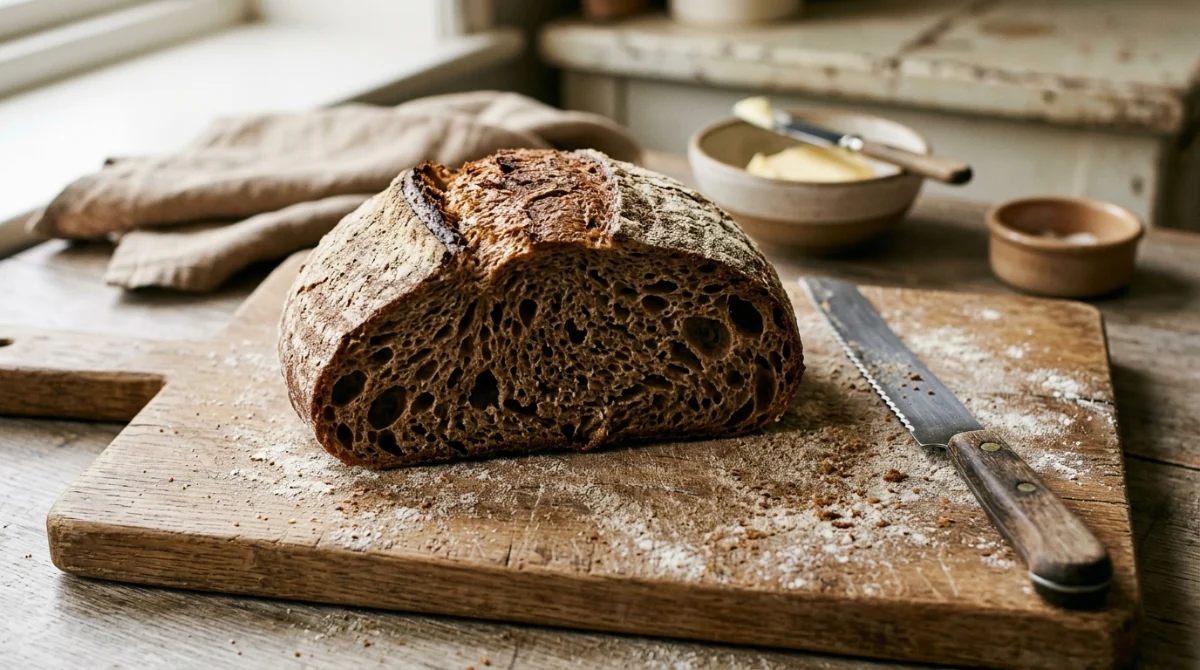
The best-known measurement comes from a French study of whole wheat bread (Lopez and colleagues, 2001), which fermented the same dough with sourdough and with baker’s yeast:
| Whole wheat dough | Phytate reduction |
|---|---|
| Fermented with baker’s yeast | 38% |
| Fermented with sourdough | 62% |
Two things follow. Acidity and time both matter, which is why a properly sour, unhurried ferment does more than a quick yeasted one. And traditional South African fermented grain foods such as mageu and amahewu work on the same principle: fermentation reduces phytate in maize and sorghum too. The nutritional logic was built into the practice long before anyone named the compound.
Temperature: why a warm bulk ferment is part of the equation
Phytase is most active at around 45–55 °C, well above typical dough temperatures of 22 to 28 °C. It still works in that cooler range, just more slowly. Temperature mainly affects the rate.
A cold retard in the fridge (4–6 °C) slows phytase down considerably but doesn’t stop it, so an overnight retard still contributes, just more slowly than fermentation at room temperature.
The practical implication: don’t skip the bulk ferment in favour of a straight refrigerator proof. A warm bulk ferment of 4–5 hours followed by an overnight cold retard gives you both: phytase gets time to work at room temperature, and the retard builds flavour and structure while the reduction carries on more slowly.
Why does rye help?
Rye has considerably more native phytase than wheat; in comparisons of cereal grains it typically comes out highest. That’s one reason rye sourdoughs are good at breaking phytic acid down.
You don’t need to bake a rye loaf to benefit from this. Two approaches work:
Keep a rye starter (or build your wheat starter on rye flour). A starter fed on rye introduces phytase-rich material into every loaf you bake. Even a wheat loaf with a rye starter gets a phytase boost.
Add 10–20% rye flour to your wheat loaf. It adds phytase to the dough without changing the flavour or texture much.
Is whole grain sourdough actually more nutritious than white bread?
Mostly yes, but in South Africa the comparison is less clean than it looks.
Start with the minerals. Whole grain contains far more zinc, iron and magnesium than white flour, and long fermentation releases a good share of what the phytic acid would otherwise hold back. On minerals alone, that usually leaves a well-fermented whole grain loaf ahead.
The South African catch is fortification. Since 2003, commercial bread flour has been fortified by law with iron, zinc and several B vitamins, which narrows the gap on exactly the minerals phytic acid affects.
Where whole grain pulls clearly ahead is everything else: the fibre, the vitamin E and the other compounds in the bran and germ, which fortification doesn’t add back and fermentation doesn’t take away. For the full picture, including what fortification means if you mill all your own flour, see is fresh-milled flour actually healthier?
Practical takeaways
You don’t need to overthink this. A few habits cover most of the ground:
Use fresh flour. Fresh-milled flour ferments more actively, and whole-grain flour tastes best within a week or two of milling anyway. There is more on storage in should you rest fresh-milled flour before baking?
Give the bulk ferment enough time. A quick rush to the fridge does less. Aim for 4–5 hours of proper bulk fermentation at 24–26 °C before your cold retard.
Don’t cut the cold retard short. The overnight period continues the reduction at a slower pace while also building flavour.
Add some rye. Even 10% rye in a wheat loaf adds phytase, and so does a starter fed on rye.
Don’t soak grain before milling. This pops up occasionally as advice for reducing phytic acid. Pre-soaking whole grain can activate some phytase, but the sourdough fermentation will do more, and you’ll end up with damp grain that’s harder to mill cleanly. Skip it.
The combination that gets you furthest is simple: an active sourdough starter, a warm bulk ferment and enough time, ideally with fresh flour.
For the tools to do this (ceramic-corundum stone grain mills with a 12-year warranty, from R10,999) see the Sana grain mill collection. The full grain mill guide covers which model fits your baking volume.
Frequently asked questions
Is phytic acid actually harmful to eat?
No. Phytic acid is a natural plant compound found in grains, legumes, nuts and seeds, and it isn’t toxic. The concern is reduced mineral absorption, not safety, and it matters most where diets are low in minerals to begin with. Traditional processing such as fermentation, soaking and sprouting exists partly to deal with it.
If I have low iron or zinc, should I stop eating whole grain bread?
Not necessarily, but talk to your doctor or a dietitian. Whole grain contains far more of those minerals than white flour, and long sourdough fermentation releases a good share of them. In South Africa, though, commercial bread flour is fortified with iron and zinc, so if you’re managing a deficiency, medical advice and fortified staples matter more than which bread you choose.
Does soaking flour overnight before mixing reduce phytic acid?
Somewhat. Soaking activates phytase in the flour and starts the reduction. It works better in slightly acidic conditions, so a tablespoon of starter or a splash of whey in the soaking water helps. But sourdough fermentation with an active starter is more effective than a plain water soak, and includes the soaking benefit anyway.
Is a 4-hour sourdough ferment enough?
It makes a real difference: in the best-known study, sourdough had cut phytate by 62% over a fermentation of about five hours. Longer ferments give the enzyme more time, so if nutrition is the point, a warm bulk of 4–5 hours followed by an overnight cold retard is a sensible target.
Does baking destroy phytase and reverse the reduction?
No. Once phytase has broken down the phytic acid during fermentation, that work is permanent. The phytase enzyme itself is denatured by the heat of baking, but it’s already done its job. The reduced phytate level is locked in when the loaf goes into the oven.
Is rye bread lower in phytic acid than wheat bread?
Rye has more native phytase than wheat, which helps rye sourdoughs break phytic acid down well. But rye also starts with plenty of phytic acid, so the fermentation matters more than the grain. A long-fermented wheat sourdough with 10–20% rye does well.
Does a cold retard help or hurt phytic acid reduction?
It helps, just more slowly. Phytase is still active at refrigerator temperatures; it slows down but doesn’t stop. An overnight cold retard contributes to phytate reduction while also developing flavour and improving the crust. It’s not an either/or with the bulk ferment. You want both.
Should I bother with any of this if I only bake once a week?
Yes. The same practices that reduce phytic acid (long fermentation, an active starter, fresh flour) are also what make a good sourdough loaf. You’re not adding extra steps, just letting the process run long enough to do what it’s designed to do.
Sources
- Lopez HW, Krespine V, Guy C, Messager A, et al. (2001). Prolonged fermentation of whole wheat sourdough reduces phytate level and increases soluble magnesium. Journal of Agricultural and Food Chemistry 49:2657–2662. doi:10.1021/jf001255z