 WhatsApp 079 885 8806
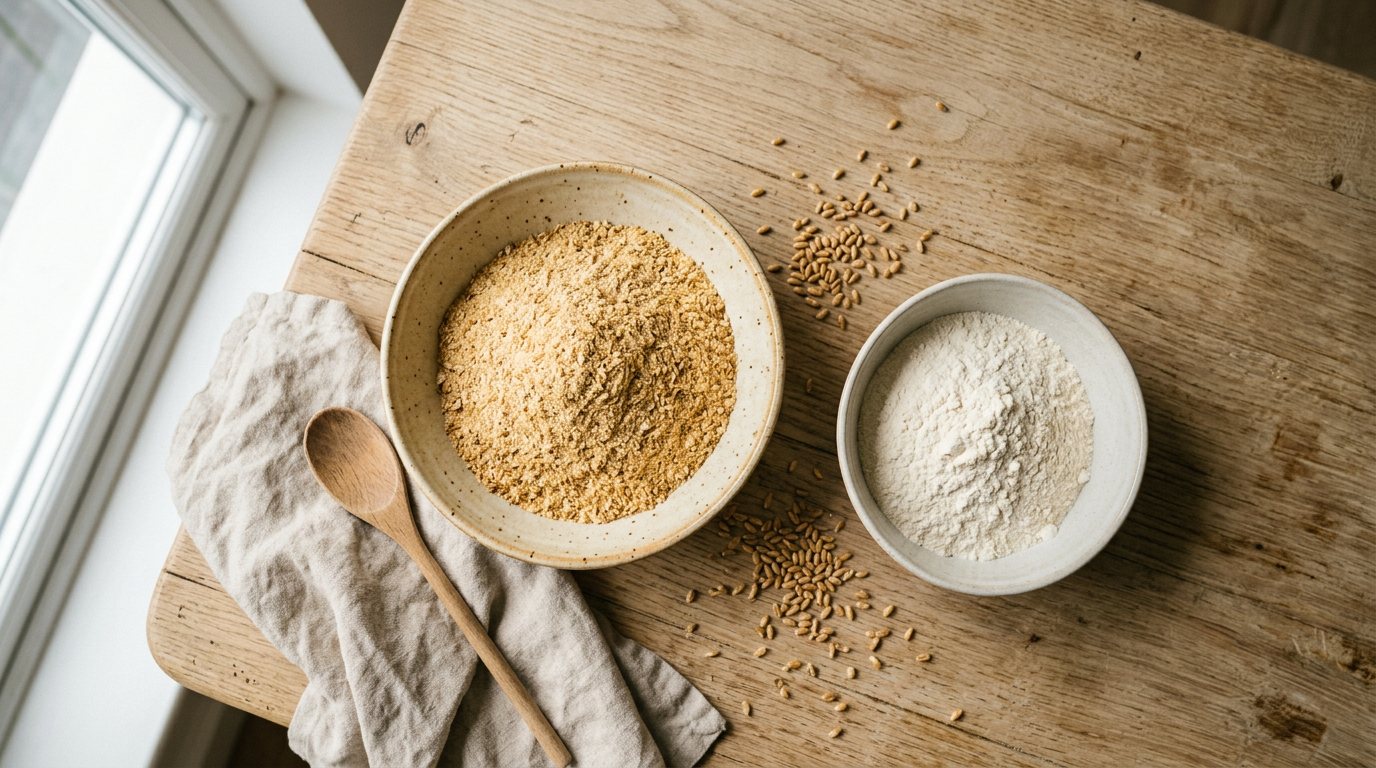
Short answer: yes, but for a more specific reason than most people think. The health win comes almost entirely from milling the whole grain (bran, germ and endosperm together), not from the flour being minutes old. Whole-grain flour carries the fibre, the B vitamins, the vitamin E and the minerals that white flour has had stripped out, and the evidence for whole grains is strong. Freshness matters too, but mostly because the germ’s oils go rancid over weeks, not because vitamins vanish within hours. If you mill at home, use the whole grain and use it reasonably fresh, and you’ll be eating better bread than almost anything on a South African shelf.
Most of the “fresh flour loses 80% of its nutrients in 24 hours” claims you’ll read online are marketing folklore. The real story is more interesting, and it holds up.
On this page
- What’s actually the difference — fresh-milled or just whole grain?
- What does whole grain actually do for you?
- Fresh-milled flour vs white flour: what’s in it?
- But doesn’t flour “lose its nutrients” within hours of milling?
- Does whole-grain flour really lower blood sugar?
- What about phytic acid — doesn’t whole grain block mineral absorption?
- Does home-milled flour miss out on fortification?
- So is it worth milling your own?
- Frequently asked questions
What’s actually the difference — fresh-milled or just whole grain?
This is the question that clears up most of the confusion. There are two separate things going on, and people conflate them constantly:
- Whole grain vs refined. A commercial white flour mill removes the bran and germ and keeps only the starchy endosperm. That’s what “white” flour is. When you mill at home you keep all three parts. This is the big nutritional difference, and it’s the same whether the flour is fresh or a week old.
- Fresh vs stored. Once you crack a grain open, the germ’s natural oils start to oxidise. This affects flavour and, slowly, some nutrients, but it’s a much smaller effect than the whole-vs-refined one.
So when someone says fresh-milled flour is “healthier”, what they’re mostly describing is the benefit of eating whole grain. Home milling gives you 100%-extraction flour that is also fresh, and in South Africa both halves of that matter. Under the wheat-product regulations, brown bread flour is flour with 10 to 15% bran and no added germ, so it isn’t whole grain at all. Shop whole-wheat flour does have to contain the whole kernel, but it may have spent months in a warehouse and on a shelf before it reaches you.
What does whole grain actually do for you?
This is where the evidence is solid rather than hopeful. A 2020 systematic review and meta-analysis of dietary fibre and whole grains in diabetes management, published in PLOS Medicine, pulled together 42 controlled trials and two long-running cohort studies:
| Outcome | Effect of higher fibre / whole-grain intake |
|---|---|
| All-cause mortality (people with diabetes) | ~35% lower risk comparing ~35 g/day fibre to ~19 g/day |
| HbA1c (long-term blood sugar) | −2.0 mmol/mol |
| Fasting blood glucose | −0.56 mmol/L |
| LDL (“bad”) cholesterol | −0.17 mmol/L |
| Total cholesterol | −0.34 mmol/L |
| Body weight | −0.56 kg |
The review’s practical takeaway was that pushing daily fibre toward 35 g is a reasonable target. For context, a slice of true wholemeal bread carries roughly 2–3 g of fibre; a slice of white bread about 0.7 g. Whole grains are not the only way to hit 35 g, but they make it a great deal easier.
Beyond diabetes, decades of cohort evidence link regular whole-grain intake to lower rates of heart disease, type 2 diabetes, colorectal cancer and premature death. It’s one of the least controversial findings in nutrition. The catch is that most South Africans eat very little actual whole grain, and that’s the gap home milling fills.
Fresh-milled flour vs white flour: what’s in it?
Here’s the compositional picture. Figures are approximate and vary by grain, but the direction is consistent:
| Per 100 g flour | White (refined) wheat | Whole-grain wheat |
|---|---|---|
| Fibre | ~2.5–3 g | ~10–12 g |
| Bran (fibre, minerals) | Removed | Retained |
| Germ (vitamin E, healthy fats, folate) | Removed | Retained |
| Vitamin E | Trace | Present (in the germ) |
| Magnesium, zinc, iron | Much reduced | Substantially higher |
| B vitamins (thiamin, niacin, B6, folate) | Reduced | Higher naturally |
The germ is the part that matters most, and the part commercial milling removes first, precisely because its oils shorten shelf life. When you mill at home you keep the germ, which means you keep the vitamin E, the folate and the unsaturated fats. You also keep the reason fresh flour needs to be used or frozen rather than left in the pantry for months.
But doesn’t flour “lose its nutrients” within hours of milling?
Mostly, no. It’s worth being straight about this, because it’s the most over-claimed thing in the home-milling world.
What actually happens after milling:
- Germ oils begin to oxidise. This is real and measurable. Over days to weeks the flour can develop a faint bitter or “off” note as the fats go rancid. This is the single best reason to mill fresh and store the rest cold.
- Some antioxidants and fat-soluble vitamins slowly decline over weeks and months, not hours. The steep “24-hour” loss figures you’ll see quoted don’t hold up in the food-science literature.
- Enzyme activity is higher in fresh flour, which is why fresh-milled dough ferments faster. That’s a baking issue more than a health one.
The practical rule that follows: mill what you’ll use within a week or two, and freeze the rest. Freezing all but stops the oxidation. You don’t need to bake within an hour of milling to get the benefit. That idea is a myth, and it puts people off a worthwhile habit.
Does whole-grain flour really lower blood sugar?
There’s a caveat here that’s easy to leave out. Whole grain is consistently linked to better long-term glycaemic control (the HbA1c and fasting-glucose numbers above). But a 2022 randomised crossover trial in the American Journal of Clinical Nutrition found that whole-grain and refined wheat, milled into matched products, produced no meaningful difference in the immediate blood-sugar rise.
The lesson isn’t that whole grain doesn’t help. It’s that the form of the grain matters more than the freshness of the flour. Cracked grains and intact kernels slow digestion and blunt the glucose response. Finely milled flour, whole or refined, behaves much the same, and a coarser grind doesn’t change that much: a 2021 trial in people at risk of type 2 diabetes found no significant difference between fine and coarse stone-ground wholegrain bread. So if blood sugar is your priority:
- Don’t count on a coarser grind of flour on its own to make much difference.
- Include some cracked or whole kernels in breads and porridges.
- Lean on the fibre, satiety and long-term benefits, which are real, rather than expecting a fine wholemeal loaf to behave like a plate of lentils.
A mill helps here in a different way: it lets you crack grain for porridge and seeded loaves, which a bag of shop flour can’t do.
What about phytic acid — doesn’t whole grain block mineral absorption?
Partly true, and worth understanding rather than fearing. Whole grains contain phytic acid (phytate), stored mostly in the bran, which binds minerals like iron, zinc and magnesium and can reduce how much your body absorbs. This is the standard objection to whole grain, and it’s real.
It’s also largely solvable with technique:
- Long sourdough fermentation. The wild-yeast and bacterial acids activate the grain’s own phytase enzyme, which breaks phytate down substantially over a slow rise.
- Soaking or sprouting the grain before milling.
- Simply eating whole grain regularly, which appears to up-regulate your gut’s own adaptation over time.
Fresh flour may help a little, since the grain’s own phytase does part of the work, but how quickly that enzyme declines in stored flour isn’t well documented. The fermentation is what matters. The short version: don’t let phytate talk you out of whole grain. Let it talk you into sourdough.
Does home-milled flour miss out on fortification?
To keep this honest: since 2003, South African law has required commercial wheat bread flour and maize meal to be fortified with vitamin A, thiamin (B1), riboflavin (B2), niacin, vitamin B6, folic acid, iron and zinc. That fortification was a public-health success — it measurably improved micronutrient intake across the country.
Home-milled flour is not fortified. You’re relying on the grain’s natural nutrients instead of added ones. For most home millers eating a varied diet, that’s a good trade: you gain fibre, germ, vitamin E and flavour, and the natural B-vitamin and mineral content of whole grain is higher than refined flour to begin with. But if a member of your household depends on fortified staples for folic acid or iron (during pregnancy, for instance), a 100% home-milled diet removes that particular safety net. Variety and, where relevant, a chat with your GP or dietitian cover it.
So is it worth milling your own?
On health grounds, the case is straightforward:
- You get whole-grain flour that is also fresh: fibre, germ, vitamin E and minerals, without months on a shelf in between.
- The whole-grain evidence for heart health, blood sugar and longevity is strong and well replicated.
- You control the grind, the grain and the freshness in a way no packaged flour allows.
- The rancid-germ problem that forces commercial mills to strip flour simply doesn’t arise if you mill fresh and freeze the rest.
It won’t turn a diet of cake into health food, and it isn’t a substitute for medical advice if you’re managing a condition. But as a single change to how a household eats bread, porridge and baking, few things offer more for the effort.
If you’re weighing up a mill, the two we import and support locally are the Sana Grain Mill 360W (from R10,999) for everyday household baking, and the Sana Grain Mill MAX 600W (R15,999) if you bake in bigger batches or want faster, cooler milling. Both use ceramic-corundum grinding stones in a solid beechwood housing, are made in Austria, and carry a 12-year warranty. We’re the official Sana importer, so warranty, spares and support are all handled here in South Africa rather than shipped in from overseas. There’s a fuller breakdown in our guide to the Sana stone grain mills.
Frequently asked questions
Is fresh-milled flour healthier than shop-bought whole-wheat flour?
Usually, yes, though the reason depends on what you compare it with. Against brown bread flour it clearly is: South African regulations define brown flour as flour with 10 to 15% bran and no added germ. Against shop whole-wheat flour, which must legally contain the whole kernel, the difference is freshness. Fresh-milled flour hasn’t lost germ oils and antioxidants to months of storage.
Does fresh-milled flour really lose its nutrients within 24 hours?
No. That figure is folklore. The measurable change in the first days is oxidation of the germ’s oils, which affects flavour more than nutrition. Vitamins and antioxidants decline slowly over weeks and months. Mill what you’ll use within a week or two and freeze the rest.
Is whole-grain flour good for blood sugar?
Whole grain is linked to better long-term blood-sugar control and lower diabetes risk. But in short-term trials, finely milled whole and refined wheat give a similar immediate glucose rise, and a coarser grind of flour makes little measurable difference. If blood sugar is your focus, include cracked or whole kernels in your breads and porridges.
What is phytic acid and should I worry about it?
Phytic acid is a compound in the bran that can reduce absorption of iron, zinc and magnesium. Long sourdough fermentation, soaking or sprouting break most of it down. It’s a reason to ferment your bread properly, not a reason to avoid whole grain.
Is home-milled flour fortified like South African commercial flour?
No. Since 2003, commercial wheat flour and maize meal must be fortified with vitamins and minerals; home-milled flour is not. Whole grain is naturally richer in most of those nutrients than refined flour, but if someone in your home relies on fortified staples (for folic acid or iron, for example), keep variety in the diet and check with your doctor.
How should I store fresh-milled flour to keep it healthy?
Use it within a week or two at room temperature, or freeze it in a sealed container for longer. Freezing all but stops the germ oils oxidising, so you keep the nutrition and the flavour.
This article is general information, not medical or dietary advice. If you’re managing diabetes, pregnancy or another condition, speak to your doctor or a registered dietitian before making big changes.