Grain Mills
Grind Fresh Flour at Home
Looking for a way to grind fresh flour at home? A grain mill lets you mill whole grains just before baking, giving you fresh flour with the bran, germ, fibre, minerals, natural oils, flavour and aroma of the grain intact.
Our range of electric stone grain mills is selected for reliable home use, beautiful design, adjustable milling and long-term performance. Mill fresh flour for bread, sourdough, pancakes, pastries, porridge and wholesome everyday baking.
Showing 13–14 of 14 resultsSorted by popularity


Showing 13–14 of 14 resultsSorted by popularity
Choosing the Right Grain Mill for Fresh Flour
Why Mill Your Own Flour at Home?
There is something very different about baking with flour that has just been milled. Freshly milled flour has a richer aroma, fuller flavour and more wholesome texture than ordinary store-bought flour. It also gives you control over exactly what goes into your bread, sourdough, pancakes, porridge and everyday baking.
Most commercial flour is made with shelf life in mind. In many cases, the bran and germ are removed because they contain natural oils that can shorten the shelf life of flour. The problem is that these parts of the grain also contain much of the fibre, minerals, vitamins, antioxidants and natural goodness found in whole grains.
A home grain mill allows you to mill your own flour just before you bake. This means you can enjoy flour while it is fresh, fragrant and full of character, with the goodness of the grain still intact.
What Machine Do You Need to Grind Flour at Home?
If you are wondering how to grind fresh flour at home, how to grind wheat berries, or how to make your own flour from whole grains, the appliance you need is a grain mill. It may also be called a flour mill, stone mill, stone grain mill, home flour mill, wheat grinder or flour grinder.
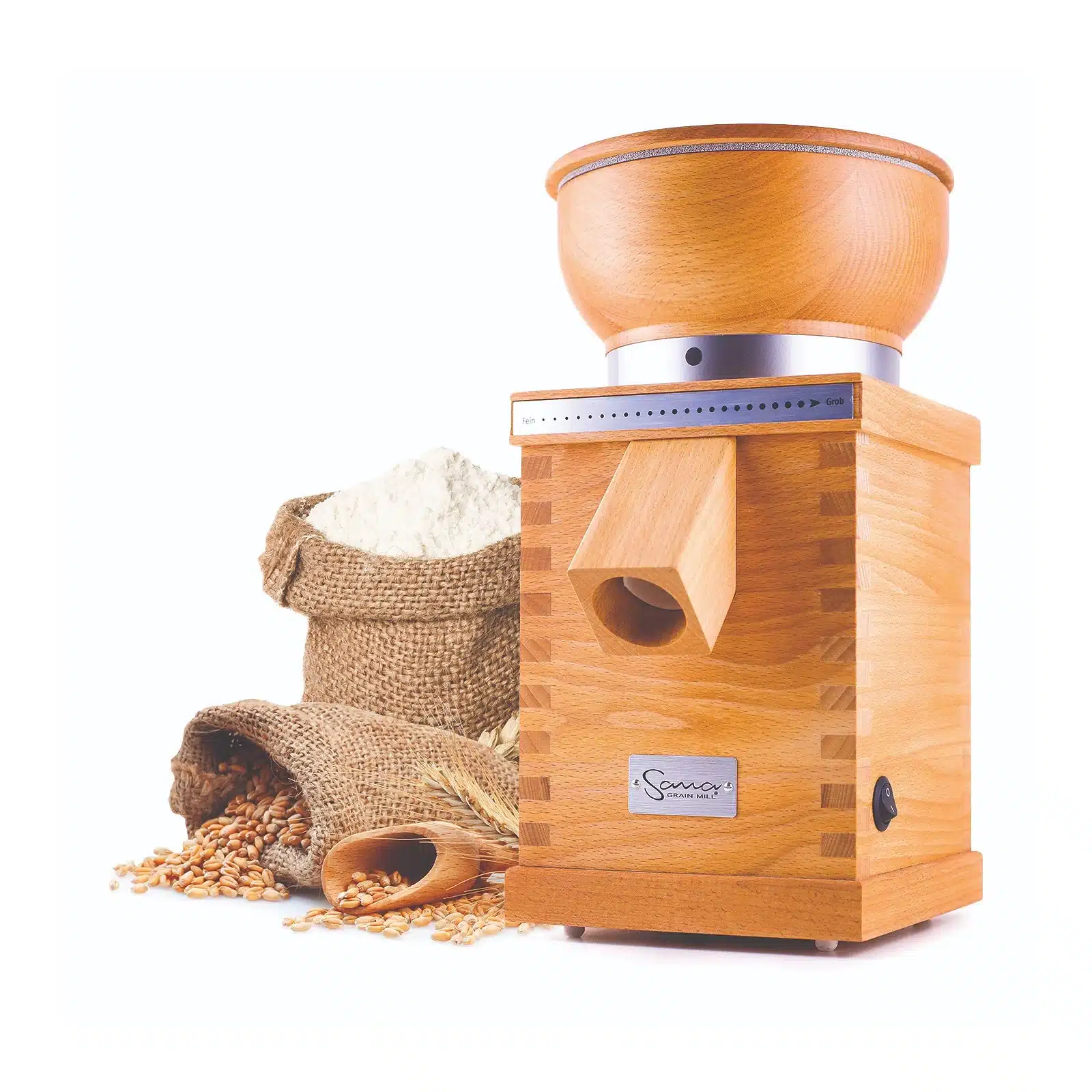
A stone mill is a type of grain mill that uses durable milling stones to grind dry grains into fresh flour. Electric stone grain mills are popular with home bakers because they are simple to use, adjustable and well suited to regular baking.
Some people first look at using a blender, food processor or coffee grinder to grind flour, but a purpose-built grain mill is designed to mill dry grains more consistently and give you better control over the texture of the flour.
What Can You Grind in a Grain Mill?
While many people first buy a grain mill to grind wheat for bread or sourdough, a good electric grain mill can be used for much more than wheat. You can mill a wide variety of dry grains into fresh flour, including wheat, spelt, rye, rice, maize, oats, barley, millet and sorghum.
You can also mill many ancient grains and pseudo-grains, such as einkorn, emmer, khorasan, quinoa, buckwheat, amaranth and teff, depending on the model and the manufacturer’s guidance. This gives you far more flexibility than buying pre-packed flour from the supermarket.
For everyday baking, this means you can make fresh whole wheat flour, rye flour, spelt flour, rice flour, buckwheat flour, oat flour, sorghum flour and maize meal at home. These are useful for bread, sourdough, pancakes, muffins, pastries, porridge, flatbreads, gluten-free baking and traditional recipes.
Some grain mills can also handle selected dry legumes and pulses, such as lentils, chickpeas, fava beans and dry beans, depending on the model. This can be useful if you want to make fresh chickpea flour, lentil flour or other wholefood flours for savoury baking, flatbreads and plant-based recipes.
Grain mills are designed for dry, non-oily ingredients. Oily seeds, nuts, coffee beans, moist ingredients and very hard ingredients should generally not be milled unless the manufacturer specifically says they are suitable for your machine.
Fine Flour, Coarse Meal and Freshly Milled Grains
One of the main advantages of milling flour at home is control over texture. You can mill fine flour for bread, sourdough, cakes and pastries, or a coarser meal for porridge, rustic loaves, polenta-style dishes and traditional recipes.
This is especially useful if you bake with whole wheat flour, rye flour, spelt flour, maize meal or gluten-free flours and want to adjust the texture to suit your recipe. Instead of relying on one type of packaged flour, you can choose the grain and mill it the way you prefer.
What to Look for in a Home Grain Mill
When choosing a grain mill for home use, the most important things to consider are the type of grains you want to mill, how often you plan to use it, and how fine you want your flour to be. For most home bakers, an electric stone grain mill is the most practical choice. It offers a good balance of convenience, consistency and flour quality.
A quality mill should feel solid, run smoothly and allow you to adjust the texture of the flour. Fine flour is ideal for bread, sourdough and pastries, while a coarser setting is useful for porridge, rustic baking and certain traditional recipes.
Our grain mills are selected for dependable home use, quiet operation, attractive design and long-term performance. All models are supplied in South Africa with the correct voltage and plug, and include proper warranty support.
Fresh Flour, Milled When You Need It
For many people, the journey starts with a simple question: how do I grind fresh flour at home? The answer is a grain mill.
With the right mill, you can keep whole grains, wheat berries, ancient grains, rice, maize and selected dry legumes in your pantry, then turn them into fresh flour whenever you need it. It is a simple way to bring more flavour, freshness and wholegrain goodness into your baking.