 WhatsApp 079 885 8806
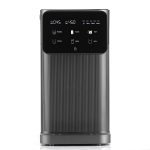


REVERSE OSMOSIS, WITHOUT THE COLD TANK
The same membrane, the cheaper machine
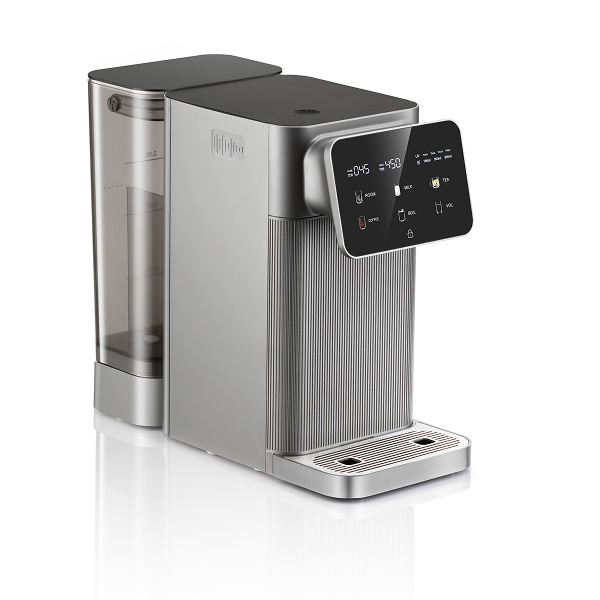
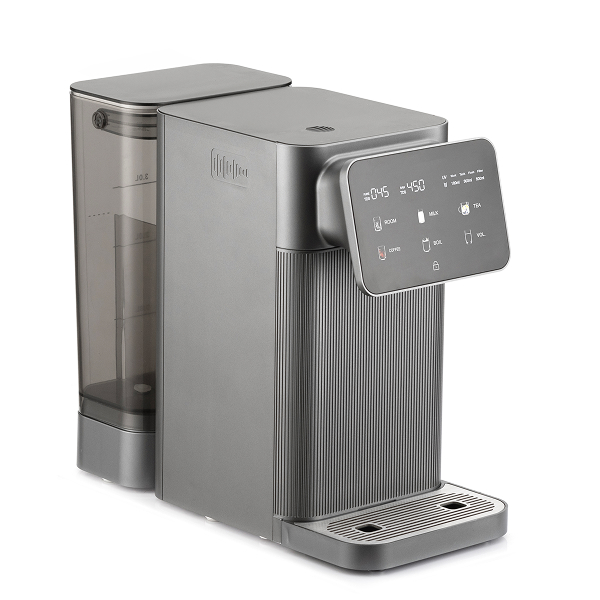
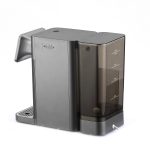
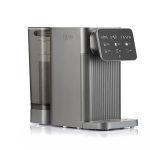
The CA2901 is the CA3001’s cheaper sibling and the difference between them is simpler than the model numbers suggest. Both run a 0.0001 micron reverse osmosis membrane, both remineralise afterwards, and neither needs a plumber. This one dispenses hot and ambient water; it does not chill, and it is the cheaper of the two by a useful margin.
What it adds in return is a UV lamp. The CA2901 runs a five-stage system in which ultraviolet light treats the water and the purified tank it sits in, which the CA3001 does not do. If your source is a borehole, a tank or a municipal supply you do not entirely trust, that is a meaningful addition and it is the reason to choose this model over the dearer one.
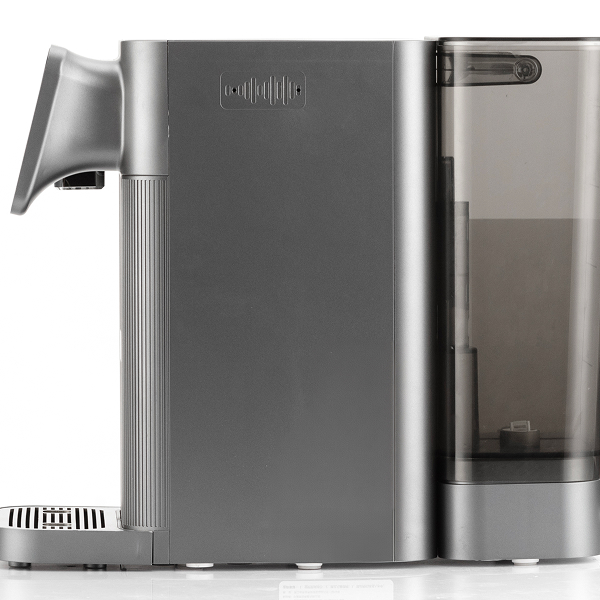
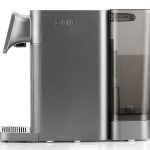
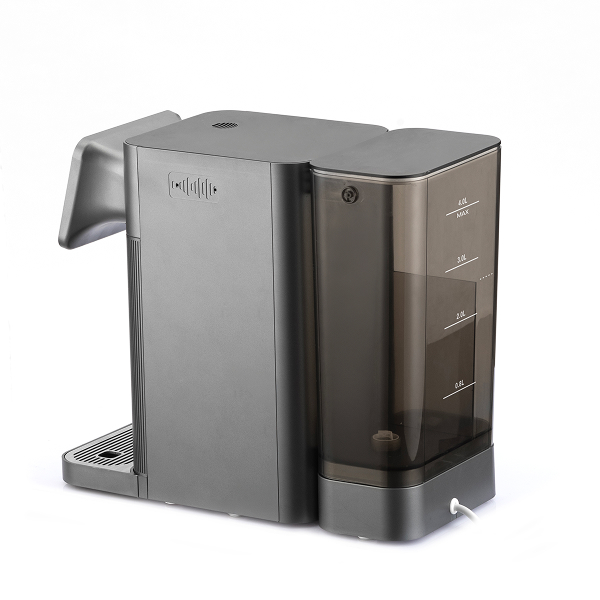
It is also the slimmer machine. At 15.3 cm deep it sits against a wall or on a narrow counter where a deeper unit will not, and at 7.8 kg it is light enough to move between a kitchen and an office without a second pair of hands.
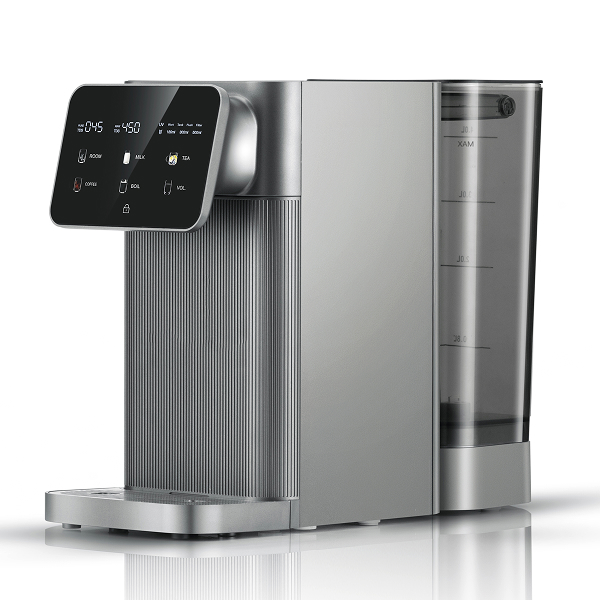
Fill the tank at the tap, plug it into a wall socket, and the next glass you pour has come through a reverse osmosis membrane and an ultraviolet lamp. No plumber, no drilling, nobody to ask permission.
ONE CARTRIDGE, FOUR STAGES, PLUS UV
What the PCRC filter does and what the lamp adds
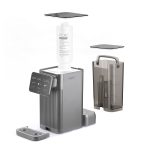
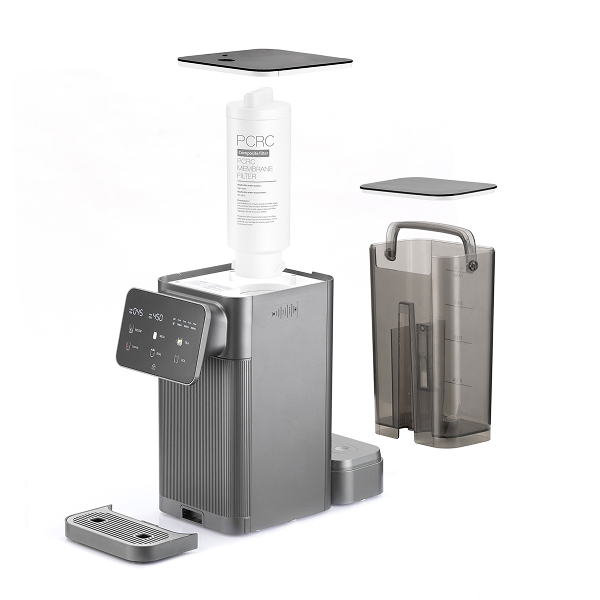
Where the CA3001 uses two cartridges, the CA2901 uses one. The PCRC composite cartridge stacks four media in a single housing — polypropylene sediment, a carbon block for chlorine and taste, the reverse osmosis membrane itself, and a post-carbon polish on the way out. One part to order, one part to change.
The membrane is the same 0.0001 micron rating as its sibling. Cara lists microplastics, heavy metals, PFAS and PFOS, fluoride, chlorine and lead among what it reduces. What a membrane cannot do is guarantee anything about micro-organisms in the tank downstream of it, which is where the fifth stage comes in.
The ultraviolet lamp treats the water and, Cara says, the purified tank it is held in. That second part is the useful bit: a small volume of standing water is exactly the place a filtration system can let you down, and a lamp that keeps working on the tank rather than only on the stream is a sensible piece of design.
THE PANEL TELLS YOU WHAT IS IN THE WATER
TDS on the display, five temperatures, three volumes
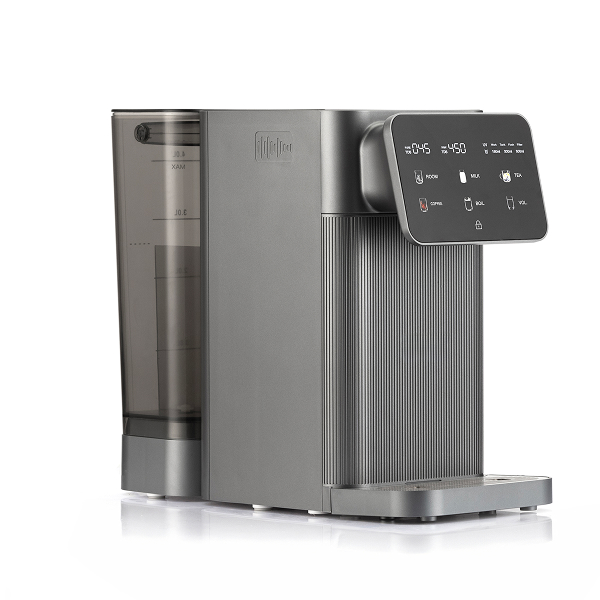
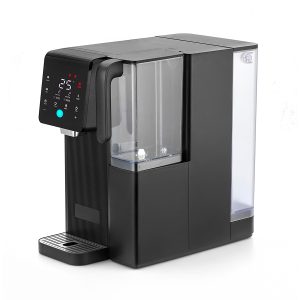
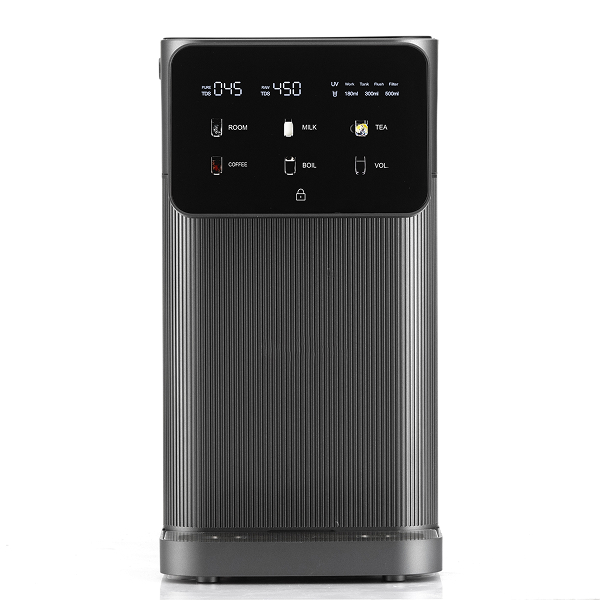
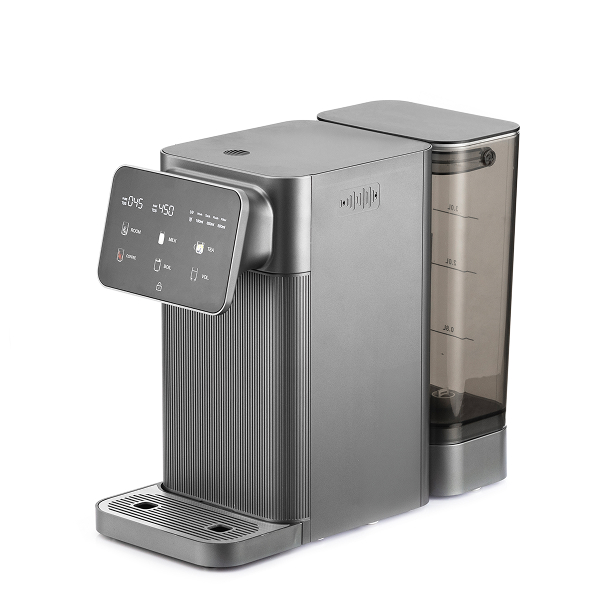
The CA2901 reads out the total dissolved solids in the water it is producing, live, on the front panel. That is unusual at this price and it is worth more than it sounds: it is the only way to see for yourself that the membrane is still doing its job, rather than trusting a timer.
Alongside it are five temperature selections and three dispensing volumes. Pick a cup, a mug or a jug and the machine stops on its own. Hot water is produced at up to 18 litres an hour at 90 °C or above, so a teapot is not a long wait even though the filtered flow rate is a measured 0.26 litres a minute.
There is a child lock on the hot selection, and a filter life monitor that counts down against use rather than against the calendar. Between the TDS readout and the filter counter, the machine tells you when something needs attention instead of leaving you to guess.


WHO IT IS FOR
Kitchens, offices and anywhere without plumbing to spare
In a home it replaces the filter jug in the fridge and the kettle on the counter at the same time. Ambient water for drinking through the day, hot water for tea and coffee, and a TDS number on the front that settles arguments about whether the tap water is any good.
In an office or a guest kitchen it does something a plumbed cooler cannot: it goes wherever there is a plug and a counter. No bottle deliveries, no contract, no waiting for a technician to move it when the office layout changes. Refill the 4 litre tank at the nearest tap.
And in a flat, a cottage or a rented house it is the practical answer to not being allowed to alter the plumbing. It arrives in a box, it leaves in the same box, and the landlord never needs to know it was there.
LIVING WITH IT
Four litres in, 1.4 litres held, one cartridge a year
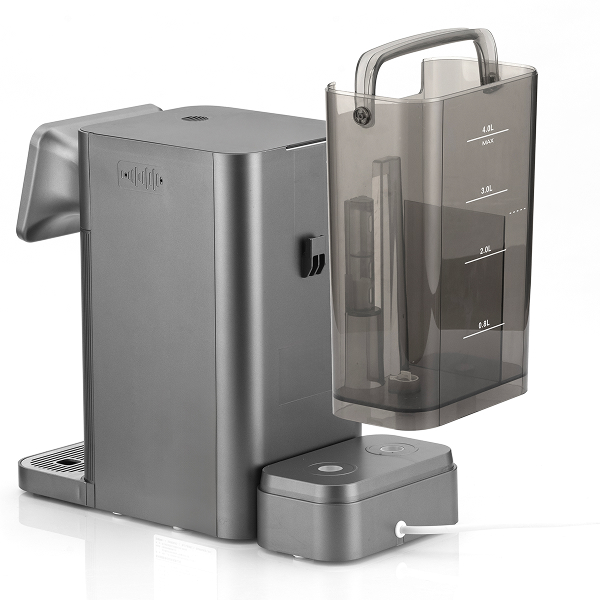
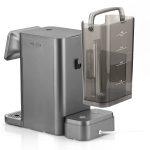
The feed tank holds 4 litres and lifts off by a handle on the top. Fill it at the sink, clip it back, and the self-priming pump takes it from there. The purified side holds 1.4 litres, which is the buffer that lets the machine hand you a glass immediately rather than making you wait for the membrane.
Cara rates the cartridge at up to twelve months, and publishes a total purification volume of 2,000 litres for the machine — the two figures describe the same limit from different directions, and the filter monitor tracks the one that arrives first. The replacement part is the F2901.
Cara describes the CA2901 as having zero water wastage, and there is certainly no drain line on the unit. What their published material does not say is where the concentrate goes, so we are not going to explain a mechanism we have not been shown. Our practical advice either way is to empty and refill the feed tank rather than topping it up.
MADE FOR SOUTH AFRICAN POWER
100–240 V, and a two-kilowatt heater worth knowing about
The CA2901 accepts 100–240 V at 50 or 60 Hz, so South African mains is well inside its range — no transformer, no adaptor, no imported 110 V surprise.
One figure deserves your attention before you buy: Cara rates the machine at 1,650 to 2,050 watts. That is a kettle-class load, drawn only while it is heating, and standby is quoted at 0.05 kWh over twenty-four hours. If you are planning to run it through an inverter or a UPS during load-shedding, check that the unit can carry two kilowatts before you commit — most home inverters sized for lights and a router cannot.
Cara Water runs from Johannesburg and Cape Town and the two-year warranty is theirs to honour, so a machine that needs attention is looked at in this country. Certification is CE and RoHS; where Cara publishes anything further we have dealt with it in the questions below rather than repeating it as our own claim.
The Cara range in short
Cara have not published a walkthrough film for the CA2901. This is their own introduction to the brand and what they build — the machine on screen is the CA3001, its hot-and-cold sibling.
CA2901 specifications
| Filtration media | Four-in-one PCRC composite cartridge — polypropylene sediment, carbon block, reverse osmosis membrane, post-carbon polish — plus an ultraviolet lamp |
| Rated power | 1,650–2,050 W while heating |
| Standby consumption | ≤0.05 kWh per 24 hours |
| Pure water flow rate | 0.26 litres per minute at 25 °C |
| Hot water output | 18 litres per hour at 90 °C or above |
| Total purification volume | 2,000 litres |
| Dispensing volumes | Three preset volumes |
| Monitoring | Live TDS readout and filter life counter on the display |
| Safety | Child lock on the hot water selection |
| Working water pressure | 0.3–0.6 MPa; inlet 0–0.1 MPa |
| Feed water temperature | 5–38 °C |
| Plumbing and drain | None. Detachable 4 litre feed tank, no drain line |
| Certifications | CE, RoHS |
| Noise level | Not published by Cara, and we would rather say so than repeat a figure we cannot verify |
| In the box | CA2901 water station, four-in-one filter cartridge, user guide |
Cara publishes a laboratory test report for its alkaline filter on its own site: read the supplier’s water test report. We have asked Cara for a CA2901 spec sheet and user manual in PDF and will add them here when they arrive.
How the CA2901 sits against the alternatives
Start with its own sibling, because that is the real decision. The Cara CA3001 is the dearer of the two and buys you chilled water on demand, nine temperature selections rather than five, and a larger 5.5 litre feed tank with a 1.8 litre jug you can carry to the table. What it does not have is the UV lamp. So: if cold water is the point, pay the difference. If your water source is the thing you worry about, or the counter you have is shallow, the CA2901 is the better machine and the cheaper one at the same time — which does not happen often.
Against distillation, the Waterwise 4000 Water Distiller removes more than any membrane does, because boiling and condensing leaves almost everything behind, but it works by the batch and by the hour and it gives you flat water to remineralise yourself. The CA2901 is the machine for people who want purified water to be the default rather than a project.
The DNA Water Purifier 2 is the closest rival and costs about the same: countertop reverse osmosis with hot and ambient water and a display of the dissolved solids going in and coming out, but no UV lamp and no remineralising stage. The DNA Water Cooler chills as well as heats for less, but it filters through a carbon and ion-exchange cartridge rather than purifying through a membrane. The OzoMed Air & Water Purifier is not a comparison at all: ozone sanitises and does nothing about lead, fluoride or dissolved solids.
Questions we are asked about the CA2901
Do I need a plumber, or any plumbing at all?
No. Fill the 4 litre tank at any tap, clip it onto the back and plug the machine in. There is no inlet connection, no drain line and nothing to drill, which is the whole reason this class of machine exists. At 15.3 cm deep and 7.8 kg it also goes back in its box and comes with you when you move.
What is the difference between this and the CA3001?
Cold water and UV, in opposite directions. The CA3001 chills; this one does not. This one has an ultraviolet lamp; the CA3001 does not. Both use the same 0.0001 micron membrane and both remineralise. The CA3001 also has the bigger tanks and the carry jug, and costs more. If you want one sentence: buy the CA3001 for cold water, buy the CA2901 for UV and a slimmer machine.
Is it really IAPMO tested and NSF certified?
Cara’s own product summary describes the CA2901 that way. We have not been able to verify either listing in the certifiers’ own databases, so we are repeating it as Cara’s claim rather than stating it as ours, and we have asked them for the certificate numbers. What we can state is what appears on the South African listing and on the unit: CE and RoHS. We would rather under-claim here and correct it upward when the paperwork arrives.
Does it really waste no water?
Cara says zero water wastage, and there is no drain line on the machine, which is what the claim rests on. Their published material does not say where the concentrate ends up, and we are not going to invent a mechanism to explain it. Practically: empty and refill the feed tank rather than topping it up, and if the answer matters to your decision, ask Cara directly before you buy.
How much electricity does it use?
Cara rates it at 1,650 to 2,050 watts, drawn only while it is heating, with standby quoted at 0.05 kWh over twenty-four hours. In practice it behaves like a kettle that runs for shorter bursts. The figure that catches people out is the inverter one: two kilowatts is more than a home backup system sized for lights, Wi-Fi and a television will carry, so check yours before you plan on tea during load-shedding.
How often does the filter need changing, and what does it cost to run?
Cara rates the four-in-one cartridge at up to twelve months and publishes a total purification volume of 2,000 litres. Those are two descriptions of the same limit, and the machine’s filter monitor counts against use rather than against the calendar, so heavy use brings the change forward. The replacement part is the F2901, and there is only the one to buy — unlike the CA3001, which takes two.
Can I use it with borehole or tank water?
This is the Cara machine to choose if you are. The membrane deals with dissolved solids and the UV lamp addresses what a membrane cannot promise about micro-organisms downstream of it. Two cautions all the same. Turbid or sediment-heavy water will shorten cartridge life sharply, so a pre-filter upstream is worth the money. And if your source has never been tested, test it — no benchtop appliance is a substitute for knowing what is actually in the water.
Does reverse osmosis leave the water tasting flat?
It would, which is why the cartridge finishes with a post-carbon stage and Cara’s system remineralises after the membrane. A bare RO unit produces water most people find lifeless; the point of the last stage is to give it a mineral profile and a taste again. The TDS readout on the front will show a number well above zero for exactly this reason, and that is correct rather than a fault.
How much counter space does it need?
Cara publishes 44.3 cm high by 46 cm wide by 15.3 cm deep. The depth is the number that matters: at 15.3 cm it fits on a shallow counter or a shelf where most water stations do not, and the feed tank lifts out upward rather than pulling out backward, so it does not need clearance behind it.
What does the warranty cover?
Two years through Cara Water’s South African distributor, against manufacturing faults. The filter cartridge is a consumable and is not covered. Cara operate from Johannesburg and Cape Town, so a unit that needs attention is assessed here rather than shipped abroad.
Why Buy From EcoHub
Backed by a local warranty
Every appliance we sell is supported here in South Africa, with after-sales help and spare parts held locally.
Made for South African power
Correct 220–240 V models with South African plugs, supplied through the local distributor rather than imported for another market.
Fast nationwide delivery
Delivered across South Africa in 1-3 days, with same-day dispatch on cleared payments ordered before 14:00.
Authorised dealer
Expert advice from a specialist store that has been helping South Africans choose health appliances since 2012.



Reviews
There are no reviews yet