 WhatsApp 079 885 8806










REVERSE OSMOSIS, ON THE COUNTER
Municipal water in, drinking water out, no plumber involved
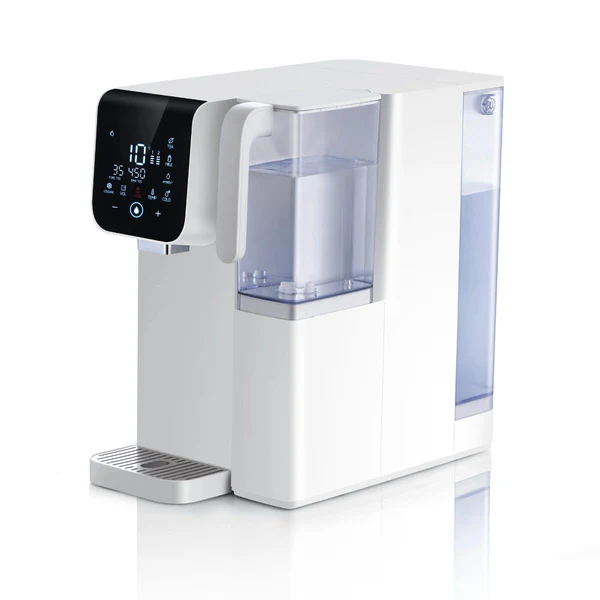
Reverse osmosis has been the serious answer to drinking water for decades, but it has always arrived with a cupboard full of housings, a drilled countertop and a plumber’s invoice. The CA3001 puts the same membrane technology into a benchtop unit you fill from the tap. Unbox it, drop in two cartridges, fill the 5.5 litre tank at the back and plug it in.
It occupies 23 cm across and 41 cm deep and replaces a kettle, a filter jug and, for most households, the standing order of bottled water. Nothing is cut, nothing is drilled, and it moves house with you.
That last point matters more here than it does in most markets. Municipal supply varies street by street and season by season across South Africa, and a machine you can pick up and take to the next flat is worth more than one bolted under a sink you do not own.

The kettle goes. The filter jug goes. The crate of bottled water by the back door goes. One machine takes their place in 23 cm of counter — and everything it pours has been through a 0.0001 micron membrane.

THE FILTER TRAIN
What each stage in the cartridge actually removes
Two cartridges do the work. The PPC cartridge handles the coarse end — polypropylene cotton for sediment, then activated carbon for chlorine and the taste and smell that come with it — so the membrane behind it is not asked to do a job it is poor at.
The reverse osmosis membrane is rated at 0.0001 microns. At that pore size it passes water molecules and rejects most of what is dissolved alongside them; Cara lists fluoride, lead, PFAS and PFOS, microplastics and chlorine among what it reduces. Cara Australia publishes a typical TDS rejection figure of around 92 per cent, which is the number worth knowing — the “99.9 per cent” headline refers to particular contaminant classes rather than to total dissolved solids, and we would rather give you both figures than only the flattering one.
The T33 cartridge comes last and works in the opposite direction, putting calcium and magnesium back into water the membrane has stripped. That is what stops RO water tasting flat, and it is the difference between this and the bare reverse osmosis units sold as industrial spares.
HOT, COLD AND THE POINTS BETWEEN
The kettle and the fridge jug in one footprint
The CA3001 holds water across a range of 10 °C to 98 °C, and Cara Australia lists nine selectable points along it. In practice that is 98 °C for tea, something closer to 85 °C for coffee that does not scald the grounds, body temperature for a bottle, and 10 °C for a cold glass in February.
Cara Australia also lists a one-litre chilled tank inside the machine, alongside the 5.5 litre feed tank at the back and the 1.8 litre jug at the front. Three volumes of water, in a unit that takes up less counter than a microwave.
The jug is the piece most people underestimate. It lifts off the dispensing tray and goes straight into the fridge or onto the dinner table, which means the machine stops being the only place in the house where filtered water lives.


WHAT YOU WILL ACTUALLY USE IT FOR
One appliance, four jobs
Drinking water is the obvious one and the reason most people buy the machine. What changes is the recurring cost: two cartridge changes a year instead of a standing order of bottled water, and no crate of empties by the back door.
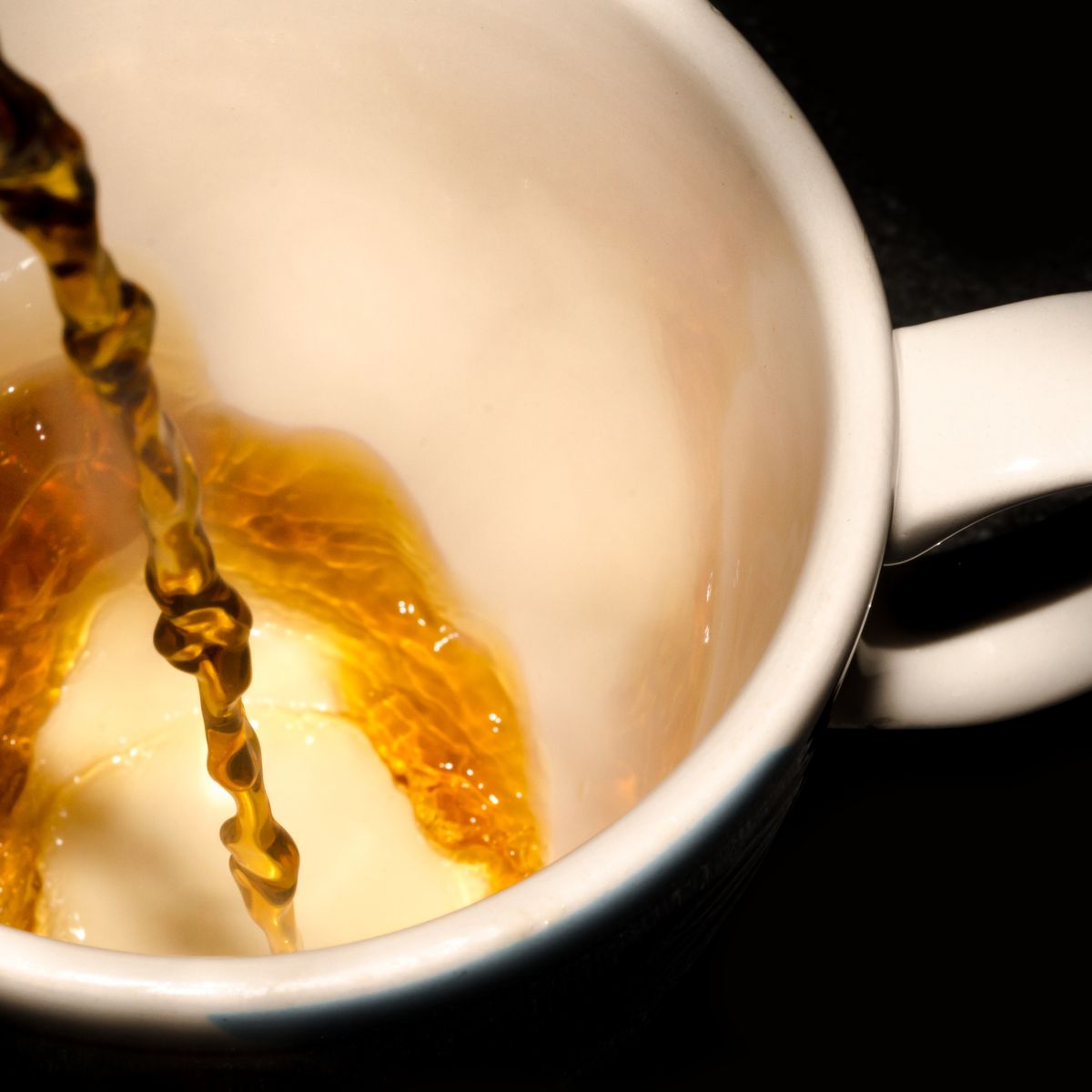
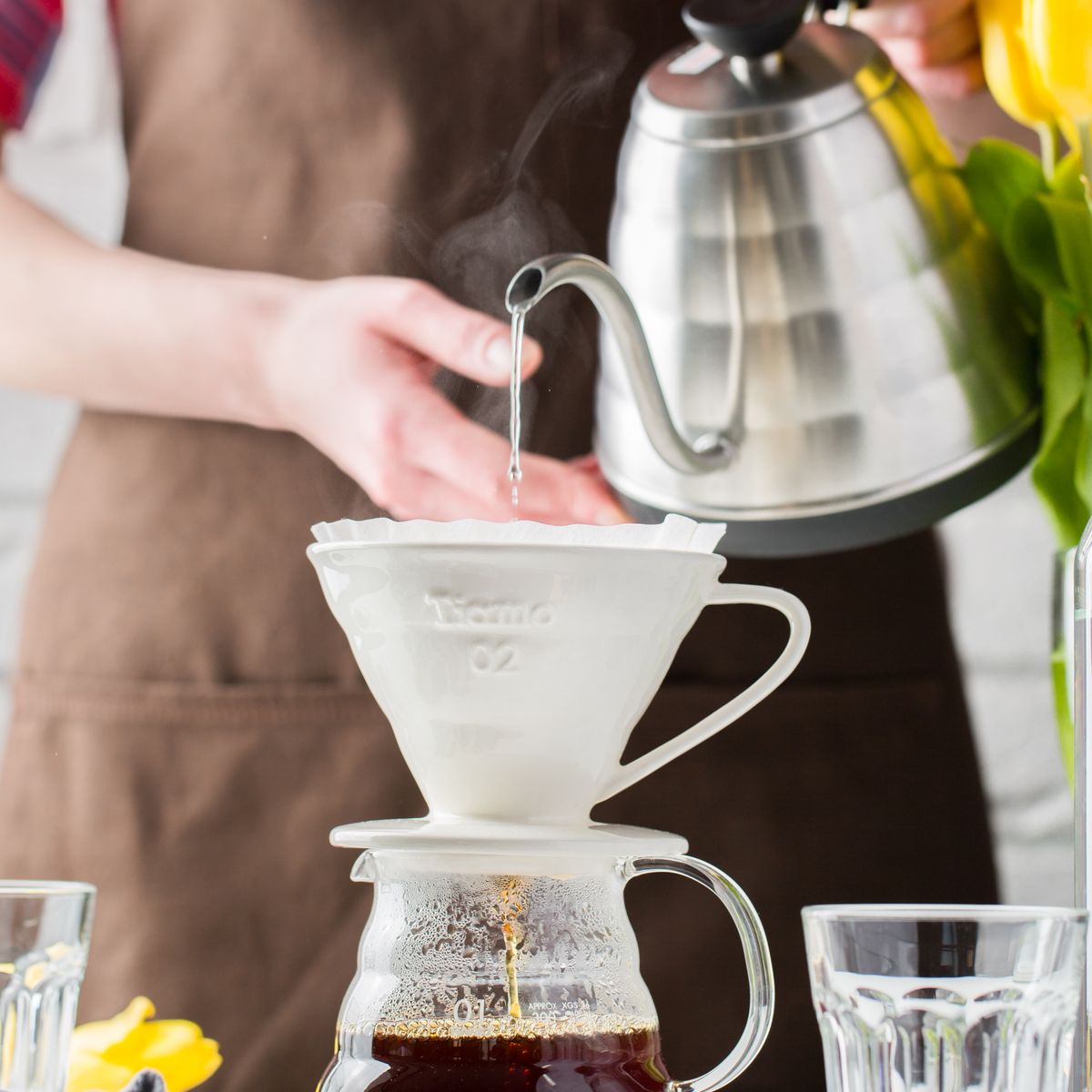
Tea and coffee are the second. Water at 98 °C goes into a teapot without a kettle on the counter, and a lower setting gives pour-over coffee water that is not boiling when it hits the grounds. If you care about either drink, the water you make it with changes it more than a better leaf or bean does.
Cooking is the one people forget — rice, stock and pasta all take on whatever is in the water they are made with. Be realistic about the pace, though: Cara South Africa publishes 0.3 to 0.5 litres a minute, so filling a pot is a jug-at-a-time job rather than a tap-at-full-bore one. Baby bottles and the dog’s bowl round out the list.
LIVING WITH IT
Filling, emptying and changing cartridges
The feed tank lifts off the back and holds 5.5 litres. You fill it at the sink, clip it back on and the machine draws from it. There is no inlet connection and, as the manufacturer’s own photograph shows, no drain line — the only thing leaving the back of the unit is the power cable.
Cartridge life is quoted two ways. Cara South Africa puts the PPC and T33 pair at twelve months and the RO membrane at twenty-four; Cara Australia quotes the same parts in litres, at roughly 2,000 and 4,000. Whichever arrives first is the one that matters, and the machine tracks it and puts an alert on the display rather than leaving you to remember.
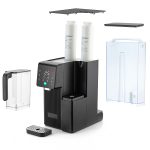
Both cartridges push into a bay in the top of the machine. There are no spanners, no housings to unscrew and no shut-off valve to find first. Replacements are sold as separate parts — the F3001 for the PPC and T33 pair, the R3001 for the membrane.


MADE FOR SOUTH AFRICAN POWER
220–240 V, 50 Hz, and a warranty you can phone
The CA3001 is built for 220–240 V at 50 Hz, which is what comes out of a South African wall socket. That sounds obvious until you price the same class of machine on an import site: a great many benchtop RO units sold online are 110–120 V models built for the North American market, and they arrive needing a step-down transformer that costs money, takes up space and voids whatever cover came with the unit.
Cara Water runs from Johannesburg and Cape Town, and the two-year warranty on this machine is theirs to honour. Worth noting: Cara Australia publishes twelve months on the same model, so the South African cover is the more generous of the two. A unit that needs attention is looked at here rather than crated to another hemisphere.
The machine carries CE and RoHS certification. Cara Australia’s page also lists NSF; the South African listing does not, so we have left it out of the specification table below. Where the two sites disagree we have gone with what the South African distributor publishes, and said so each time.
The CA3001 in operation
Thirty seconds with the machine, filmed by Cara Water themselves.
CA3001 specifications
| Filtration media | PP cotton sediment, pre-carbon, fine sediment, reverse osmosis membrane, activated carbon, alkaline mineral enhancement. Cara Australia itemises this as six stages; Cara South Africa counts the same hardware as five |
| Typical TDS rejection | Approximately 92% (published by Cara Australia) |
| Pure water flow rate | 0.3–0.5 litres per minute (Cara South Africa). Cara Australia publishes approximately 0.26 litres per minute for the same machine |
| Chilled water tank | 1 litre, internal (published by Cara Australia) |
| Temperature selections | Nine points from 10 °C to 98 °C (Cara Australia) |
| Filter change alert | Tracked by the machine and shown on the display |
| Plumbing and drain | None. Detachable 5.5 litre feed tank, no drain line |
| Materials | FDA-compliant food-grade materials, BPA-free |
| Certifications | CE, RoHS |
| Noise level | Not published by Cara, and we would rather say so than repeat a figure we cannot verify |
| In the box | CA3001 water station, PPC carbon filter, T33 alkaline filter, RO filter, user guide |
Cara publishes a laboratory test report for the alkaline filter on its own site: read the supplier’s water test report. We have asked Cara for a full spec sheet and user manual in PDF and will add them here when they arrive.
How the CA3001 sits against the alternatives
The honest comparison at this price is distillation. The Waterwise 4000 Water Distiller sits in the same bracket as the CA3001, and on pure removal a distiller wins: boiling and condensing leaves behind effectively everything that is not water. What it costs you is time and electricity — a distiller works by the batch and by the hour, and it produces flat water that most people then remineralise by hand. The CA3001 gives you a smaller reduction at the membrane, remineralises it for you on the way out, and hands it over hot or cold on demand. If your priority is the most complete removal available and you do not mind waiting for it, buy the distiller. If you want purified water to be the default thing on tap in your kitchen, buy this.
Inside the Cara range the question is cold water. The Cara CA2901 is the cheaper of the two, runs the same 0.0001 micron membrane, adds a UV lamp the CA3001 does not have, and dispenses hot and ambient — but not chilled. If nobody in the house drinks cold water, or the jug lives in the fridge anyway, the CA2901 is the better buy and we will say so. If cold water on demand is the reason you are replacing the fridge jug in the first place, the CA3001 is the one.
Two other things on EcoHub do a different job and should not be mistaken for cheaper versions of this one. The OzoMed Air & Water Purifier sanitises: ozone deals with micro-organisms and does nothing whatsoever about lead, fluoride or dissolved solids. Within DNA’s range, the DNA Water Purifier 2 is countertop reverse osmosis for less, with hot and ambient water but no chilling, and the DNA Water Cooler chills and heats for less but filters rather than purifies. The DNA Water Bar is the plumbed-in alternative, adding sparkling water at a higher price.
Questions we are asked about the CA3001
Do I need a plumber, or any plumbing at all?
No. This is a plug-in benchtop appliance. Fill the 5.5 litre tank at the back from any tap, clip it on, and plug the machine into a wall socket. There is no inlet connection, no drain line and nothing to drill. It asks about as much of your kitchen as a kettle does, and it comes with you when you move.
How many filtration stages is it — five or six?
Both, depending on who is counting. Cara’s South African listing calls it a five-stage system; Cara Australia itemises six — PP cotton sediment, pre-carbon, fine sediment, the RO membrane, activated carbon and alkaline mineral enhancement. The hardware is identical either way; the difference is whether the sediment pass is counted on its own. We have used the South African distributor’s figure in the product attributes, because they are the ones standing behind the machine here.
How much water does it waste?
Cara does not publish a pure-to-drain ratio for the CA3001 and we are not going to estimate one on their behalf. What we can tell you from the manufacturer’s own photographs is that there is no drain line on the unit — the feed tank detaches and is emptied and refilled at the sink. Our practical advice is to tip the tank out and refill it rather than topping it up, and to ask Cara directly for the ratio if that figure is going to decide your purchase.
How fast does it actually dispense?
Cara South Africa publishes 0.3 to 0.5 litres a minute; Cara Australia publishes approximately 0.26 for the same machine. We report the split rather than quoting whichever suits us. Either figure describes a considered pour rather than a tap, so the 1.8 litre jug takes a few minutes to fill. That is what the jug is for: fill it while you are doing something else, and keep it in the fridge.
Does reverse osmosis strip the minerals out of my water?
Yes, and that is rather the point — a membrane cannot tell calcium from lead, so it rejects both. The T33 cartridge is the answer to it, reintroducing calcium and magnesium after the membrane so the water has a mineral profile and a taste again. As a matter of nutrition, drinking water is a minor source of minerals next to food. As a matter of taste, the difference between bare RO water and remineralised water is immediate, which is why the stage exists at all.
How often do the filters need changing, and what does that cost to run?
Cara South Africa quotes twelve months for the PPC and T33 pair and twenty-four months for the RO membrane. Cara Australia quotes the same parts by volume, at roughly 2,000 and 4,000 litres. Whichever comes first is the one to act on, and the machine tracks usage and raises an alert on the display. Replacements are separate parts: the F3001 covers the PPC and T33 pair, the R3001 is the membrane.
Is it noisy?
Cara does not publish a decibel figure for the CA3001, and we would rather tell you that than repeat a number we cannot verify. What we can say is that the machine has a pump, so it is audible while it is producing water and silent the rest of the time. If a published noise figure matters to you, ask Cara before you buy and hold us to whatever they tell you.
Can I use it with borehole or tank water?
Reverse osmosis at 0.0001 microns is the right technology for borehole water, and it is a common reason people buy a machine like this. Two cautions. Sediment-heavy or turbid water will shorten the life of the PPC cartridge considerably, so a pre-filter upstream is worth having. And a membrane reduces dissolved solids but is not a substitute for microbiological treatment where the source has never been tested — if that describes your borehole, test it before you choose a machine, and note that the CA2901 adds a UV lamp which this model does not have.
What does the warranty cover?
Cara Water covers the CA3001 for two years through its South African distributor, against manufacturing faults. Filter cartridges are consumables and are not covered by it. Cara operates from Johannesburg and Cape Town, so a unit that needs attention is assessed in this country rather than shipped abroad. It is worth knowing that Cara Australia publishes a twelve-month warranty on the same machine: the South African cover is the more generous of the two, and it is the one that applies to a unit bought here.
Who is Cara Water?
Cara Water is a water filtration brand with a South African arm running out of Johannesburg and Cape Town and a sister operation in Australia. Benchtop reverse osmosis and ultra-filtration systems are all they make, which is unusual and, in our experience, a good sign — support tends to be better from a company with one product line to know. Their own introduction film is below.
Why Buy From EcoHub
Backed by a local warranty
Every appliance we sell is supported here in South Africa, with after-sales help and spare parts held locally.
Made for South African power
Correct 220–240 V models with South African plugs, supplied through the local distributor rather than imported for another market.
Fast nationwide delivery
Delivered across South Africa in 1-3 days, with same-day dispatch on cleared payments ordered before 14:00.
Authorised dealer
Expert advice from a specialist store that has been helping South Africans choose health appliances since 2012.



Reviews
There are no reviews yet