 WhatsApp 079 885 8806















REVERSE OSMOSIS, NO PLUMBER
Purified water from a machine you plug in
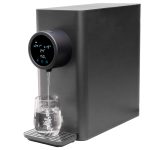
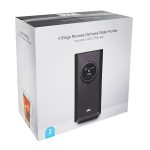
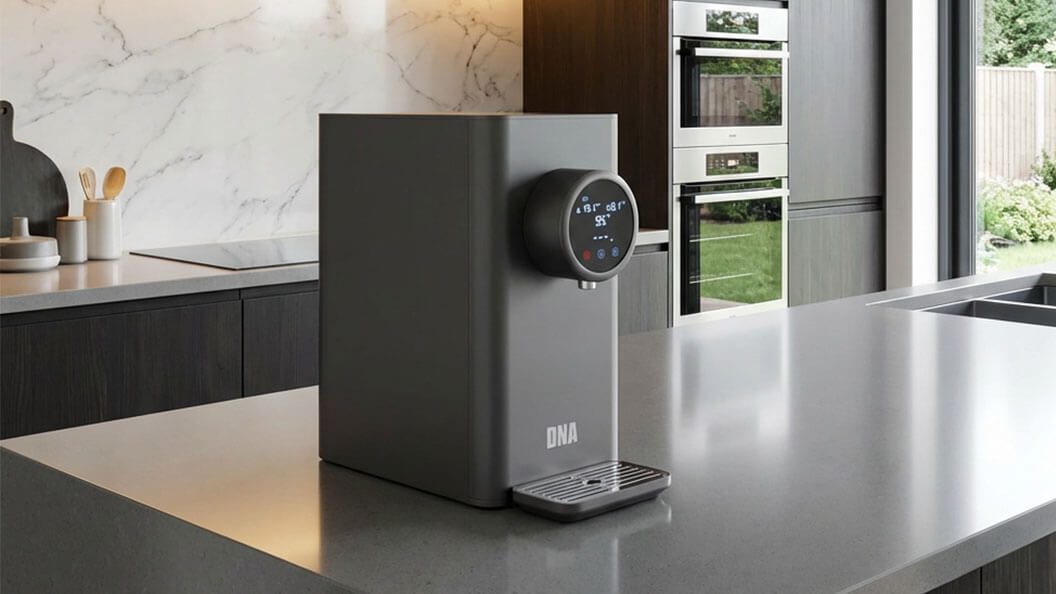
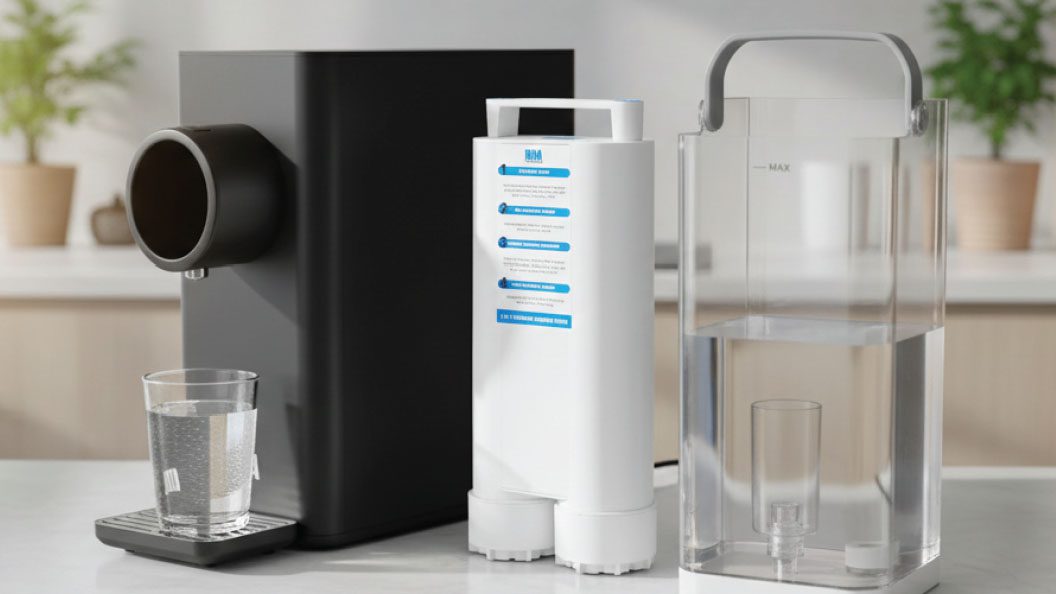
The DNA Water Purifier 2 puts a reverse osmosis membrane on your counter without a single pipe to connect. Fill the 5-litre tank at the tap, clip it on, plug the machine in, and the next glass you pour has been through four stages of filtration. There is nothing to drill, no drain line to find and nothing to undo when you move.
Reverse osmosis is the method that deals with what jugs and tap filters cannot. A carbon filter improves the taste and smell of chlorine; a reverse osmosis membrane goes further and removes most of the dissolved solids — the salts, metals and hardness minerals a jug leaves behind. DNA rates this one at 150 gallons a day, a comfortable margin for a household’s drinking and cooking water.
This is the second generation of DNA’s countertop purifier. The first took four separate cartridges; this one takes a single 4-in-1 cartridge that lifts out in one piece, carries a larger tank, and keeps the before-and-after water quality display that made the original worth having.
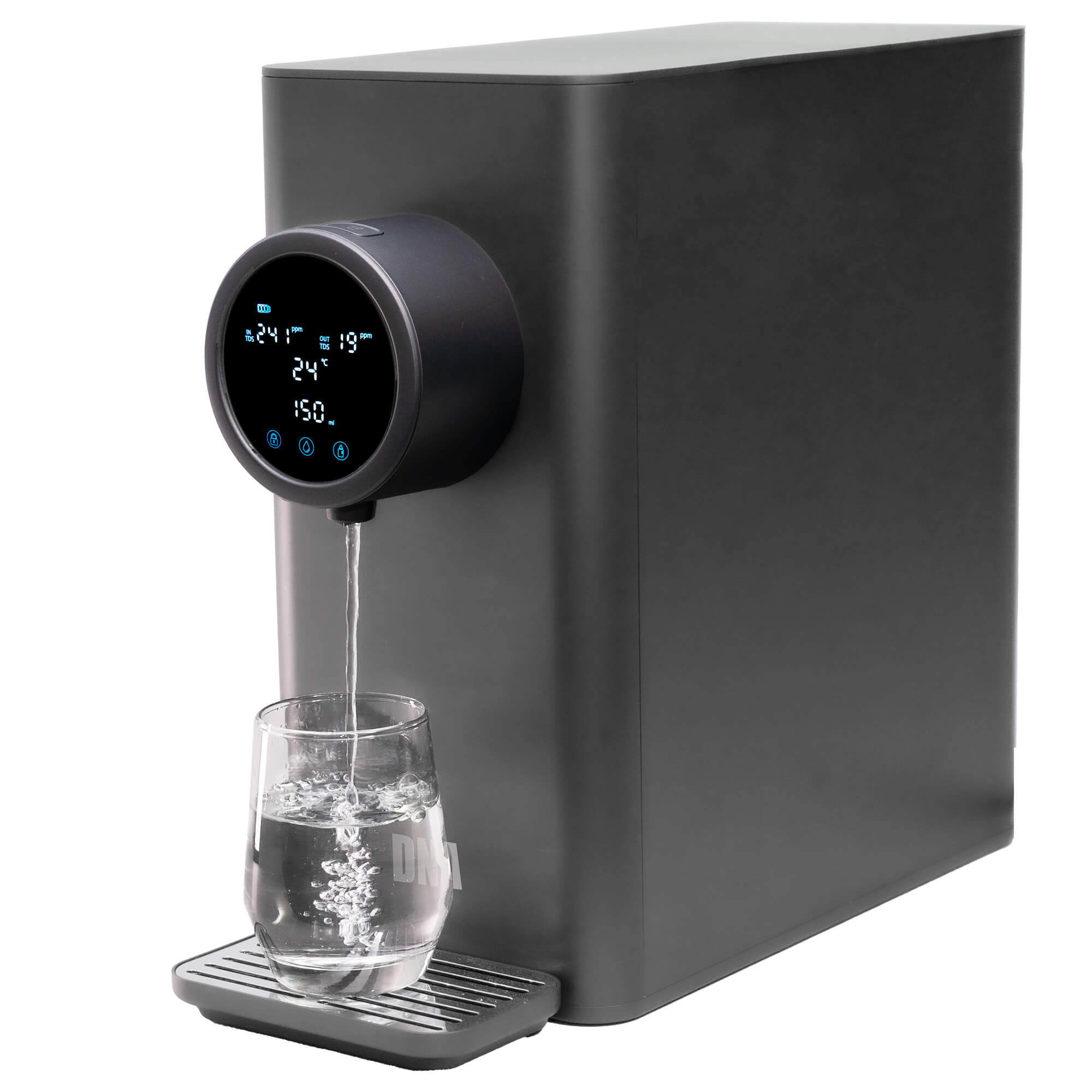
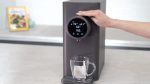
Fill the tank, plug it in, and pour reverse osmosis water — hot or at room temperature — without ever calling a plumber.

ONE CARTRIDGE, FOUR STAGES
Four stages of filtration in one cartridge
All four filtration stages are packed into one 4-in-1 cartridge that sits in the side of the machine. When it is due, it comes out in one piece and the new one goes in — DNA’s own two-minute film in the questions below shows the whole job. There are no housings to unscrew and no separate filters to keep track of.
DNA rates the cartridge at up to 5,000 litres, and its spare-parts listing gives a typical life of twelve months. The two figures describe the same limit from different directions: a household using 10 litres a day for drinking and cooking reaches 5,000 litres in about sixteen months, so for most homes the calendar arrives first. The machine alerts you when the cartridge is due.
One replacement cartridge lasts about twelve months, rated for 5,000 litres. That is the running cost to set against bottled water, which costs a good deal more per litre and arrives in plastic.
THE DISPLAY SHOWS YOU THE DIFFERENCE
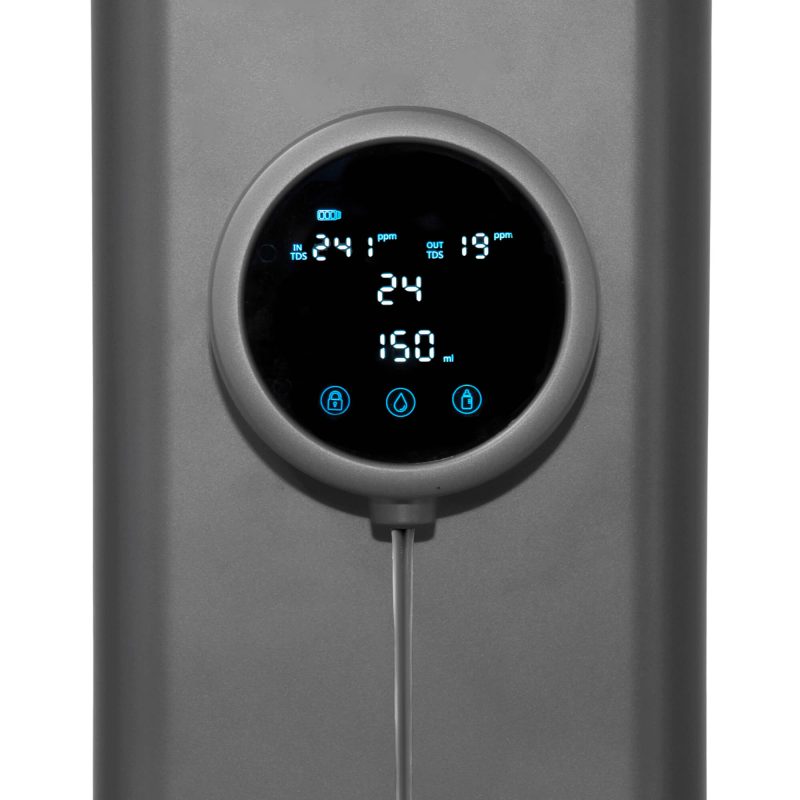
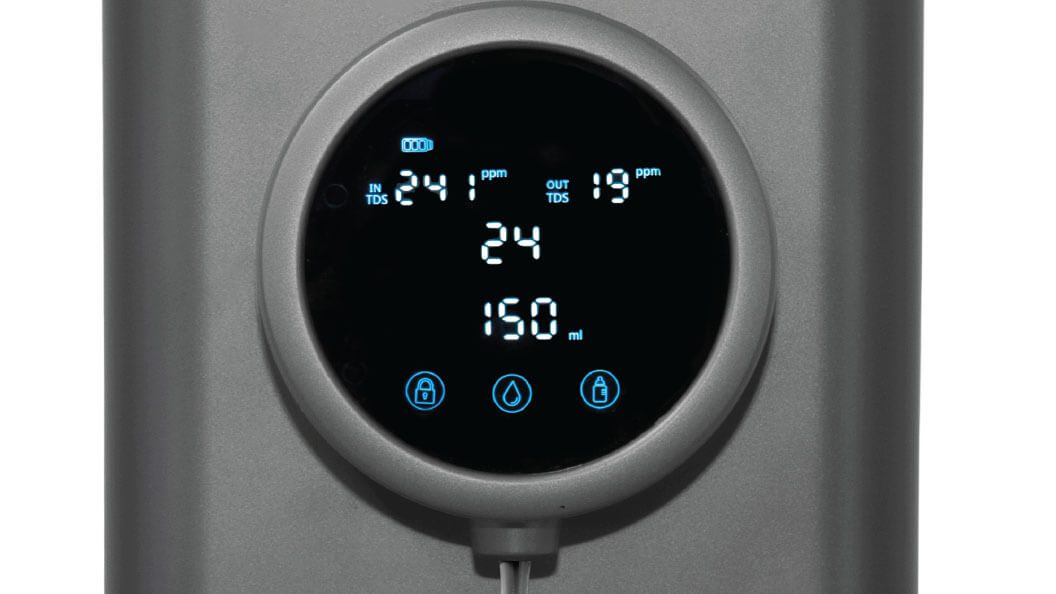
TDS in, TDS out, on the front panel
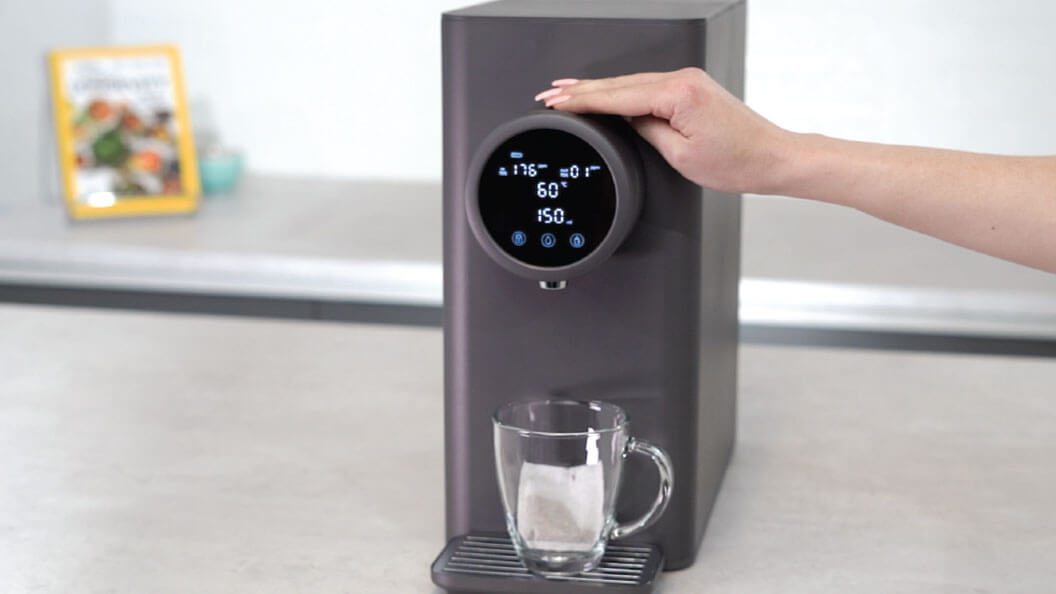
The round display measures total dissolved solids twice — in the water you pour into the tank and in the water that comes out of the spout. That before-and-after reading is the most useful thing a purifier can show you, because it is the evidence that the membrane is doing its job, measured on your own water rather than promised in a brochure.
It also makes the cartridge’s condition visible. As a membrane ages, the outgoing reading creeps up; when that number starts to drift you know why, and the replacement alert confirms it. Between the two there is no guessing about whether the water is still being purified properly.
The same panel carries the temperature selection and a hot-water safety lock. The lock is worth having in a home with small children, and it is the first setting we would show anyone new to the machine.

WHO IT IS FOR
Kitchens, flats and offices where the plumbing stays as it is
In a family kitchen it replaces the filter jug and the kettle at once: purified water at room temperature for drinking through the day, and hot water for tea, coffee and cooking from the same spout.
In a rented flat it is the answer to not being allowed to touch the plumbing. It arrives in a box, it leaves in the same box, and the only thing it asks of the landlord is a wall socket.
In a small office or boardroom it does the work of a kettle and a water dispenser without bottle deliveries or a service contract, and it moves when the office does. Refill the 5-litre tank at the nearest tap and carry on.
HOT WATER ON DEMAND
Ambient to 95 °C, with no kettle in between
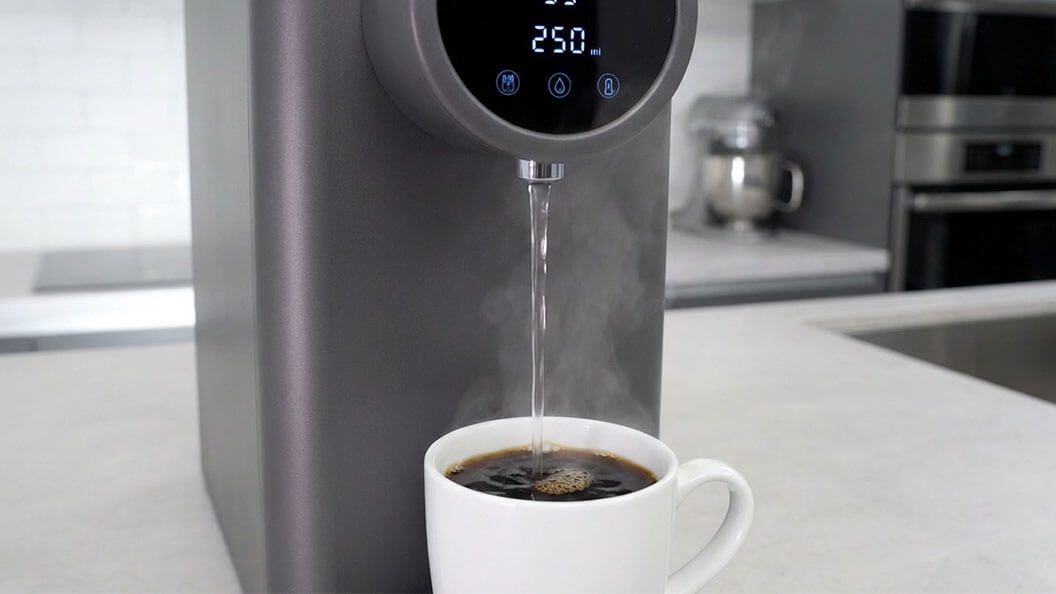
Five settings — ambient, 40, 60, 80 and 95 °C — cover everything from a glass of water to a pot of tea. DNA describes the hot water as instant: there is no kettle to wait for and no reheating what was boiled an hour ago.
The settings in between are the useful ones. 80 °C is where green tea should be made rather than scalded, and 40 or 60 °C gives warm water for anyone who wants it without waiting for it to cool.
It also means one appliance doing two jobs. The water going into your tea has already been through a reverse osmosis membrane, which also means far less of the hardness that leaves scale in a kettle.

MADE FOR SOUTH AFRICAN POWER
Ready for South African mains, straight from the box
DNA Health is a South African company, and the Water Purifier 2 is supplied for South African mains with a South African plug. It accepts 100–240 V at 50–60 Hz, so no transformer or adaptor is involved — unlike the on-demand imports that arrive as 120 V American units.
Plan for the heater. DNA rates the machine at 2,200 watts, a kettle-class load drawn while it heats. If you intend to make tea on it through load-shedding, check that your inverter or UPS can carry two kilowatts; most home backup systems sized for lights, Wi-Fi and a television cannot. Ambient water does not call on the heater at all.
Warranty and service are handled in South Africa by DNA Health, from Johannesburg and a Cape Town showroom and warehouse. DNA covers the appliance for two years, with parts and labour covered for the first year.
The DNA Water Purifier 2 in operation
DNA Health’s own introduction to the second-generation purifier.
DNA Water Purifier 2 specifications
| Membrane rating | 150 gallons per day (GPD) |
| Flow rate | 800 ml per minute, as published by DNA |
| Rated power | 2,200 W while heating |
| Water quality display | TDS of the incoming and the purified water |
| Alerts | Filter replacement alert |
| Safety | Hot-water safety lock |
| Replacement part | DNA Water Purifier 4-in-1 Replacement Filter Cartridge |
| Waste water | Not published by DNA, and we would rather say so than guess |
| Noise level | Not published by DNA |
| In the box | Water Purifier 2 with 4-in-1 cartridge fitted, drip tray, removable external tank, user manual |
How the Water Purifier 2 sits against the alternatives
The closest comparison is the Cara CA2901, which costs about the same and does the same basic job: countertop reverse osmosis, hot and ambient water, no plumbing. The Cara adds an ultraviolet lamp and a remineralising stage and is slimmer at 15.3 cm deep. The DNA shows you the dissolved solids going in as well as coming out, and carries a larger 5-litre tank against the Cara’s 4. If your water comes from a borehole or a tank, the Cara’s UV lamp is the reason to choose it; on municipal water it comes down to whether you would rather have the Cara’s remineralised taste or the DNA’s before-and-after reading.
If you want cold water as well as hot, you are choosing between two different machines. The Cara CA3001 chills and keeps reverse osmosis, at a higher price. The DNA Water Cooler chills and heats for less, but it filters through a carbon and ion-exchange cartridge rather than a membrane — better-tasting water, not purified water.
The other two DNA machines are plumbed in. The DNA Water Bar adds chilled and sparkling water on tap for a home or office of up to ten people, at more than twice the price. The DNA Pure Flow is the most economical route to reverse osmosis, with its own tap at the sink — but it needs installing under the counter and gives room-temperature water only.
Questions we are asked about the DNA Water Purifier 2
No. Fill the 5-litre tank at any tap, clip it onto the machine and plug it in. There is no inlet connection, no drain line and nothing to drill, which is the whole point of a countertop purifier.
The original used four separate cartridges — sediment, pre-carbon, reverse osmosis and post-carbon — each replaced on its own schedule. The Water Purifier 2 combines all four stages in a single 4-in-1 cartridge, carries a larger tank and has a new body. DNA no longer has new stock of the original, so the Water Purifier 2 is the one to buy.
DNA rates the 4-in-1 cartridge at up to 5,000 litres and gives a typical life of twelve months; the machine alerts you when it is due. Changing it takes a couple of minutes, and DNA’s own film shows how.
DNA does not publish how the machine handles the concentrate a reverse osmosis membrane produces, and there is no drain line. We are not going to describe a mechanism we have not been shown. Our practical advice is to empty and refill the tank rather than topping it up, which keeps the water going into the membrane fresh.
Yes — that is what the low outgoing TDS reading shows, and it is the point of the membrane. DNA does not describe a remineralising stage on this machine. Most people get the bulk of their minerals from food rather than drinking water; if taste matters to you and you would like minerals put back, the Cara CA2901 remineralises after its membrane.
The membrane deals with dissolved solids, but DNA does not publish an ultraviolet stage for this machine, so if you are unsure of your water’s microbiological quality, have it tested first or choose a purifier with a UV lamp. Cloudy or sediment-heavy water will also shorten the cartridge’s life noticeably.
No. Ambient is the coolest setting, and the other four are hot. If chilled water matters, the DNA Water Cooler and the Cara CA3001 are countertop machines that chill, and the DNA Water Bar chills and carbonates as well.
DNA gives the dimensions as 42 by 18 by 38 cm and the weight as 9.5 kg. The 18 cm is the width facing you, so it takes a narrow slice of counter and runs back towards the wall. Leave room behind or to the side to lift the tank off for refilling.
DNA rates it at 2,200 watts, drawn only while it heats. In practice it behaves like a kettle that runs in short bursts. The number that catches people out is the inverter one: check that your backup system can carry two kilowatts before planning on hot drinks during load-shedding.
DNA Health covers the appliance for two years, with parts and labour covered for the first year. Service is handled in South Africa from DNA’s Johannesburg base and its Cape Town showroom and warehouse. The filter cartridge is a consumable part.
Why Buy From EcoHub
Backed by a local warranty
Every appliance we sell is supported here in South Africa, with after-sales help and spare parts held locally.
Made for South African power
Correct 220–240 V models with South African plugs, supplied through the local distributor rather than imported for another market.
Fast nationwide delivery
Delivered across South Africa in 1-3 days, with same-day dispatch on cleared payments ordered before 14:00.
Authorised dealer
Expert advice from a specialist store that has been helping South Africans choose health appliances since 2012.


Reviews
There are no reviews yet