Dehumidifiers
Shop dehumidifiers for South African homes to control excess humidity, condensation, damp and mould. A good dehumidifier removes moisture from the air, helping protect walls, ceilings, cupboards, furniture and clothing while creating a drier, more comfortable indoor environment. Damp and mould can also affect indoor air quality and may aggravate allergies and respiratory irritation.
Dehumidifiers are particularly useful during wet South African winters, in coastal areas, and in rooms with limited ventilation. They can help with condensation on windows, damp en-suite bedrooms, musty cupboards, bathrooms, apartments and smaller or larger living areas. A dedicated laundry mode can also dry washing indoors more quickly and reduce the moisture released into your home.
Choose a compact 10L or 12L dehumidifier for bedrooms, en-suite bathrooms and smaller living spaces, or a higher-capacity 20L to 25L dehumidifier for larger homes, persistent damp problems and frequent indoor laundry drying. Selected models combine dehumidification with HEPA air purification, providing the added benefit of filtering dust and airborne allergens, while Wi-Fi control allows you to monitor humidity and operate the unit remotely.
Showing 1–12 of 13 resultsSorted by popularity


-300x300.jpg)


Showing 1–12 of 13 resultsSorted by popularity
Dehumidifiers for Damp, Condensation and Mould
Excess indoor humidity can lead to condensation on windows, damp walls, musty cupboards and mould growth. These problems are especially common during wet South African winters, in coastal areas and in rooms with limited ventilation.
A dehumidifier draws moist air into the unit, removes the excess water and returns drier air to the room. This helps protect walls, ceilings, furniture, clothing and other household items from prolonged exposure to moisture. Reducing persistent damp can also improve indoor comfort and air quality, particularly in bedrooms and frequently occupied living spaces.
Which Size Dehumidifier Do You Need?
The correct dehumidifier size depends on the size of the room, the severity of the damp problem and how the unit will be used. The litre rating refers to the amount of moisture the dehumidifier can extract over 24 hours under specified test conditions, rather than the capacity of its water tank.
- 10L to 12L dehumidifiers: Best suited to bedrooms, en-suite bathrooms, apartments, home offices and smaller living areas.
- 20L dehumidifiers: A good choice for medium-sized homes, larger living areas and more persistent condensation or damp.
- 25L dehumidifiers: Suitable for larger homes, frequent indoor laundry drying and more demanding moisture-control applications.
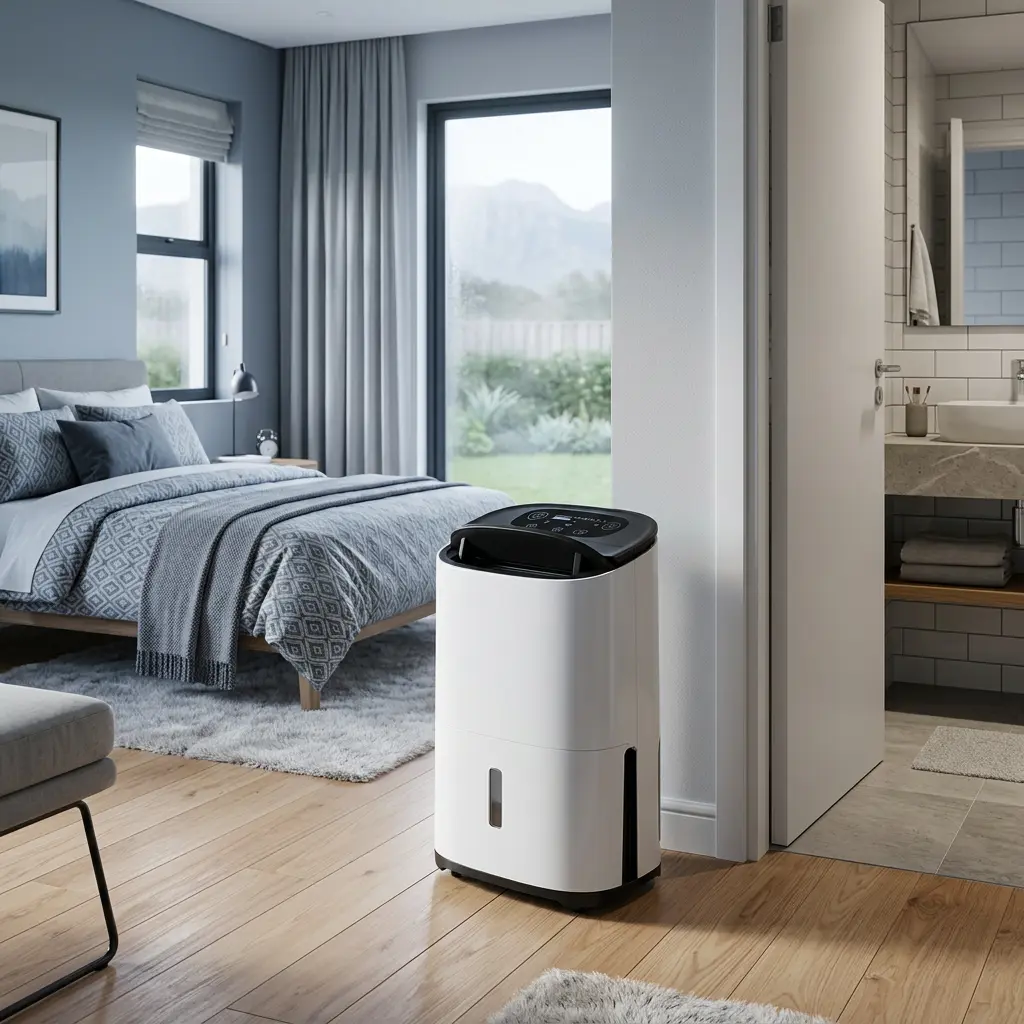
A compact 12L dehumidifier can be particularly effective in an en-suite bedroom where steam from the bathroom contributes to damp, condensation or mould. Larger-capacity models are generally better suited to open-plan areas or homes where moisture affects several rooms.
Can a Dehumidifier Help Dry Laundry Indoors?
Yes. Drying washing indoors releases a significant amount of moisture into the surrounding air. A dehumidifier removes this moisture while helping clothes dry more quickly, making it especially useful during rainy weather and winter.
Models with a dedicated Laundry Mode run at settings designed for faster indoor drying. Unlike a tumble dryer, a dehumidifier can dry clothes without applying high heat and can also help prevent the released moisture from causing condensation elsewhere in the room.
Dehumidifier and HEPA Air Purifier Models
Selected models combine a dehumidifier with a built-in HEPA air purifier. Dehumidification remains the primary function, while the HEPA filter provides the additional benefit of capturing airborne dust, allergens and other fine particles.
This 2-in-1 functionality is particularly valuable in bedrooms, where quieter operation, moisture control and cleaner filtered air can all contribute to a more comfortable sleeping environment.
Wi-Fi Dehumidifiers and Automatic Humidity Control
Wi-Fi-enabled dehumidifiers allow you to monitor humidity, adjust settings and control the appliance remotely through an app. This is especially useful when managing damp in a bedroom, holiday home, rental property or room that is not occupied throughout the day.
Many modern dehumidifiers also include a humidistat. Once the selected humidity level is reached, the appliance can reduce operation or switch the compressor off, helping maintain a stable humidity level without running unnecessarily.
Frequently Asked Questions
Does a dehumidifier remove mould?
A dehumidifier does not remove existing mould from walls or ceilings. It reduces excess humidity and helps make the environment less favourable for further mould growth. Existing mould should be cleaned safely and the underlying moisture source addressed.
Will a dehumidifier help with condensation on windows?
Yes. Window condensation is often caused by warm, moisture-laden indoor air meeting a cold glass surface. Removing excess moisture from the air can significantly reduce condensation.
Can I use a dehumidifier in a bedroom?
Yes. A quiet dehumidifier is well suited to bedrooms, particularly rooms with an en-suite bathroom, poor ventilation, damp walls or condensation. Choose a model with a low operating noise level if it will run overnight.
Is a dehumidifier useful during winter?
Winter is often when dehumidifiers are needed most. Homes are generally kept closed, ventilation is reduced and colder walls and windows make condensation more likely. A dehumidifier helps manage this trapped indoor moisture.
Where should a dehumidifier be placed?
Place the dehumidifier upright on a firm, level surface with sufficient open space around the air inlet and outlet. Keep internal doors open when treating several connected rooms, or close the door when concentrating on one damp room or drying laundry.
2-300x300.png)