 WhatsApp 079 885 8806










VACUUM BLENDING, BUILT FOR SERVICE
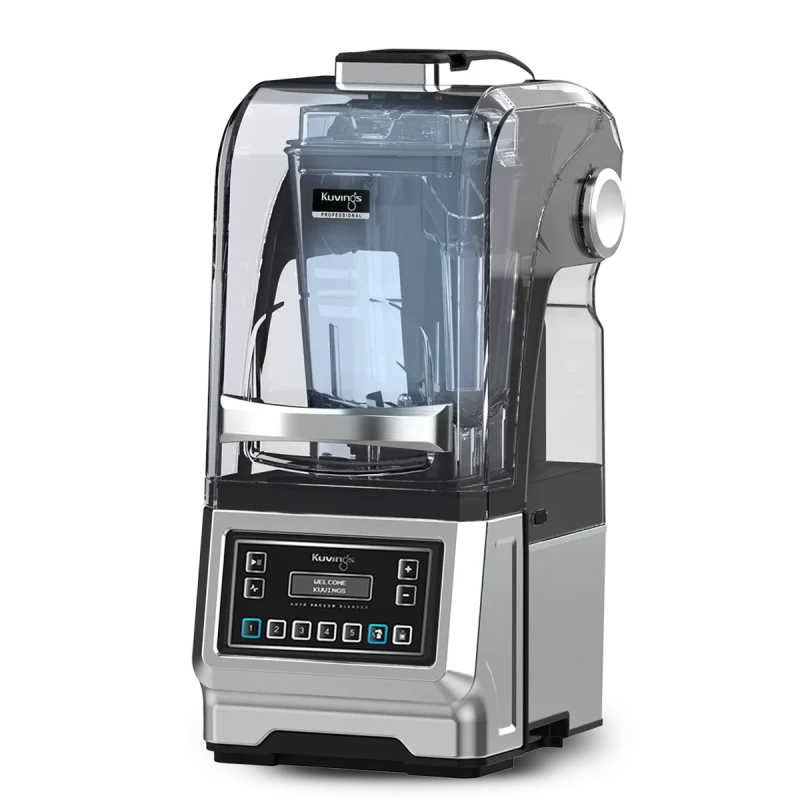
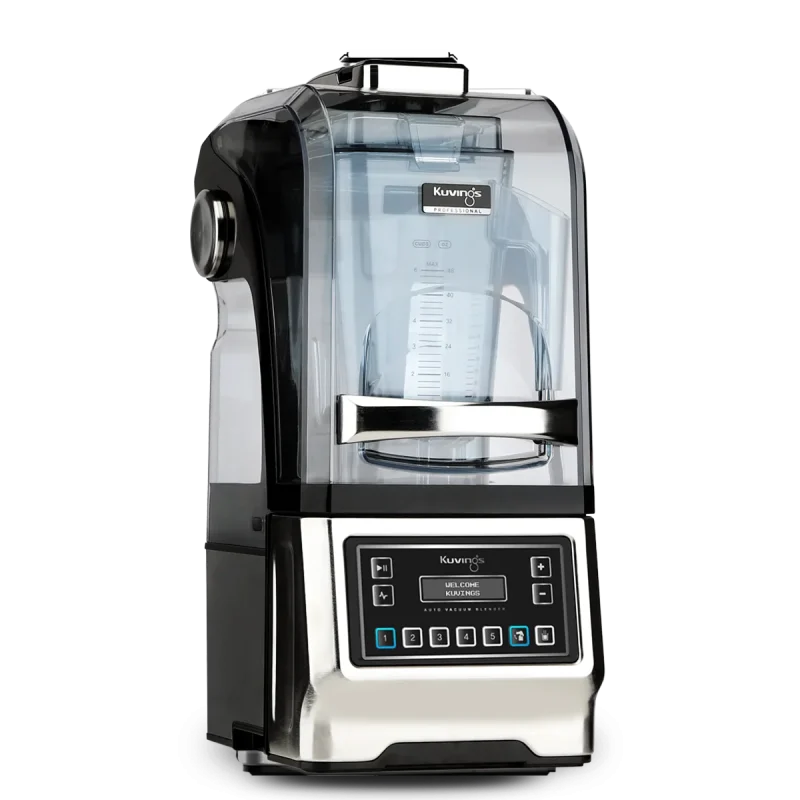
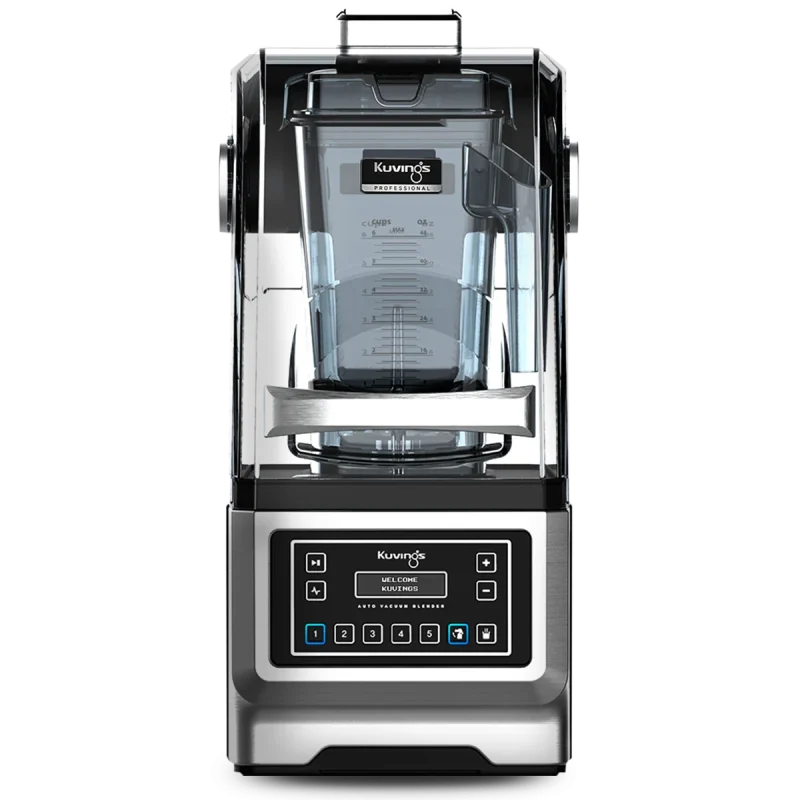
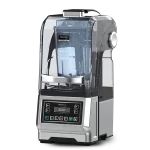
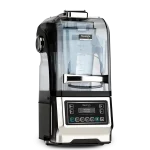
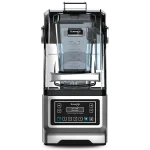
Kuvings CB1000 Professional Vacuum Blender
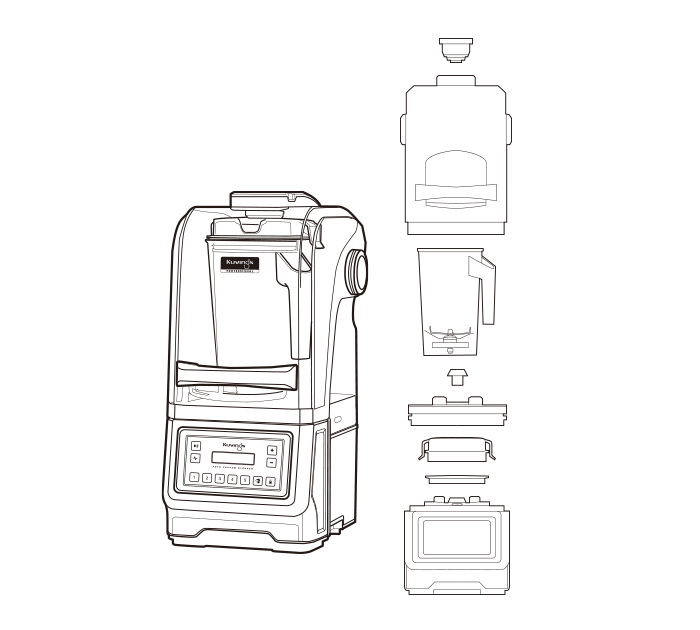
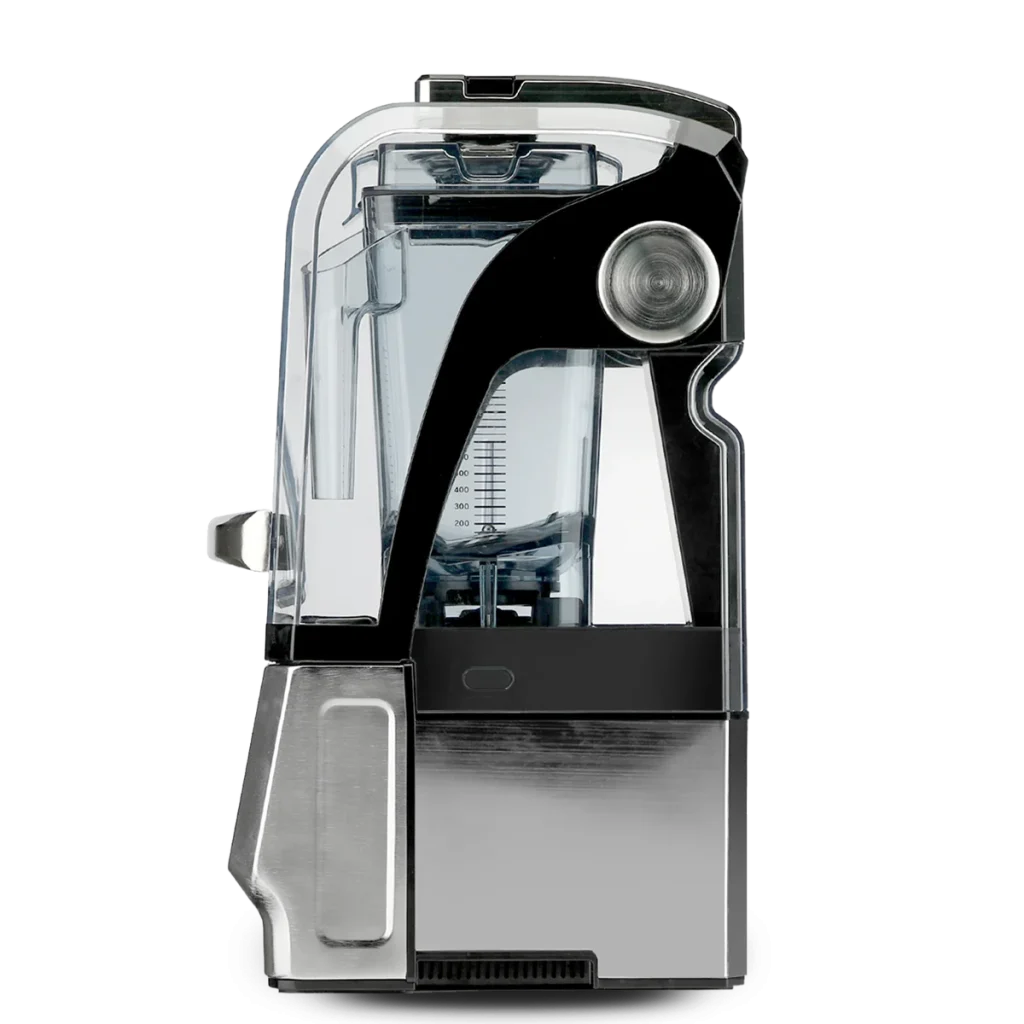
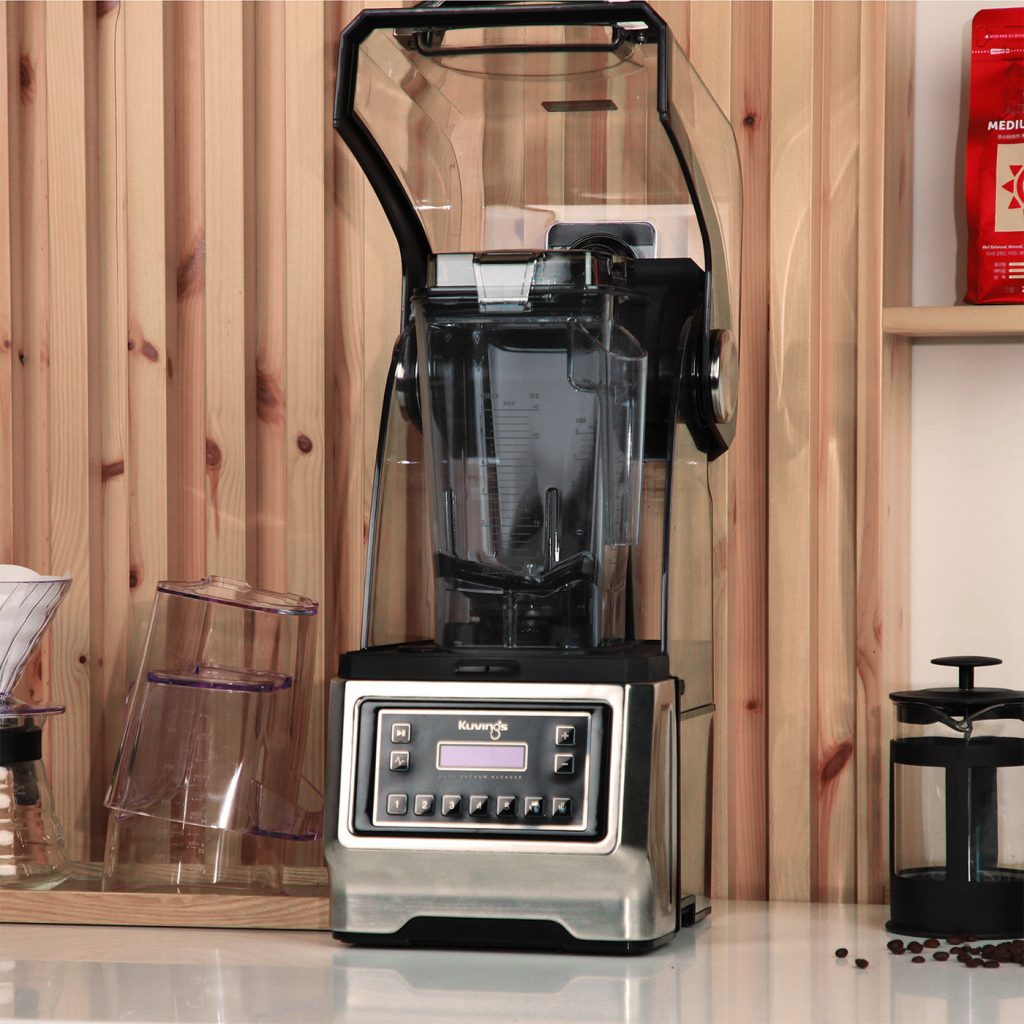
The Kuvings CB1000 is a 1,700 W commercial blender that draws the air out of the container before the blades turn. Kuvings classifies it for commercial use and builds it around a 1,400 ml BPA-free Tritan container, five preset buttons and an automatic sound enclosure.
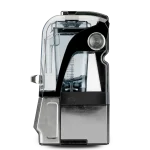
It takes 220 x 245 mm of counter and stands 480 mm tall with the hood in place — a narrower, deeper-set footprint than the CB850 below it in the range, and 21 mm taller. At 11 kg it is a substantially heavier build than that machine.
This is a single-station machine rather than a production blender. If you are building drinks two or three at a time in front of a customer, and the finish of the drink is part of what you are selling, that is the job it is designed for.
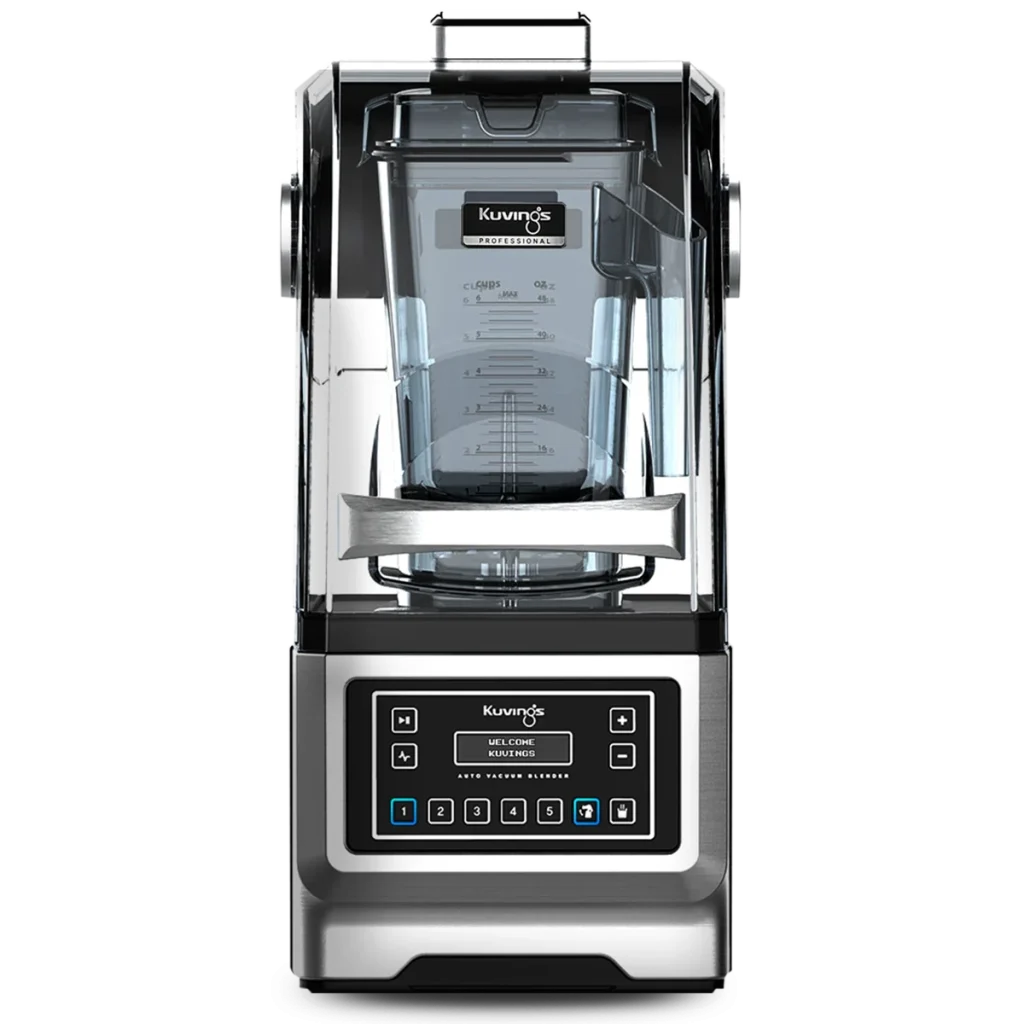
Supplied as the 220-240 V South African model with a South African plug, and covered for two years on the motor and blending components by Kuvings South Africa.
THE VACUUM SYSTEM
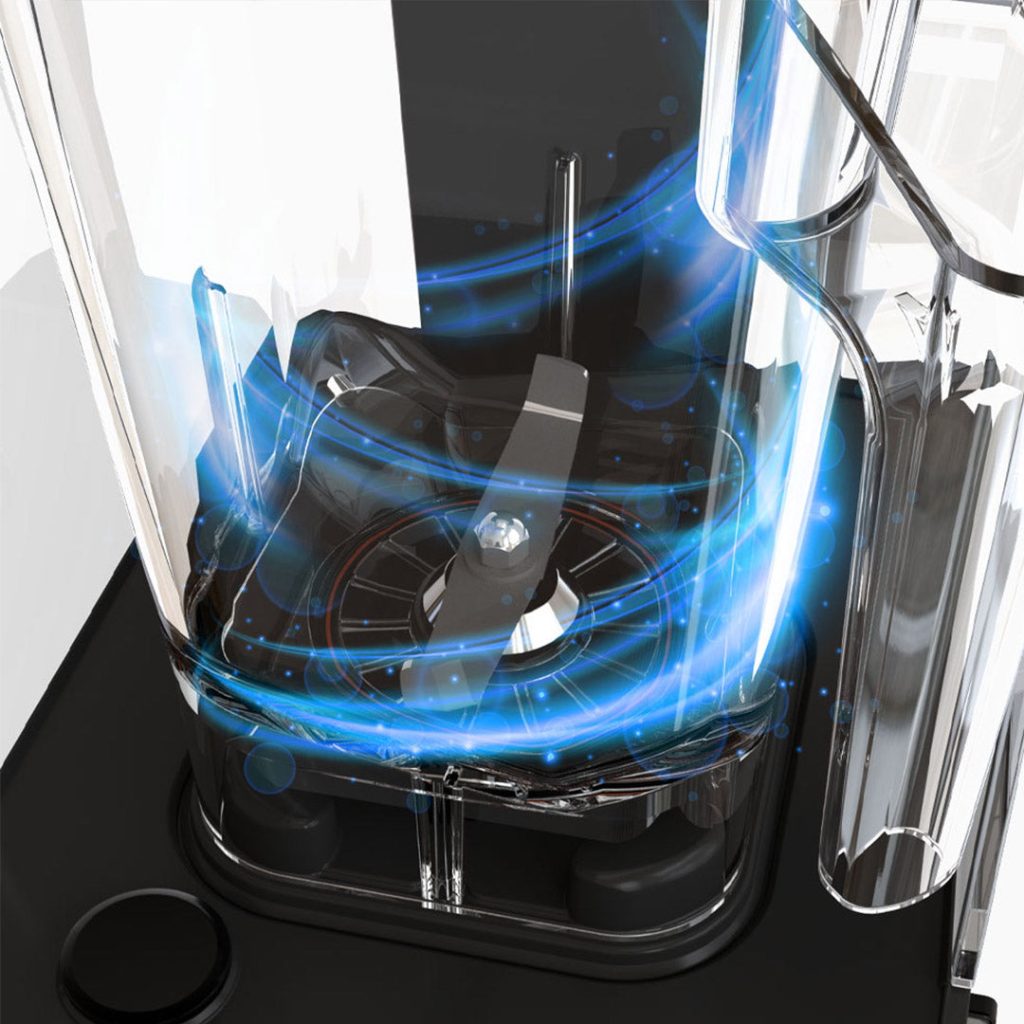
Air out first, then blend
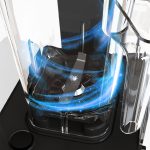
A conventional blender whips air through the ingredients along with everything else. That air is what produces the foam collar on a smoothie, and it is what starts the browning and separation you see in a drink that has stood for ten minutes. The CB1000 removes the air from the container before blending so there is far less of it to whip in.
Kuvings describes the result as drinks that “last longer, taste fresher and contain less foam and separation”. The foam and separation part is straightforward and visible in the glass. On nutrient retention, Kuvings publishes no test figures for the CB1000, so we do not quote a percentage — what removing air demonstrably does is slow oxidation, and how much that matters depends on what you are blending and how long it stands.
Where it earns its keep commercially is in drinks that sit on a pass or go out in a clear cup. A smoothie with no foam collar, a green juice that has not started to brown at the edges, and an acai bowl base that holds its texture all read as better made.
ON THE MENU
Drinks that look as good as they taste
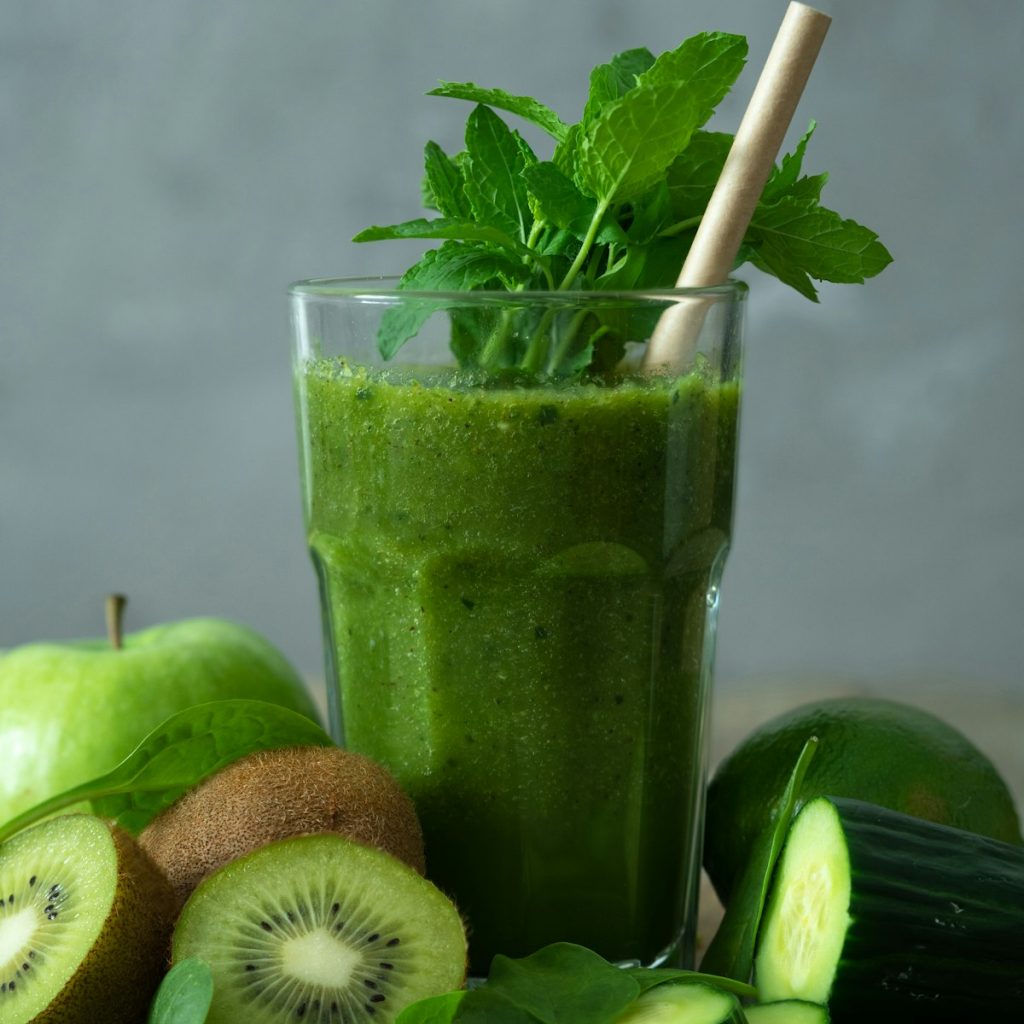
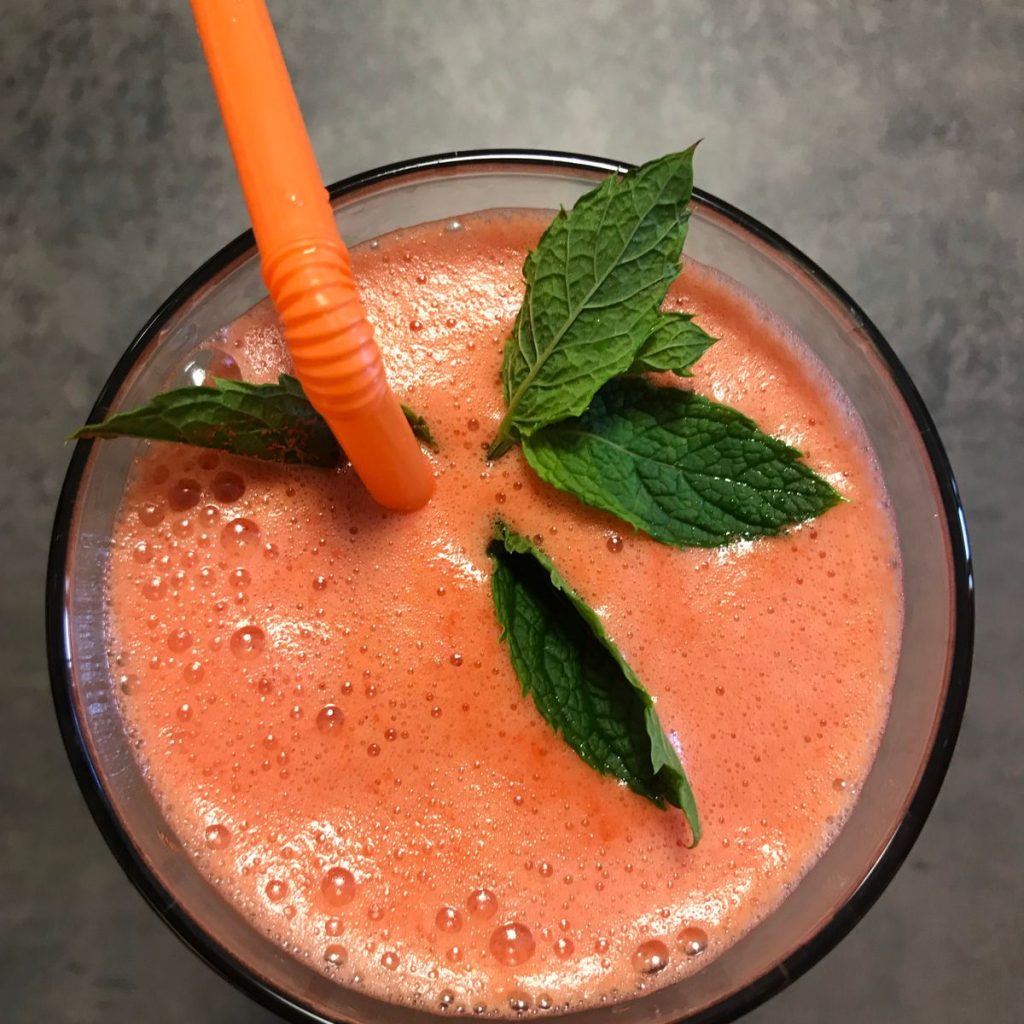
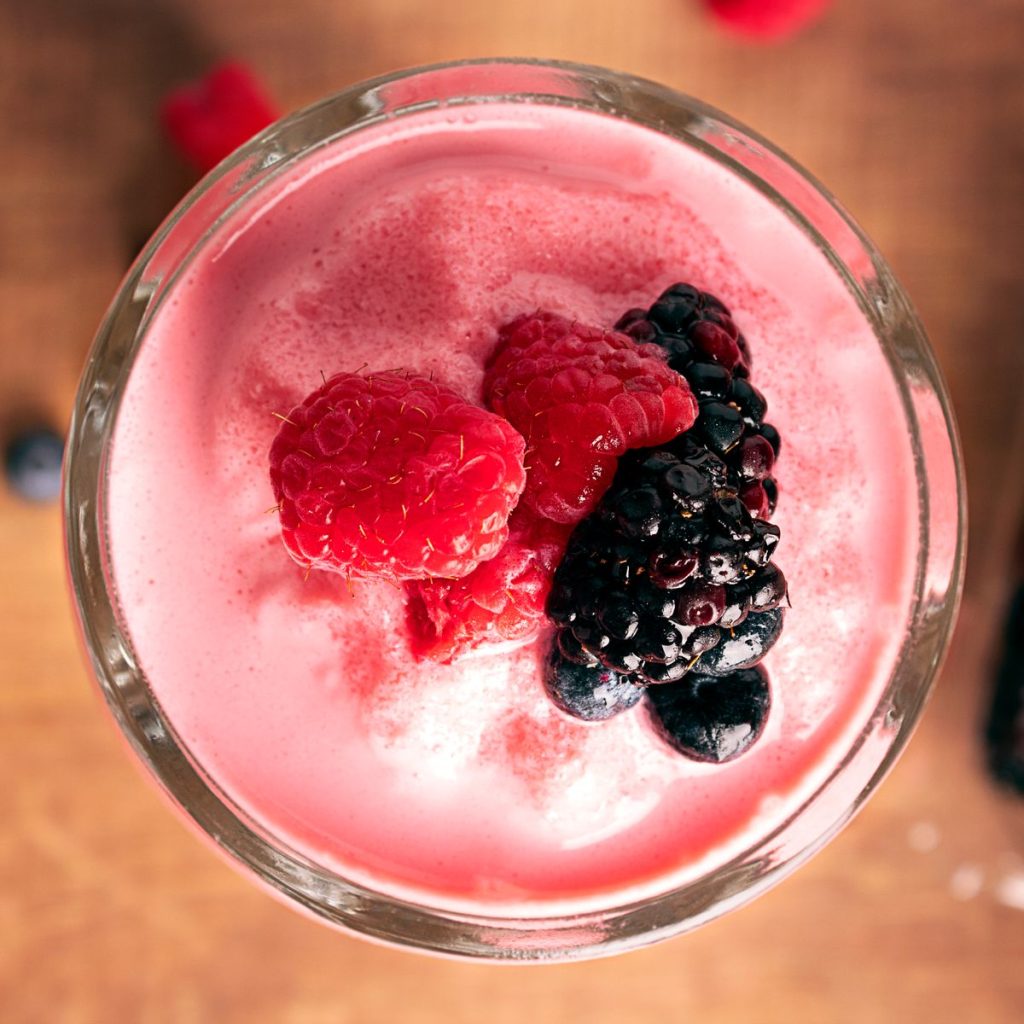
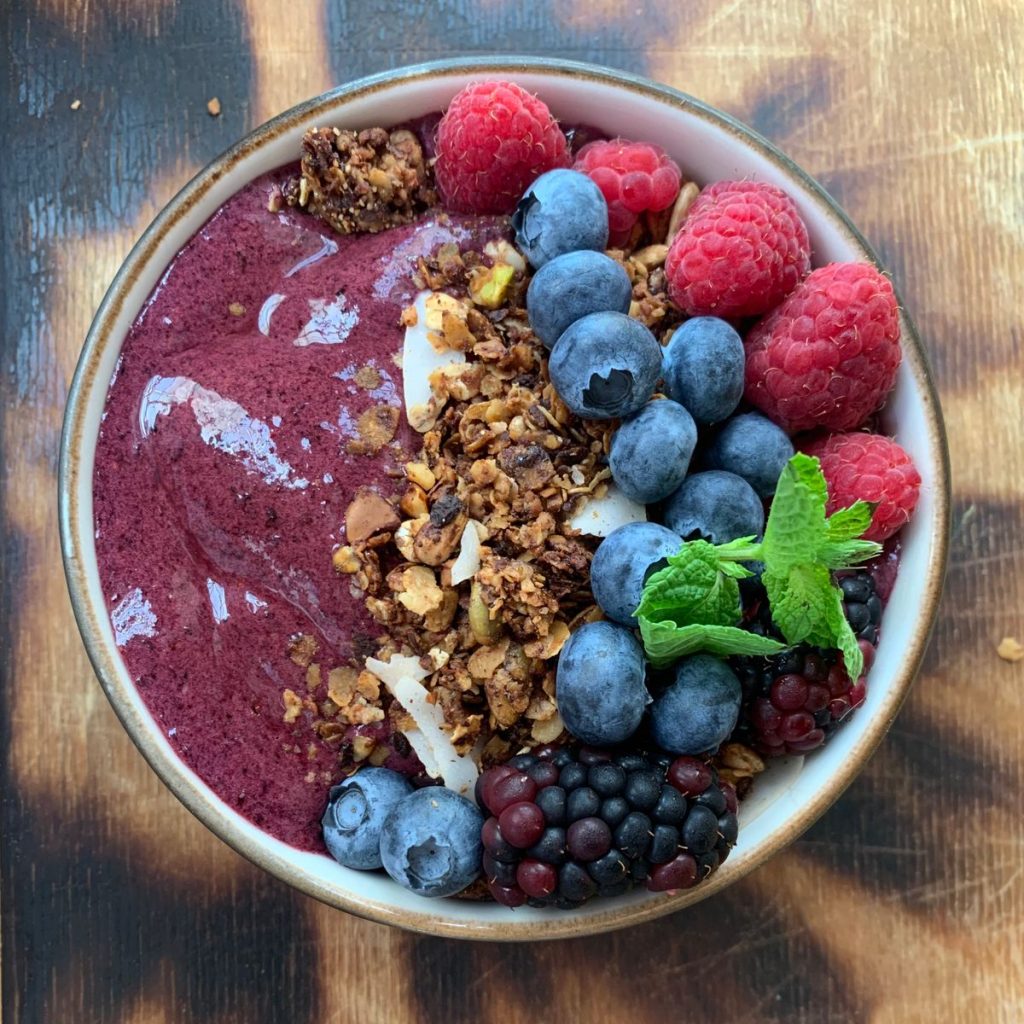
Green smoothies, berry blends, fresh juices and açaí bowl bases are the CB1000’s daily work. Because the air is drawn out before the blades turn, a green smoothie comes out a deeper, more even colour, and a berry blend holds its shade instead of paling into foam.
The 1,700 W motor handles frozen fruit and ice for frappés, and the preset programs give a thick açaí base without a tamper. The self-clean cycle between a berry blend and a green one keeps flavours from carrying across.
For a café or juice bar, the difference shows in the glass on the counter and in the cup that goes out the door: drinks that have not separated by the time they reach the customer.
THE SOUND ENCLOSURE
A hood that closes itself
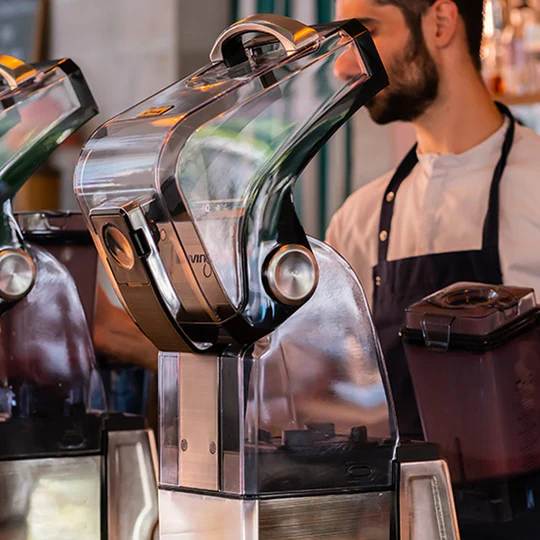
A high-speed blender at full power is the loudest thing in most cafés. The CB1000’s hood opens and closes automatically at the press of a button and damps the sound at source, which is the difference between a drink order interrupting a room and passing unnoticed.
Kuvings does not publish a decibel figure for the CB1000, and we would rather say so than repeat a number we cannot verify. What an enclosure of this type reliably does is remove the harsh upper frequencies; it does not make a 1,700 W motor quiet.
One practical note that applies to every enclosed blender: a closed hood restricts airflow around the motor housing. Keep to the published run limit and let the machine rest between long blends rather than running back-to-back cycles under the hood.
CONTROL AND CONSISTENCY
Five preset buttons, 37 recipe settings
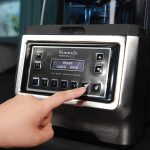
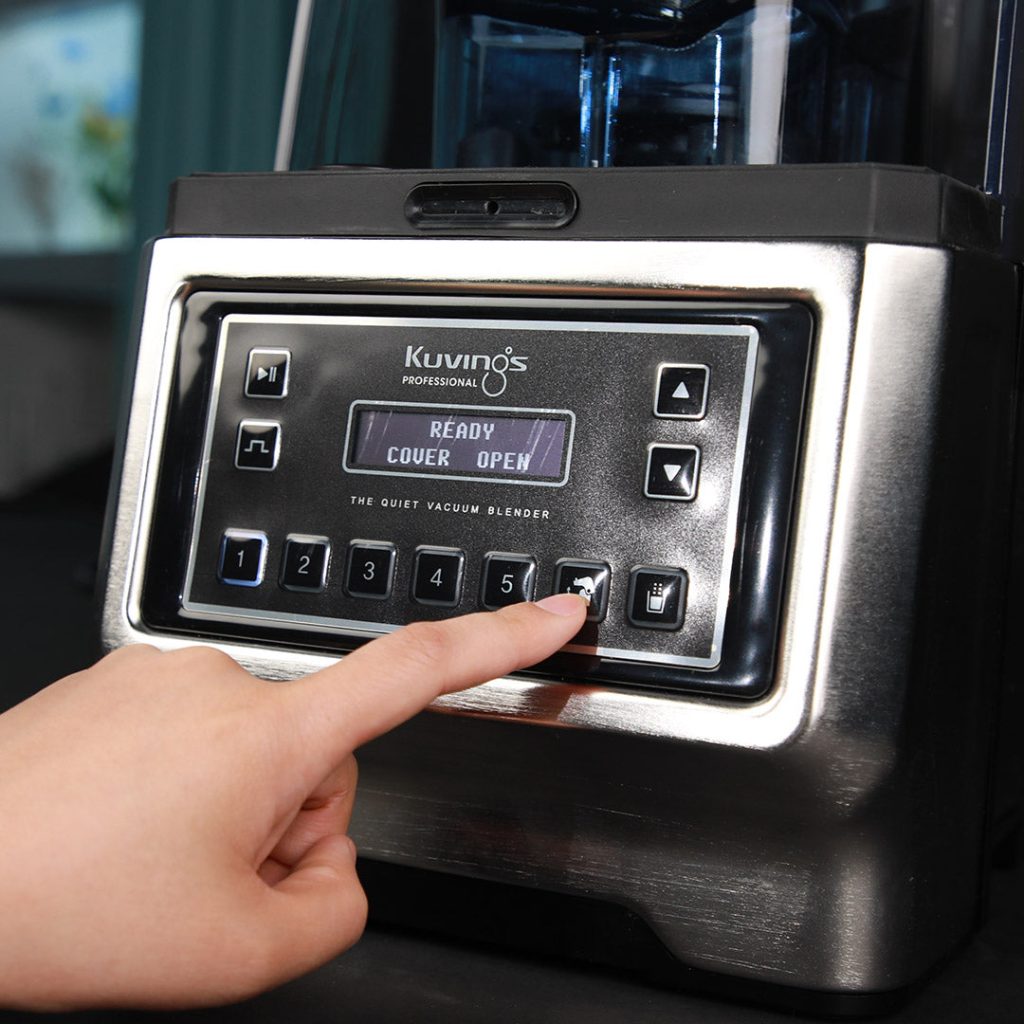
The CB1000 carries 37 pre-programmed recipe settings, any five of which can be assigned to the preset buttons on the panel. A quick-start button runs a fixed cycle for the drink you make most often.
The reason this matters commercially has little to do with the recipes themselves. A programmed cycle draws the same vacuum and runs the same length at the same speed whoever presses it, so the smoothie a new staff member makes on their second shift matches the one the owner makes.
A separate cleaning program runs the jug with warm water and a drop of detergent between drinks — the practical way to switch from a berry base to a green base without carrying flavour across.
MADE FOR SOUTH AFRICAN POWER
220-240 V, 50/60 Hz, South African plug
The CB1000 we supply is the 220-240 V, 50/60 Hz model and ships with a South African plug. It runs on a standard wall socket — 1,700 W is well inside the capacity of an ordinary 16 A kitchen circuit.
This is worth checking whoever you buy from. Commercial blenders brought in on demand are frequently 110-120 V units built for the North American market, and a step-down transformer on a 1,700 W motor is a compromise you will feel in a busy service.
Every plug-in machine EcoHub supplies is the correct South African voltage with a South African plug, supported locally.
The CB1000 in operation
Kuvings’ own introduction to the vacuum system, the sound enclosure and the preset controls.
Kuvings CB1000 specifications
| Blending | Vacuum — air drawn from the container before blending |
| Container material | Tritan (BPA free) |
| Maximum run time | Under 3 minutes per blend |
| Noise control | Automatic opening and closing sound enclosure |
| Cleaning | Self-clean program |
| Safety | Container seating sensor |
| In the box | CB1000 blender, sound enclosure, user manual, e-recipe book |
Kuvings publishes a two-page product sheet for this machine, which we host here: the Kuvings CB1000 brochure (PDF, 0.8 MB).
How the CB1000 sits against the alternatives
The closest comparison is inside the Kuvings range itself. The CB850 runs the same 1,700 W motor and the same 1,400 ml Tritan container under the same style of automatic enclosure, and costs considerably less. What the CB1000 adds is the vacuum system and a considerably heavier machine — 11 kg against 7.4 kg — in a narrower, taller body. If vacuum blending is not something your drinks menu will show off, the CB850 does the rest of the job.
Against the Vitamix The Quiet One, the CB1000 sits below it on acoustic engineering — The Quiet One remains the reference machine where silence is the specification, and it does not blend under vacuum. The Blendtec Connoisseur 825 is the other enclosed, fully programmed machine in this bracket, jar-driven rather than vacuum-driven. Against the OmniBlend V+ with sound cover, the CB1000 is a different class of machine altogether; the OmniBlend remains the value option for an enclosed blender with a slightly larger 1.5-litre jug.
If your work is batch preparation rather than single drinks, none of these is the right answer — the four-litre OmniBlend V 4L PRO or the Vitamix Vita-Prep 3 are the better fit for a production kitchen.
Questions we are asked about the CB1000
It removes the air from the container before the blades start, so less air is whipped into the drink. In the glass that shows up as less foam, less separation as the drink stands, and slower browning on anything that oxidises quickly — green juices and banana bases most visibly.
Kuvings publishes no test figures for the CB1000, so we do not quote a percentage. Reducing the air in the container slows oxidation, and oxidation is what degrades the more fragile compounds in a fresh drink. How much difference that makes depends on the ingredients and on how long the drink stands before it is finished.
Same 1,700 W motor, same 1,400 ml Tritan container, same automatic enclosure. The CB1000 adds the vacuum system, weighs 11 kg against the CB850’s 7.4 kg, and takes a narrower but taller footprint. The vacuum function is what the price difference buys.
Kuvings does not publish a decibel rating for the CB1000, so we do not quote one. The enclosure noticeably softens the blend, particularly the high frequencies that carry across a room. It does not render the machine silent.
Kuvings publishes a limit of under three minutes per blend rather than a drinks-per-hour figure. Typical smoothie cycles run well inside that, so ordinary service is not a problem. The limit exists to protect the motor during unusually long blends, not to cap the number of drinks.
Yes. Ice crushing and frozen fruit are among the tasks the 1,700 W motor and stainless steel blade assembly are specified for, and several of the preset programs are built around frozen drinks.
No. Kuvings specifies hand washing. Dishwasher heat and commercial detergent shorten the life of any Tritan jug, so the intended routine is the self-clean cycle — warm water and a drop of detergent, run briefly — followed by a rinse, with the motor base wiped down and never immersed.
Kuvings does not publish an NSF listing for the CB1000. The Tritan the container is moulded from carries its own food-contact material certifications. If your environmental health officer requires a machine-level NSF listing, ask us before ordering.
Kuvings lists the blender, sound enclosure, user manual and e-recipe book in the box. No tamper is listed, and a vacuum-sealed container is not designed to be opened mid-blend. Thick blends are handled with the preset programs and a little added liquid.
Kuvings South Africa covers the CB1000 for two years on the motor and the blending components, and the machine is supported locally — spares and service are handled here, not by shipping the unit abroad. Keep to the published run limit under the hood; a commercial warranty assumes the machine is used as specified.
Yes. The unit we supply is 220-240 V, 50/60 Hz with a South African plug, and draws 1,700 W from a standard socket. No transformer, no adaptor.
Why Buy From EcoHub
Backed by a local warranty
Every appliance we sell is supported here in South Africa, with after-sales help and spare parts held locally.
Made for South African power
Some premium machines sold here are 110 V US models, with the voltage in the fine print. Ours are 220–240 V South African models with SA plugs, so no transformer is needed.
Fast nationwide delivery
Delivered across South Africa in 1-3 days, with same-day dispatch on cleared payments ordered before 14:00.
Authorised dealer
Expert advice from a specialist store that has been helping South Africans choose blenders and juicers since 2012.




Reviews
There are no reviews yet