










POWER YOU CAN WHEEL
3,600 W in a unit you can move on your own
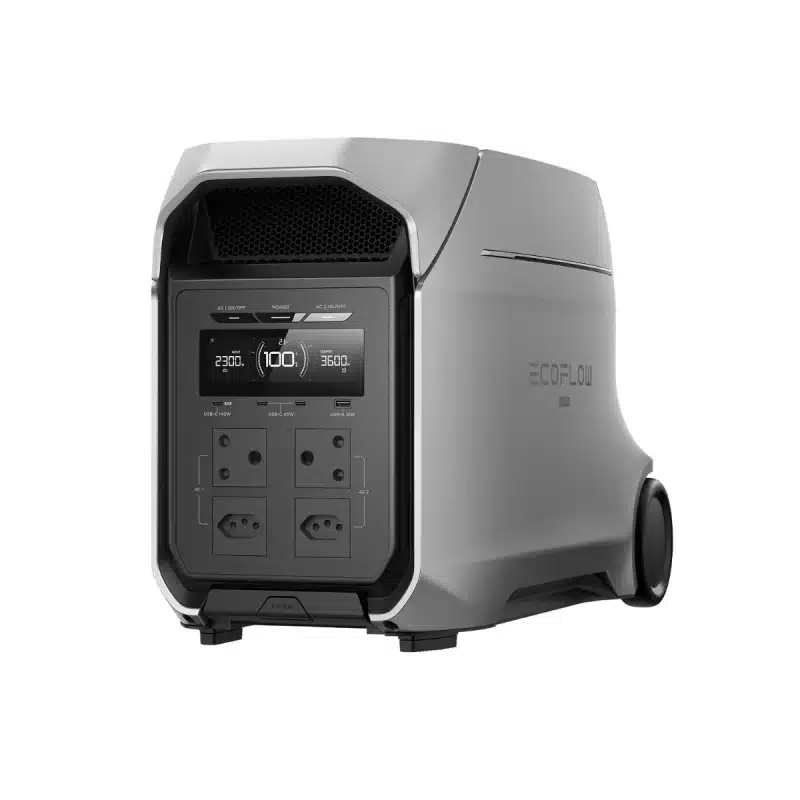
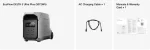
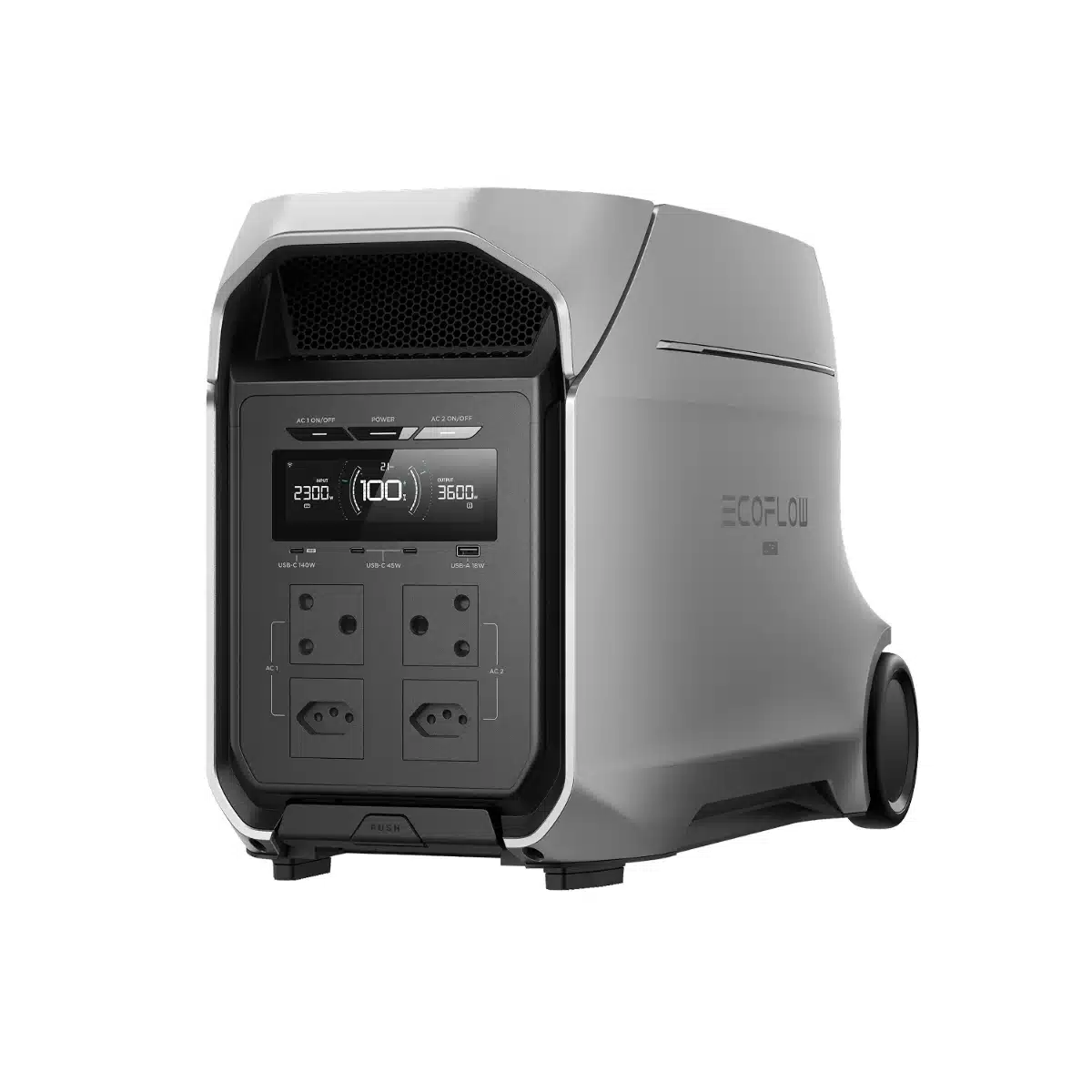
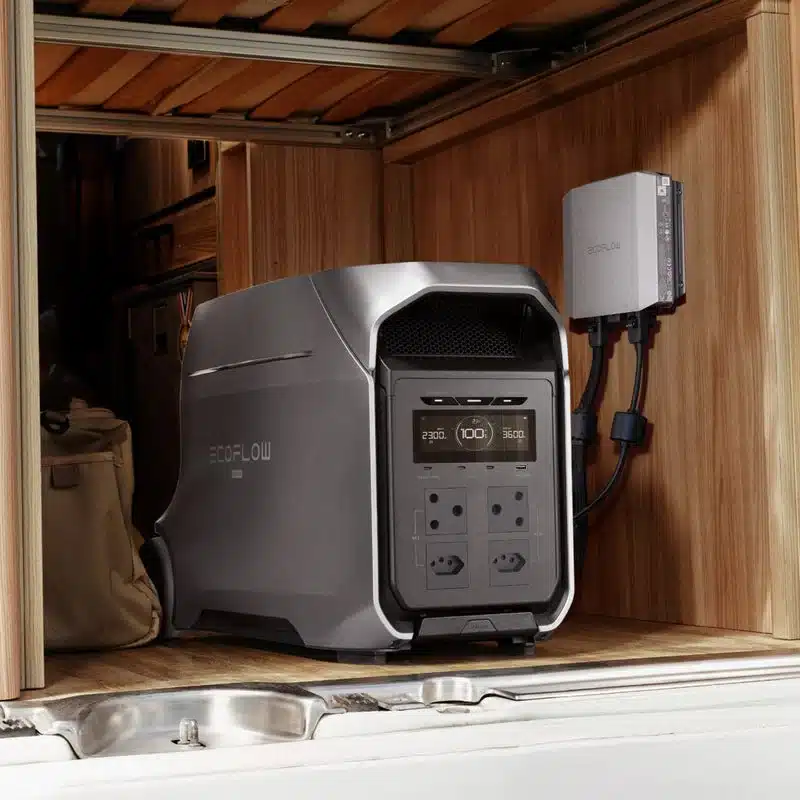
The EcoFlow DELTA 3 Ultra Plus is a 3,072 Wh lithium iron phosphate (LFP) power station with a 3,600 W pure sine wave inverter and a 7,200 W surge rating. It runs a fridge, lights, Wi-Fi, a TV, a microwave or a kettle, and starts motor loads such as a pump or compressor.
X-Boost lets it run resistive appliances such as a heater or hairdryer up to 4,700 W at reduced voltage. Four South African sockets carry the AC output, with USB-C, USB-A, a car socket and a 30 A Anderson port for 12 V gear.
At 33.7 kg on built-in wheels, it is light enough for one person to move, and it expands to about 7 kWh with a DELTA Pro 3 Smart Extra Battery.
Three kilowatt-hours that back up the house during the week, and charge from the alternator on the way to camp.
LOAD-SHEDDING
Switches over in under 10 milliseconds
Leave it plugged into the wall with your essentials plugged into it and it works as a UPS, taking over in under 10 ms when the grid drops. Computers, routers and TVs stay on.
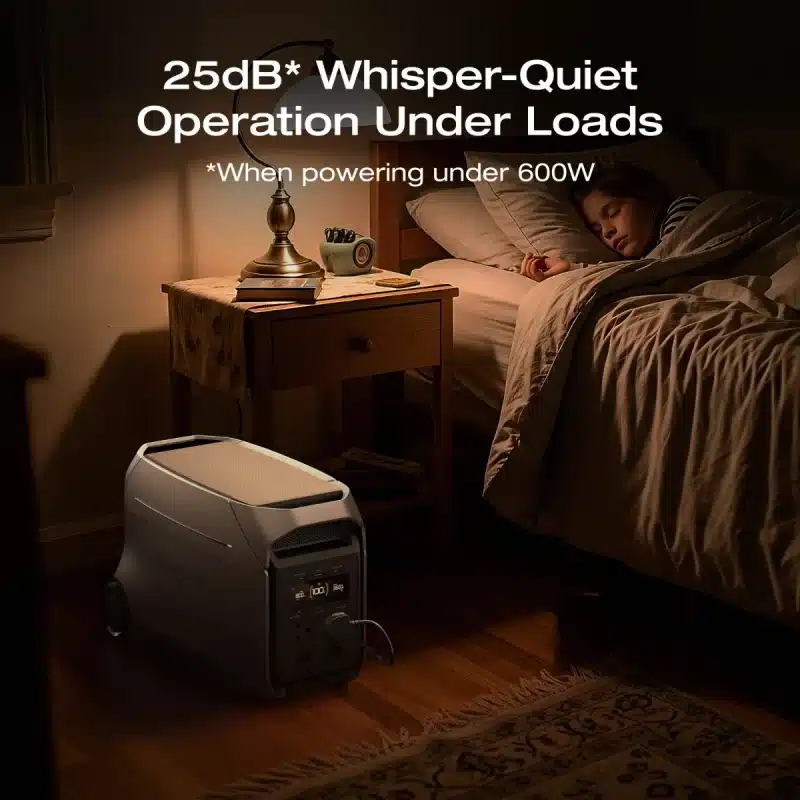
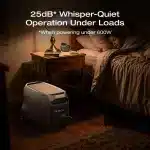
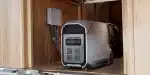
It is quiet enough to keep in a living room or bedroom: EcoFlow measures 25 dB or less at 600 W, at one metre.
On essentials (a fridge, router, LED lights and a TV, about 2 kWh a day between them) a single unit covers more than a day. Add an extra battery and it is closer to three days. Send us your appliance list and we will do the sum.
WHERE IT WORKS
Kitchen, laundry, campsite, workshop
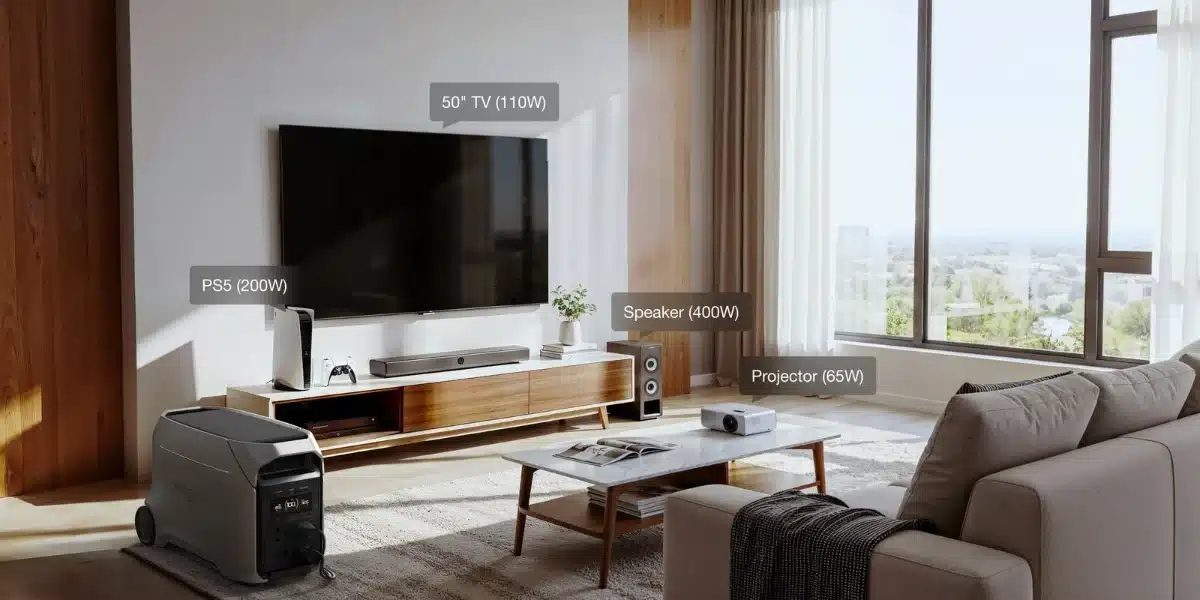
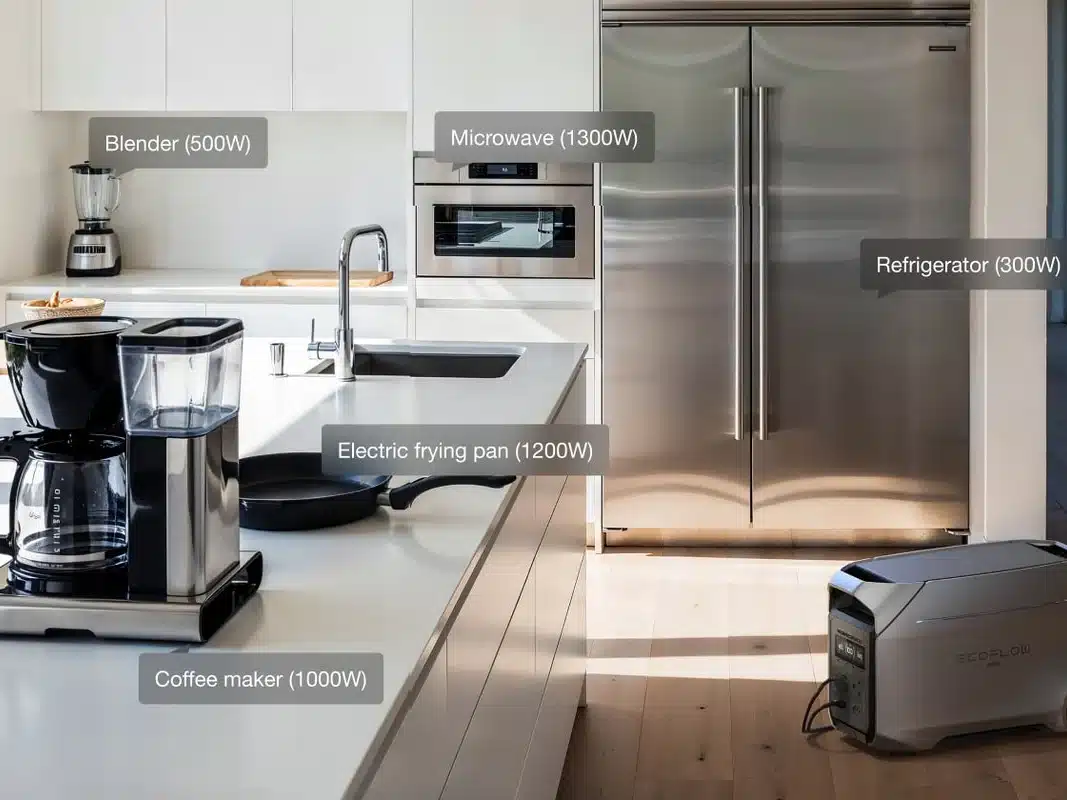
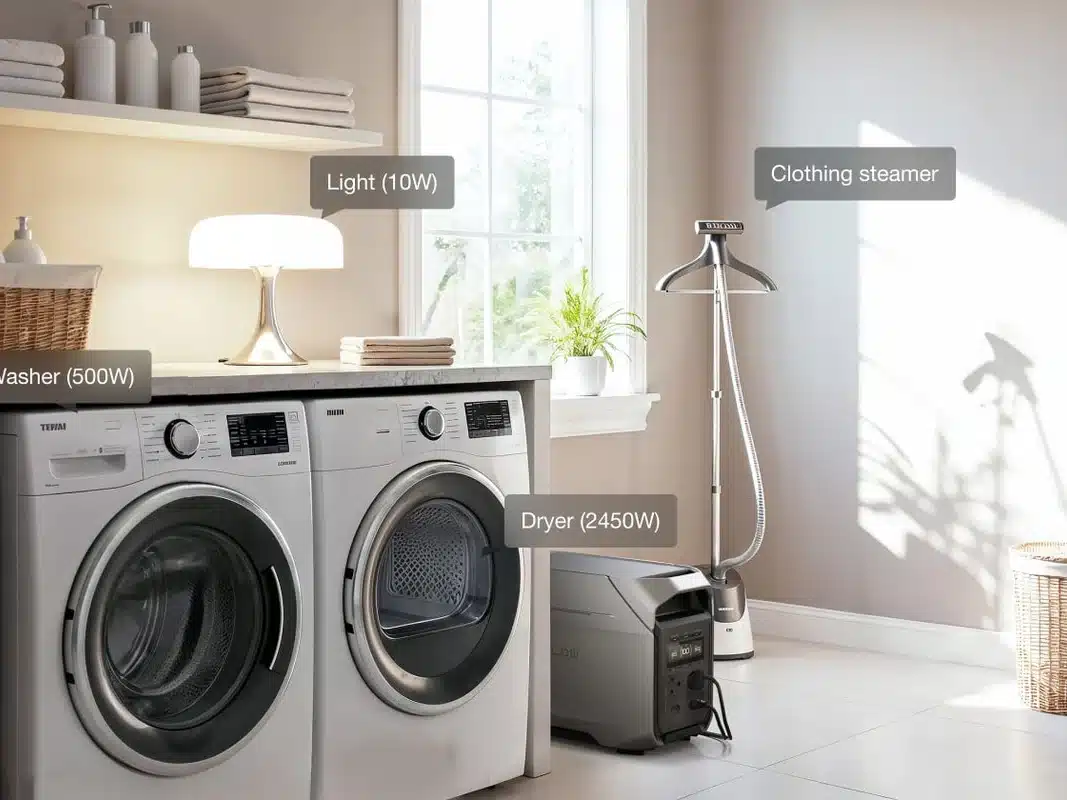
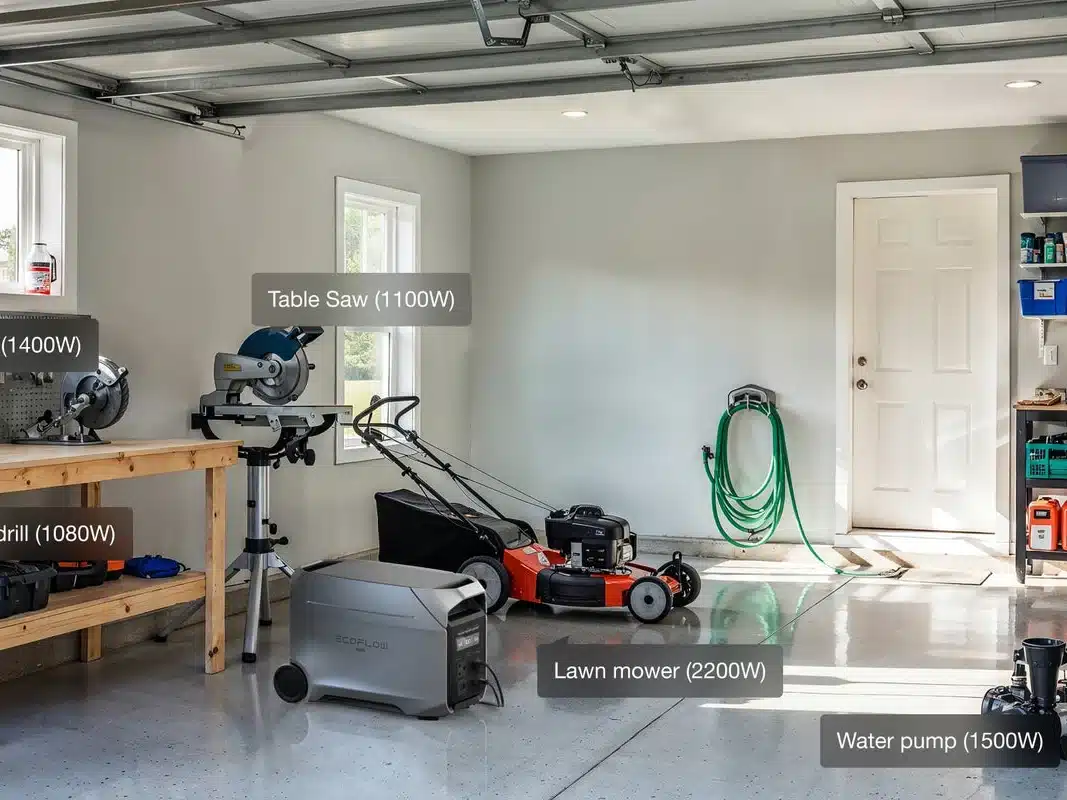
In the kitchen it runs the fridge, coffee machine and microwave through an outage. In the laundry, a washing machine on a cold cycle is within reach (a tumble dryer’s heater usually is not).
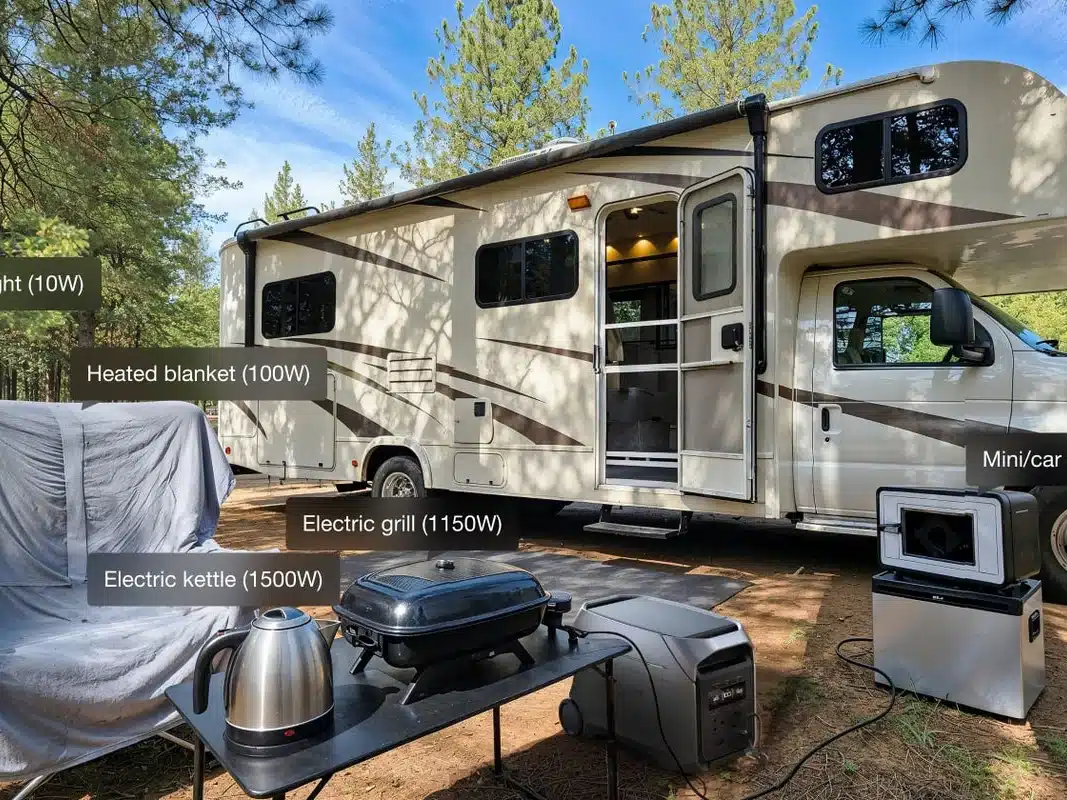
At a campsite it powers a fridge-freezer, lights and a coffee machine with no generator noise. In a workshop or on a building site it runs drills, grinders and a compressor where there is no supply.
For a small business it keeps a till, card machine and reception computer working through load-shedding.
CHARGING
Back to 80% in 75 minutes
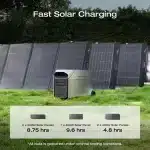
From a wall socket it charges at up to 2,300 W: empty to 80% in about 75 minutes, full in about 110. An hour and a half of grid power between load-shedding slots refills most of it.
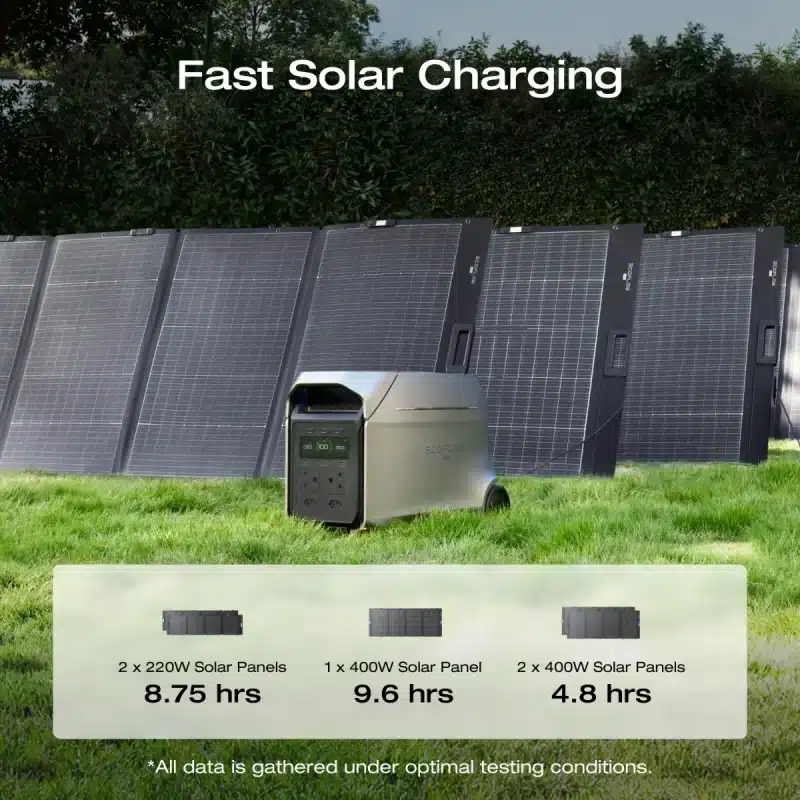
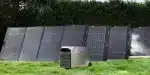
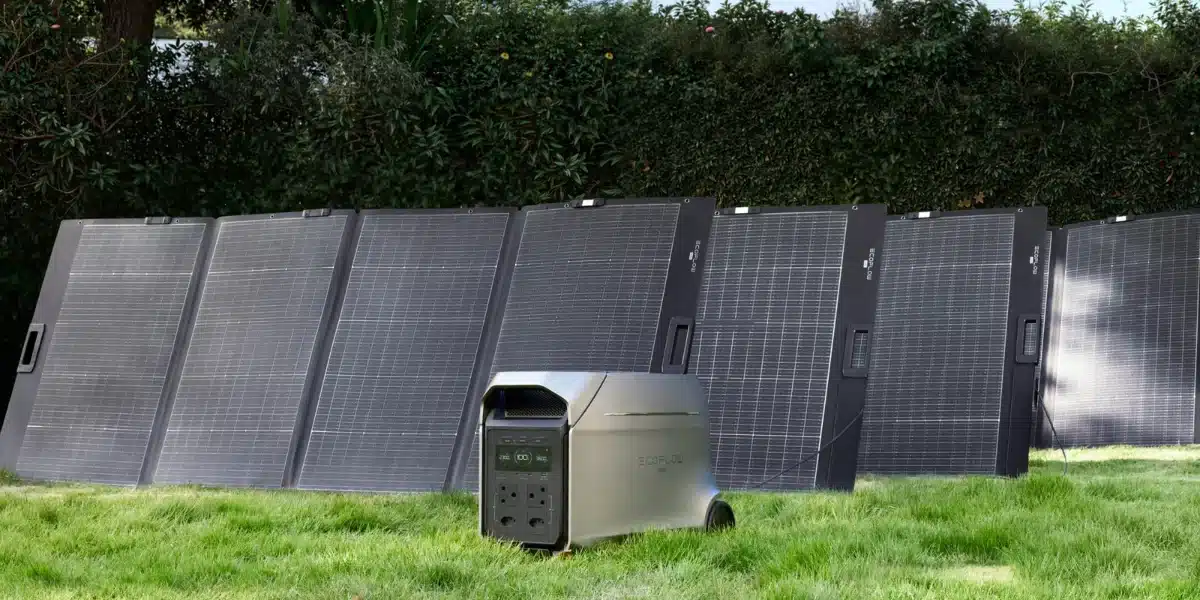
Solar input is up to 1,600 W, enough for four 400 W panels, and it charges from a generator at up to 2,400 W.
Solar and alternator charging can run together on the road, and a 12 V or 24 V vehicle socket tops it up slowly when nothing else is available.
ON THE ROAD
Charges from the alternator while you drive
For overlanding and touring, the DELTA 3 Ultra Plus accepts up to 1,000 W from EcoFlow’s Alternator Charger through its dedicated port. A few hours of driving between campsites puts back a full day of fridge, lights and camp kitchen.
That is far faster than a car’s 12 V socket, and there is no second battery or separate DC-DC charger to fit. The Alternator Charger is installed by an auto electrician and sold separately.
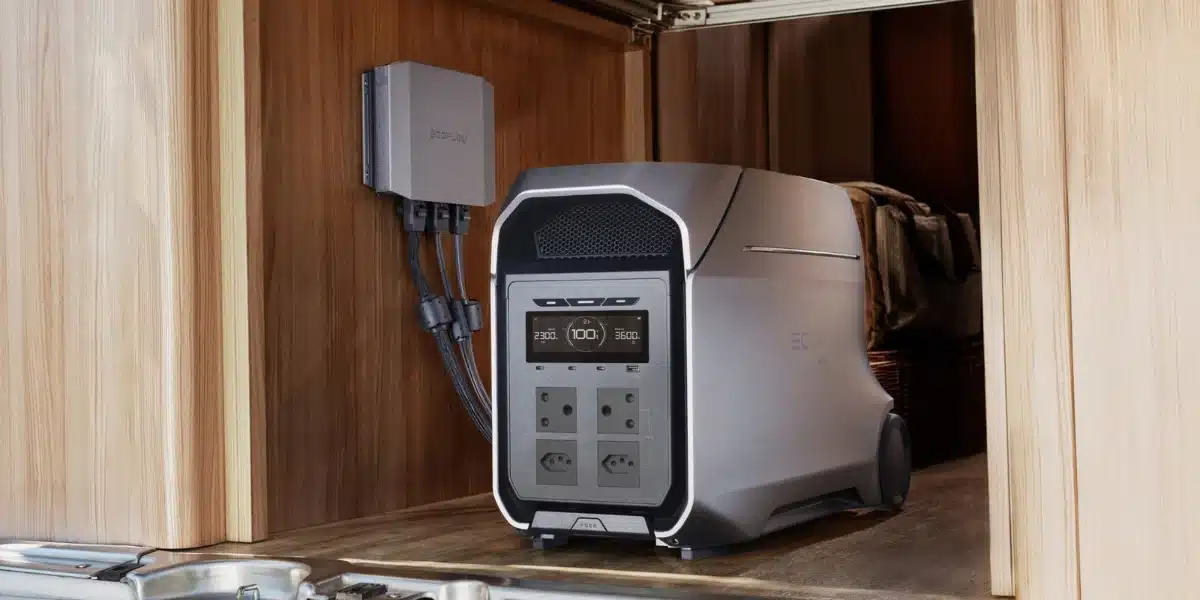
Mounted in a canopy or trailer and fed by roof panels and the alternator, it becomes a camp power system that comes out of the vehicle and goes into the house when you get home.
MADE FOR SOUTH AFRICAN POWER
The South African model, with South African sockets
We supply EcoFlow’s South African version (EFDELTA3UPLUS-ZA): 230 V, 50 Hz output on four South African sockets, charging from an ordinary wall socket.
Units bought from overseas stores are often the 120 V American model, which needs a transformer for South African appliances and carries no local warranty.
EcoFlow South Africa’s warranty is 5 years: 3 years standard, plus 2 more when you register the unit in the EcoFlow app. Register it on the day it arrives; we log and follow up any claim with EcoFlow for you.
The DELTA 3 Ultra Plus in operation
EcoFlow’s guide to working out how much power you need, using the DELTA 3 Ultra Plus.
DELTA 3 Ultra Plus specifications
| Surge output | 7,200 W |
| X-Boost | Runs resistive appliances up to 4,700 W at reduced voltage |
| AC outlets | 4 × South African sockets, 230 V, 50 Hz |
| AC charging | 220–240 V, up to 2,300 W; 0–80% in 75 min, 0–100% in 110 min |
| Generator charging | Up to 2,400 W |
| Alternator charging | Up to 1,000 W with EcoFlow’s Alternator Charger (sold separately) |
| Vehicle socket charging | 12 V / 24 V, 8 A |
| USB outputs | 1 × USB-A (18 W), 2 × USB-C (45 W) |
| 12 V DC outputs | Car socket (10 A), Anderson port (30 A); 378 W total |
| Expansion | One DELTA Pro 3 Smart Extra Battery, up to about 7 kWh |
| Noise | 25 dB or less at 600 W (1 m, 25 °C) |
| Connectivity | Wi-Fi, Bluetooth, EcoFlow app |
| In the box | DELTA 3 Ultra Plus, AC charging cable, manual and warranty card |
How the DELTA 3 Ultra Plus sits against the alternatives
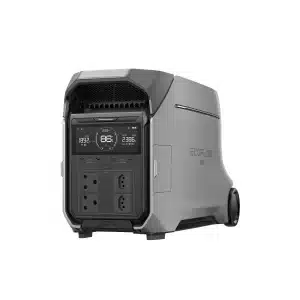
The EcoFlow DELTA Pro 3 is the step up: 4,096 Wh and a 4,000 W inverter, expandable to 12 kWh with two extra batteries. It weighs 51.5 kg against the Ultra Plus’s 33.7 kg. For home backup with growth in mind, the DELTA Pro 3; for a unit that travels as often as it stays home, the Ultra Plus.
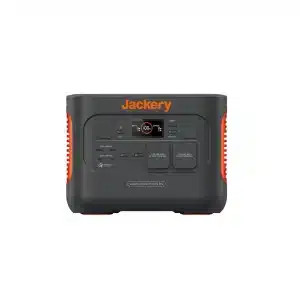
For weekends away rather than load-shedding, the Jackery Explorer 1000 Pro holds about a third of the energy (1,002 Wh, 1,000 W) and is far lighter to carry to a campsite.
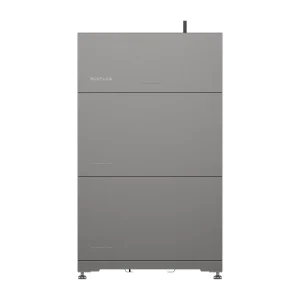
And for backup across the whole house, every day, the EcoFlow PowerOcean is wired in by an installer, switches every circuit over automatically and runs from rooftop solar.
Questions we are asked about the DELTA 3 Ultra Plus
It runs the essentials, up to 3,600 W at a time: fridge, lights, Wi-Fi, TV, computers and a kettle or microwave used one at a time. An oven, geyser, pool pump or air conditioning on full is beyond it.
A modern fridge uses about 1 to 1.5 kWh a day; with a router, LED lights and a TV, roughly 2 kWh. One DELTA 3 Ultra Plus covers that for more than a day, and with a DELTA Pro 3 Smart Extra Battery for about three days.
The DELTA Pro 3 Smart Extra Battery (4,096 Wh), which takes it to about 7 kWh. It does not use the DELTA 2 or DELTA 3 Plus extra batteries.
Yes, and it suits it well. It charges at up to 1,000 W from EcoFlow’s Alternator Charger while you drive, at up to 1,600 W from solar panels at camp, and its Anderson port runs a 12 V fridge directly. Keep it out of rain and dust, and secure it properly in the vehicle.
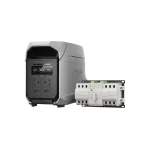
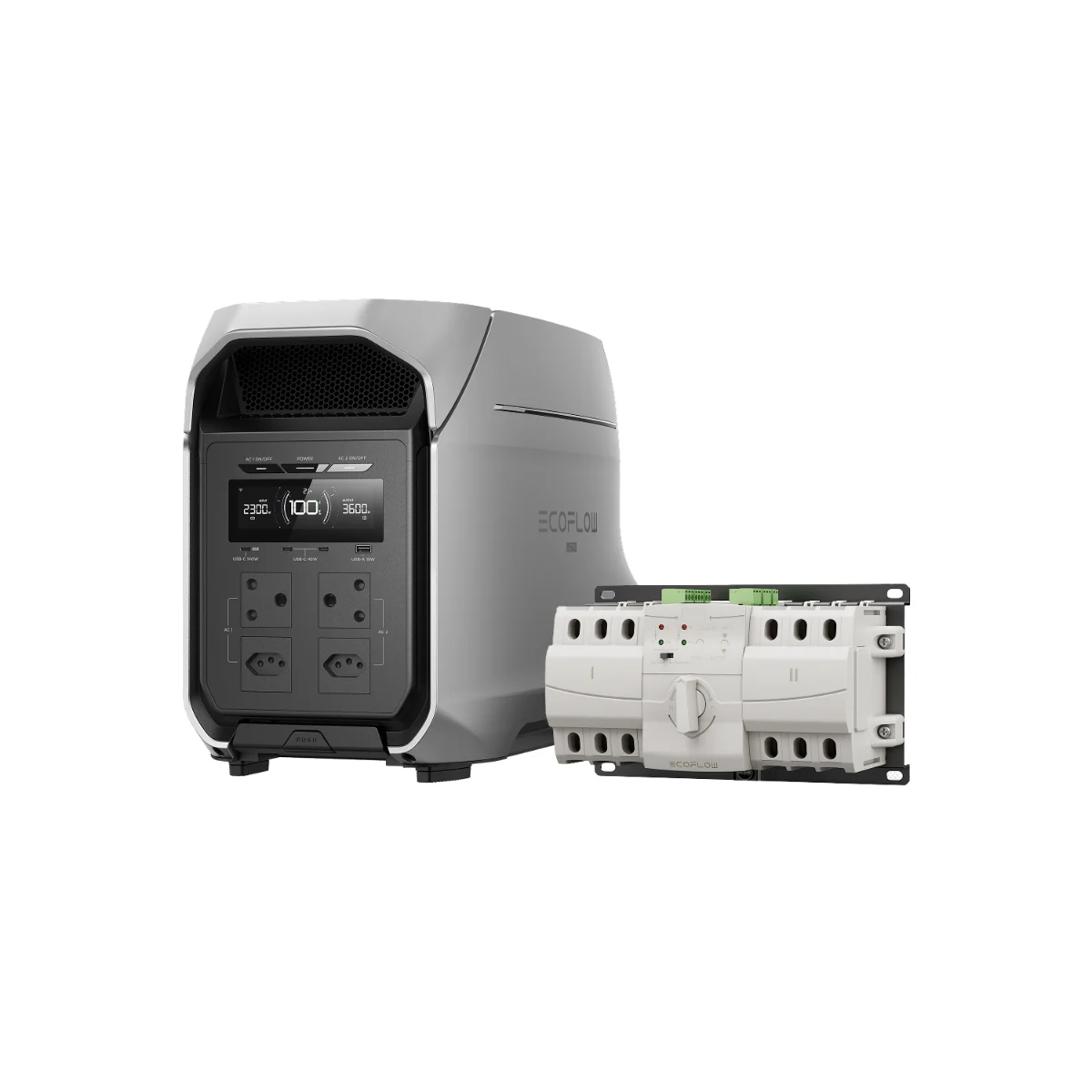
Yes, through a transfer switch installed by a registered electrician, who issues a certificate of compliance. In Cape Town and some other municipalities a system wired into the house has to be registered. Used only as a plug-in unit, it does not.
EcoFlow South Africa gives 3 years as standard and adds 2 years when you register the unit in the EcoFlow app, for 5 in total, counted from the date on your invoice. If anything goes wrong, contact us: we log the claim with EcoFlow and follow it up until it is resolved.
Not at everyday loads: 25 dB or less at 600 W. The fans become audible when it charges fast or runs close to its full output.
We order each unit from EcoFlow South Africa when you place your order, and confirm the delivery date with your order confirmation.
Why Buy From EcoHub
Supplied by EcoFlow South Africa
Every DELTA we sell is the South African model, supplied through EcoFlow South Africa, so it carries EcoFlow’s local warranty and support.
Sized before you buy
Tell us what you need to run, for how long and where, and we work out which unit and how many batteries it takes. A specialist store trading since 2012.
Room to grow
When portable power is no longer enough, we supply EcoFlow PowerOcean whole-home systems and refer installers in our network.
Delivery or collection
Delivered across South Africa, or collected by arrangement. Stock and delivery dates are confirmed with your order.



Reviews
There are no reviews yet