







ALL-IN-ONE BACKUP POWER
Inverter, battery and solar controller in one case
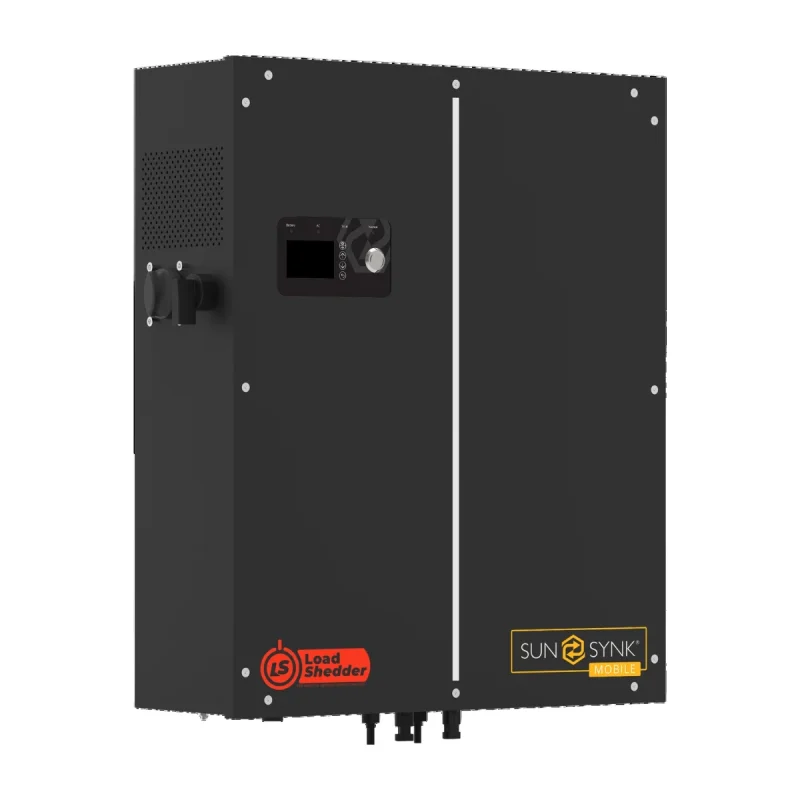
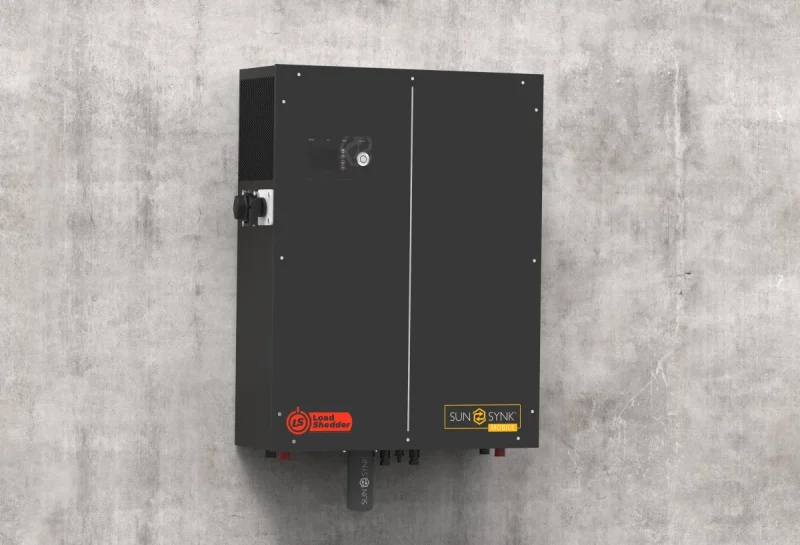
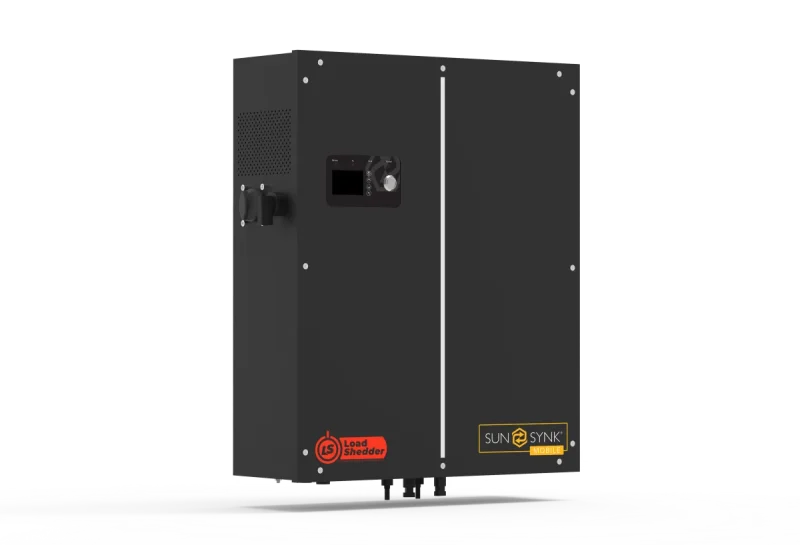
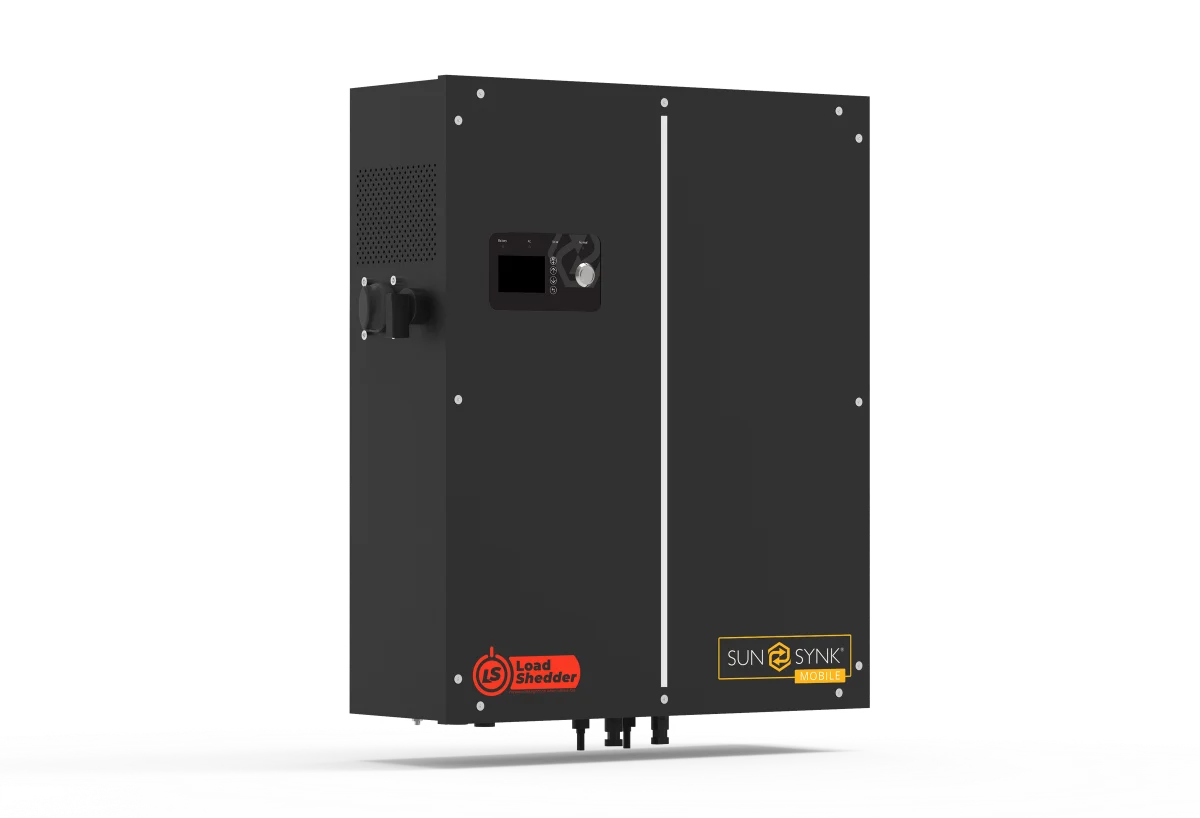
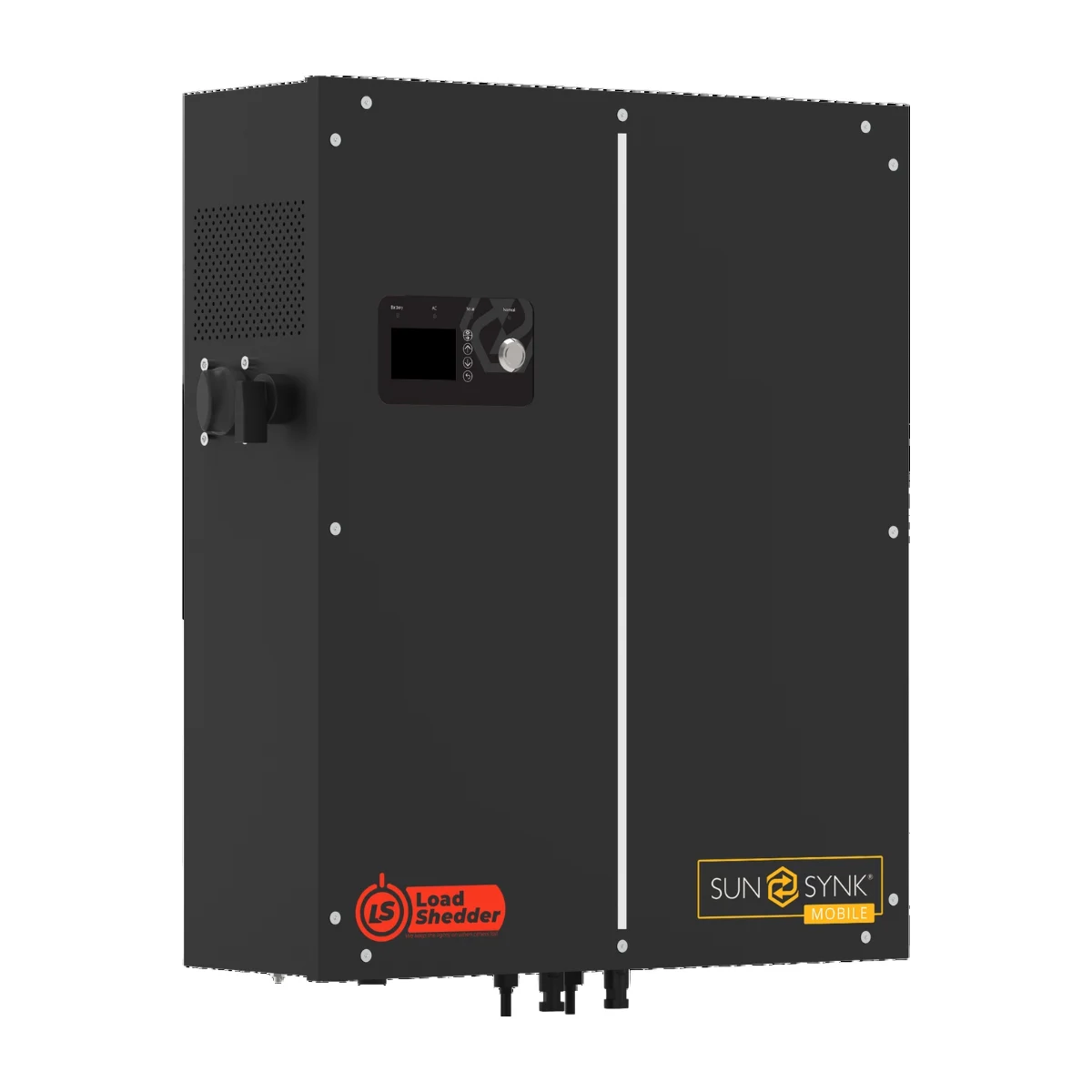
The Loadshedder 4 replaces the usual garage wall of equipment. Instead of a separate inverter, battery rack, solar charge controller and the cabling between them, everything sits in one enclosure 701 mm tall, 544 mm wide and 182 mm deep. The grid, load, CT sensor and Wi-Fi ports are underneath, so the installer wires it into the house and most of the job is done.
Inside is a 3.6 kW pure sine wave hybrid inverter and a 3.84 kWh lithium iron phosphate (LiFePO4) battery at 51.2 V. It runs your essential circuits: lighting, the plugs for the router, TVs, computers and the fridge, the gate motor and the alarm. When the grid drops, it switches over in 10 milliseconds, fast enough for most routers and computers to carry on without a restart.
It is the same Sunsynk Mobile platform as the Powerlynk X, in a black enclosure. Sunsynk’s datasheets give the two identical electrical figures. The difference Sunsynk publishes is parallel capacity: the Loadshedder is listed for up to six units.
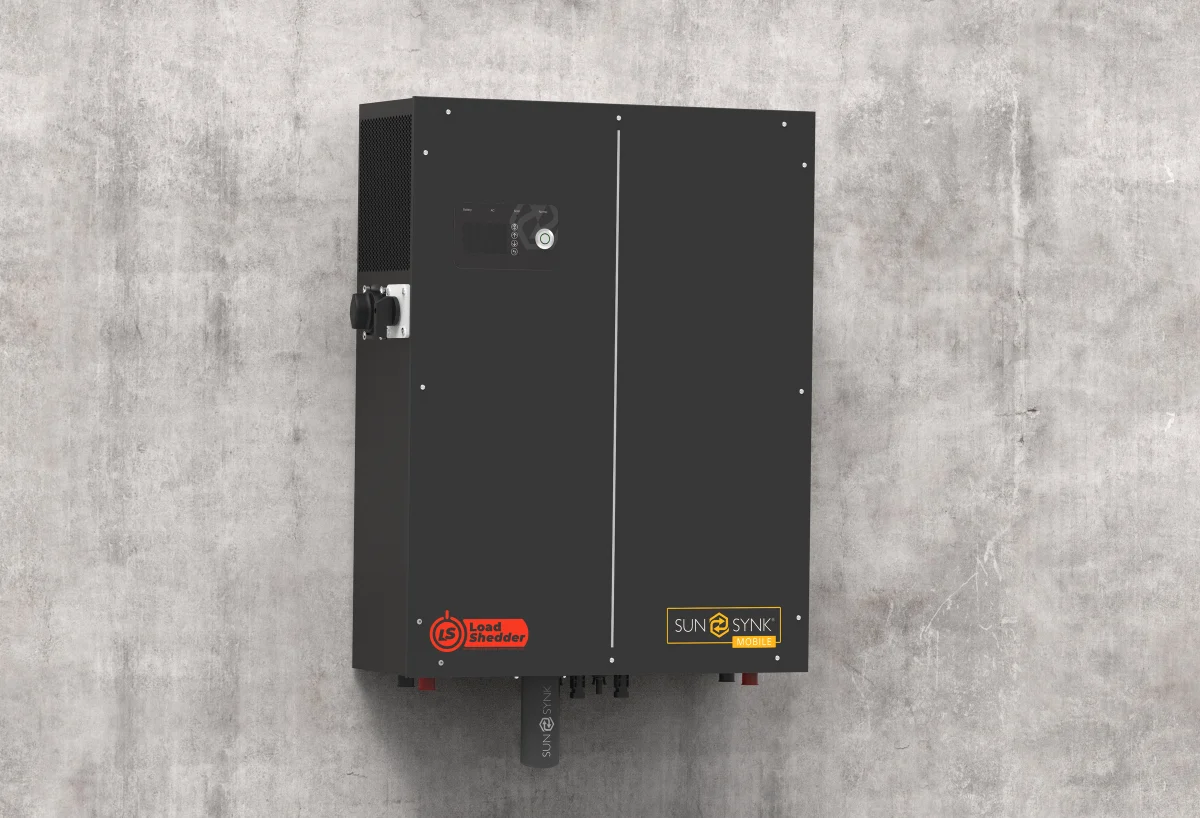
All-in-one, plug-and-play and expandable.
Sunsynk Mobile
WHAT IT RUNS
Sized for the circuits that matter in an outage
A 3.6 kW inverter covers far more than lights and Wi-Fi. A fridge, a couple of TVs and decoders, laptops, the gate, the alarm and LED lighting through the house add up to well under 1 kW of steady draw on a normal evening, which leaves headroom for the microwave or a kettle for a few minutes. Peak output of 7 200 VA handles the start-up surge of a fridge compressor.
The geyser, stove, oven and pool pump are not what it is for. Those circuits stay on the non-essential side of the board, so they switch off with the grid and leave the battery for the things you need. Your electrician decides which circuits move to the backed-up side, and the CT sensor on the main feed lets the unit see the rest of the house.
The 3.84 kWh battery delivers roughly 3.6 kWh to your appliances once Sunsynk’s 94% battery-to-load efficiency is allowed for (3.84 × 0.94 = 3.61 kWh). The runtime table further down turns that into hours.
SOLAR READY
Add panels now or a year from now
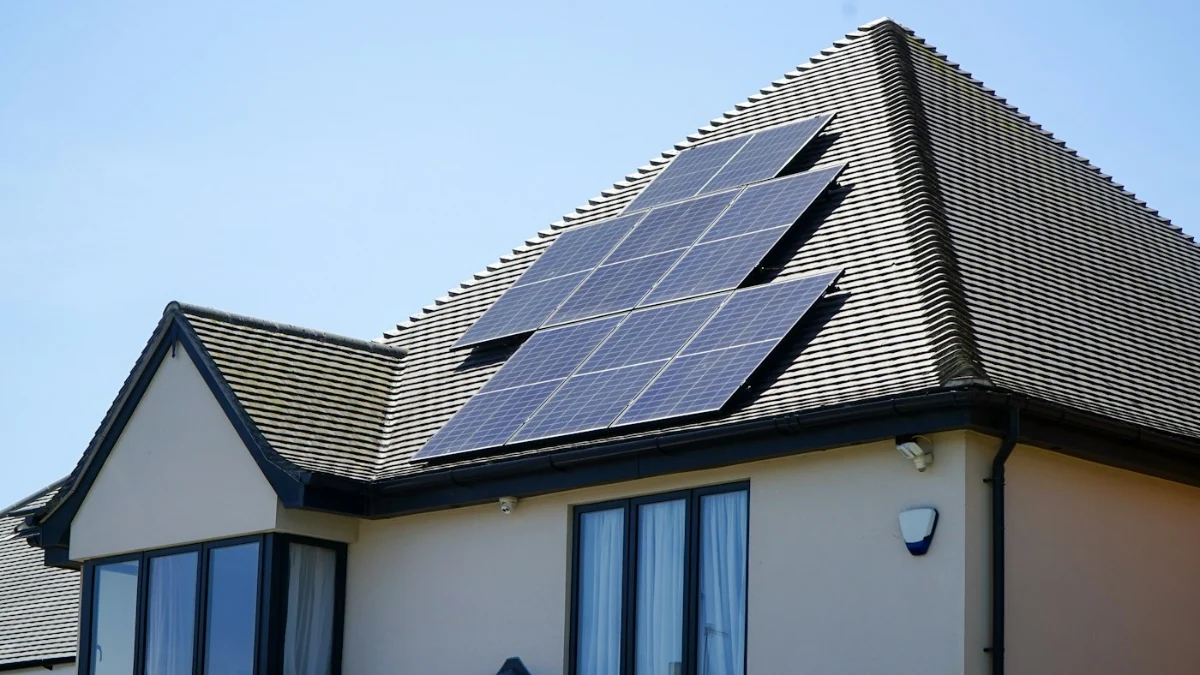
The built-in MPPT solar charger takes up to 4.5 kW of panels, on strings between 120 V and 450 V (500 V absolute maximum, 150 V to start), with a combined limit of 12 A across its two MC4 inputs. That suits a modest rooftop array that recharges the battery during the day and carries the daytime load.
With panels connected, the Loadshedder stops being only a backup and starts trimming your electricity bill. Time-of-use settings decide when the battery charges from solar or the grid and when it discharges, and the CT sensor holds the system at zero export unless your municipality has approved feed-in.
Plenty of buyers start on grid charging and add panels once the budget allows. Nothing about the unit changes when you do: the installer runs the PV cables to the MC4 connectors through a DC isolator.

EVERYDAY BACKUP
Keeps the house running when the grid goes
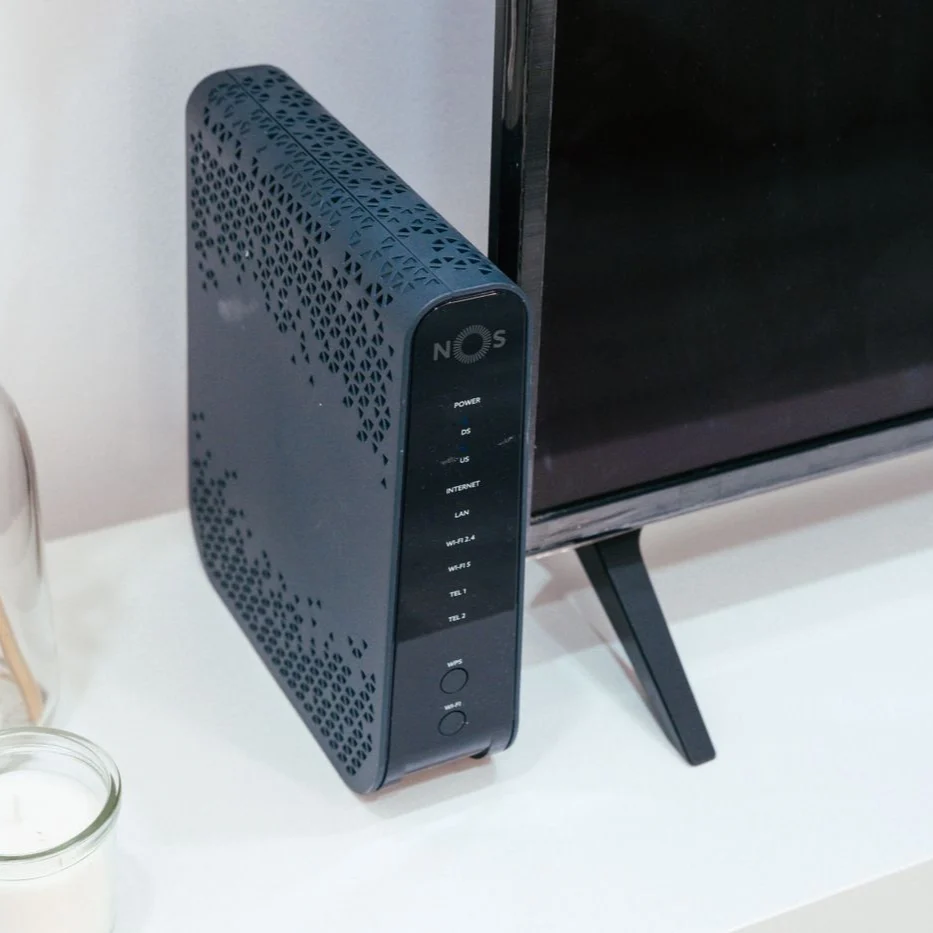
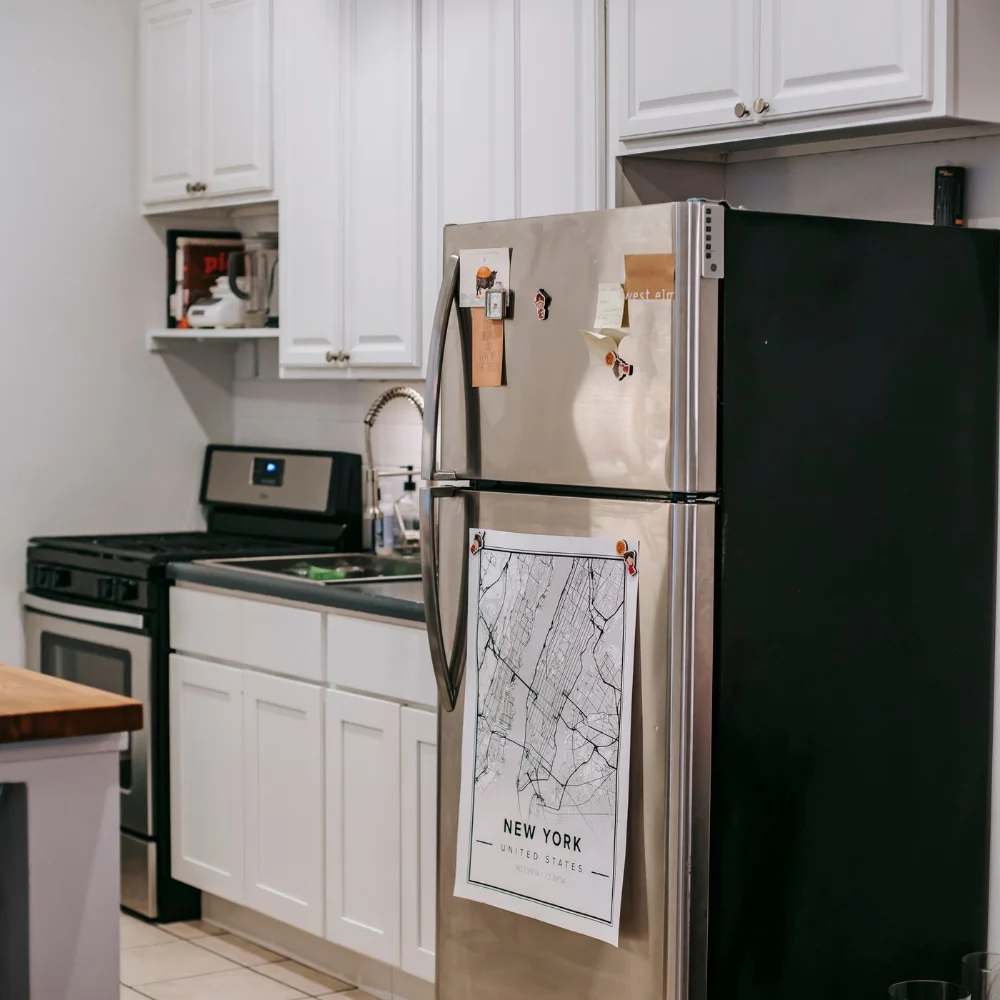
The router stays on, and so do the TV and decoder. Laptops keep charging and the fridge holds its temperature. An outage stops being an evening of candles and becomes something you glance at on your phone.
Sunsynk Connect, through the Wi-Fi data logger in the box, shows the battery’s state of charge, solar production and what the house is drawing, and lets your installer adjust settings remotely.
For a small business the same applies to the till, card machines, the network cupboard and the office lights. Sunsynk’s warranty covers domestic and light commercial use, such as small shops and salons.
EXPANDABLE
Grows with a second unit or extra batteries
When 3.6 kW or 3.84 kWh stops being enough, there are two routes. Sunsynk lists the Loadshedder for up to six units in parallel, each adding its own inverter output and battery. Or add external batteries to a single unit: Sunsynk Mobile names the SUN-BATT-5.32, SUNSYNK-L5.1 and L051069-A as verified.
Parallel units are set up as master and slave in each inverter’s settings and joined with Sunsynk’s parallel connections, which is installer work rather than a plug-in job. A dedicated Loadshedder parallel kit is available, and we can quote it with the units.
Plan for it at installation. Sunsynk asks for about 500 mm of clearance either side of each unit, so leaving that wall space free makes a second Loadshedder a simple addition later.
MADE FOR SOUTH AFRICA
Certified for South African grid connection
The Loadshedder 4 is a 230 V, 50 Hz single-phase system certified to NRS 097-2-1, the South African standard municipalities and Eskom work to when you register a grid-connected system. It is hard-wired into your distribution board by a qualified electrician, who issues the Certificate of Compliance.
That certificate matters for the warranty too. Sunsynk’s South African terms require a qualified installer, a valid CoC and registration on sunsynk.org within seven days of commissioning.
Under those terms, claims go through the retailer you bought from rather than to Sunsynk directly. EcoHub has been trading since 2012; we log the claim with Sunsynk and follow it through for you.
How long the Loadshedder 4 runs
These figures assume the full 3.84 kWh, less Sunsynk’s 94% battery-to-load efficiency, so about 3.6 kWh delivered. The low-battery cut-off you set keeps some charge in reserve, which shortens real runtimes, so treat them as the upper limit.
| Average load | What that looks like | Runtime on 3.6 kWh |
|---|---|---|
| 150 W | Router, LED lights, TV and decoder | About 24 hours |
| 300 W | Add the fridge cycling and two laptops | About 12 hours |
| 600 W | A busy evening: lights, two TVs, fridge and computers | About 6 hours |
| 1 200 W | The microwave or kettle in use as well | About 3 hours |
Loadshedder 4 specifications
| Model code | SM3.6kWLS |
| Battery voltage | 51.2 V nominal (43.2–57.6 V) |
| Battery charge / discharge current | 60 A / 80 A |
| Peak output | 7 200 VA |
| Switchover time | 10 ms |
| Maximum bypass current | 40 A |
| Solar input voltage | 120–450 V MPPT range, 500 V maximum, 150 V start-up |
| Solar input current | 12 A, total of both MC4 inputs |
| Efficiency | 97.6% peak, 94.0% battery to load |
| Operating temperature | −25 °C to +50 °C (battery charges between 0 °C and 45 °C) |
| Enclosure | IP20, indoor wall mounting, fan cooled |
| Unit size and weight | 701 × 544 × 182 mm (H × W × D), 51.7 kg |
| Monitoring | Sunsynk Wi-Fi data logger and Sunsynk Connect app |
| Compliance | NRS 097-2-1, IEC/EN 62109-1, IEC 62619, UN38.3 |
| Parallel operation | Up to six units (Sunsynk Mobile) |
| Verified add-on batteries | SUN-BATT-5.32, SUNSYNK-L5.1, L051069-A |
Sunsynk Mobile’s Loadshedder 2, 4 and 5 datasheet (PDF) has the full electrical tables.
How the Loadshedder 4 sits against the alternatives
The Sunsynk Powerlynk X shares the Loadshedder’s inverter, battery and dimensions in a white case. Sunsynk lists it for up to two units in parallel against six for the Loadshedder, so if there is any chance you will grow beyond two, start with the Loadshedder. If you only ever expect one or two units and white suits the room better, either will do the same job.
The Huawei Power-M 5kWh stores more energy per module (5 kWh against 3.84 kWh) but delivers 2.5 kW with a single battery, and builds up as a modular tower to 15 kWh. The Loadshedder gives more output from one compact box; the Power-M gives more storage that grows in the same footprint.
For larger homes, the REVOV E100 kit with a Sunsynk 6 kW hybrid inverter pairs 10.24 kWh of storage with a separate 6 kW inverter. It takes more wall space and more installation work, but runs heavier loads for far longer. If you already have batteries, the Sunsynk Powerlynk Lynks 6 kW is a hybrid inverter on its own.
Questions we are asked about the Loadshedder 4
Electrically, yes. Sunsynk Mobile’s datasheets for the Loadshedder 4 (SM3.6kWLS) and the Powerlynk X (SM3.6kWPL) give the same inverter, battery, solar input, dimensions and weight. The Loadshedder has a black enclosure and the Powerlynk a white one.
The one difference Sunsynk publishes is parallel operation: up to six Loadshedders against up to two Powerlynks. If you might expand beyond two units, choose the Loadshedder.
It depends on what is switched on. On a typical evening load of 300 to 600 W (lights, TV, router, fridge and laptops) expect roughly 6 to 12 hours before the battery reaches its reserve. A light 150 W load can run through a whole night. The runtime table above shows the working.
A kettle or microwave, yes, for a few minutes at a time: the inverter gives 3.6 kW continuously and 7 200 VA at peak. A 2 kW kettle running for three minutes uses about 0.1 kWh of the battery.
The geyser, stove, oven and pool pump draw too much for too long. Your electrician keeps those circuits on the non-essential side, so they switch off with the grid.
Either. The built-in MPPT charger accepts up to 4.5 kW of panels on strings between 120 V and 450 V, with a 12 A limit across its two MC4 inputs. Your installer sizes the string to stay inside those limits and fits a DC isolator. The CT sensor keeps the system at zero export unless your municipality approves feed-in.
Yes. Sunsynk Mobile lists the SUN-BATT-5.32, SUNSYNK-L5.1 and L051069-A as verified external batteries, and the Loadshedder is listed for up to six units in parallel. Parallel systems need master and slave settings and Sunsynk’s parallel connections, so plan the wall space with your installer.
Yes. It is hard-wired into your distribution board, and Sunsynk’s warranty requires a qualified installer and a Certificate of Compliance. Sunsynk’s manual asks for indoor wall mounting with the display at eye level, about 500 mm clear at the sides, above and below, and 1 m in front.
Our prices are for the equipment. If you do not have an installer, ask us and we will suggest one in your area where we can.
No. The enclosure is rated IP20, so it belongs indoors or in a dry garage, out of direct sun and away from moisture. It operates from −25 °C to +50 °C, but the battery only charges between 0 °C and 45 °C, so an unheated space on an icy Highveld morning will hold off charging until it warms up.
Sunsynk specifies 10 milliseconds between grid and battery. Routers, TVs and most computers carry on through that without restarting.
Sunsynk’s South African warranty covers manufacturing faults for five years from installation, for domestic and light commercial use. The unit must be fitted by a qualified installer, with a Certificate of Compliance, and registered on sunsynk.org within seven days of commissioning.
Claims go through the retailer, which is us: we log the claim with Sunsynk and follow it up. Some sellers advertise ten years; Sunsynk’s South African schedule lists inverters at five years and batteries at five or ten depending on the model, without singling out the all-in-ones, so we quote five.
It ships by courier in a box about 86 × 71 × 32 cm that weighs around 61 kg packed, so plan on two people to carry it and lift it onto the bracket. Solar orders are generally ready to ship within 24 hours of payment.
Why Buy From EcoHub
Authorised for every brand we sell
Our authorised dealer status is confirmed in writing by brands including Revov and Hubble, so every battery and inverter carries its full South African manufacturer warranty.
Trusted by installers
We are a Revov distributor, and installers and electrical contractors across South Africa buy their batteries and inverters from us.
The right system, first time
Advice on matching batteries, inverters and panels to your load and budget, from a specialist store helping South Africans since 2012.
Delivery or collection
Delivered across South Africa in 1–3 working days. Orders are generally ready within 24 hours of payment, and many of the heavier batteries can be collected.




Reviews
There are no reviews yet