

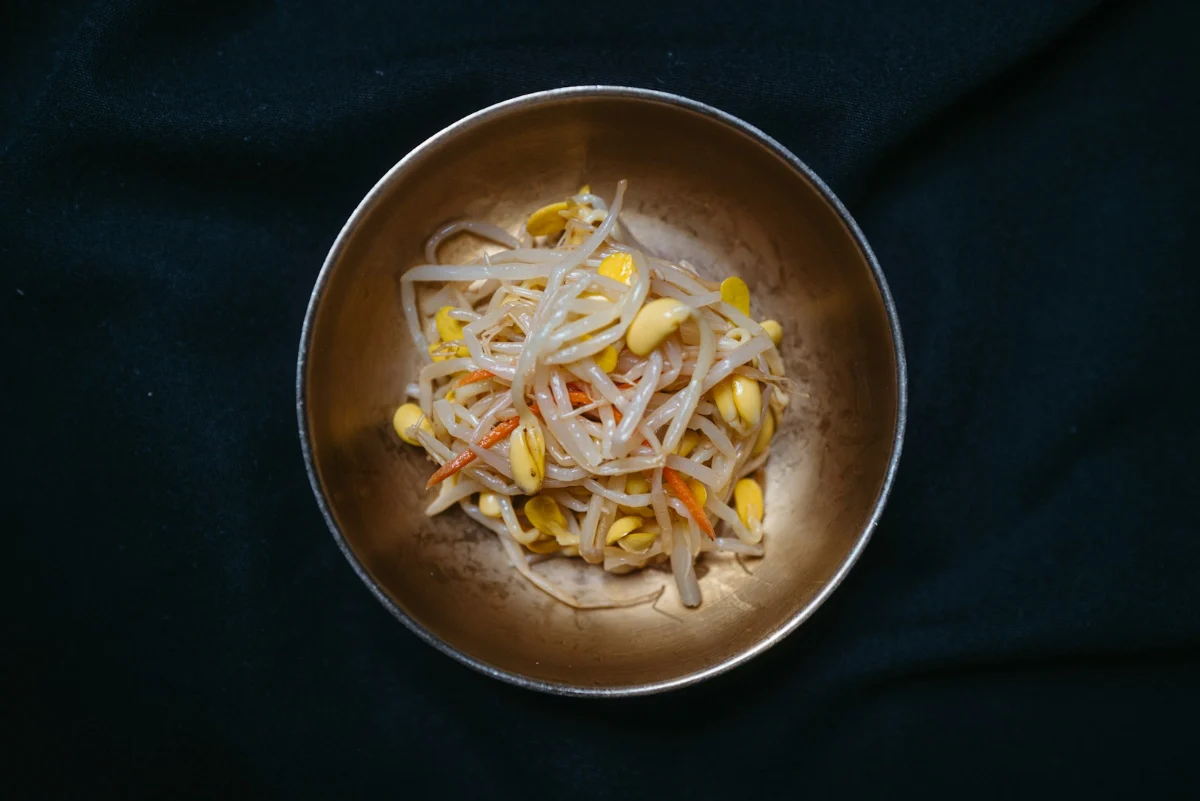
Short answer. Are sprouts safe to eat? Cooked thoroughly, yes: the US Centers for Disease Control and Prevention (CDC) says thorough cooking kills the harmful bacteria. Raw sprouts are a known higher-risk food. They grow from seeds and beans in warm, humid conditions that also suit bacteria such as Salmonella and E. coli, and the US Food and Drug Administration (FDA) says that if just a few harmful bacteria are on the seed, they can grow to high levels during sprouting, even under sanitary conditions at home. The FDA, the CDC and the Food Safety Authority of Ireland (FSAI) advise children, older adults, pregnant women and people with weakened immune systems to avoid raw sprouts; Health Canada advises everyone to cook them. Buy seed sold for sprouting, keep equipment and hands clean, refrigerate sprouts at 4°C or below and eat them within a few days.
This article covers seed and bean sprouts such as alfalfa, broccoli, mung beans, lentils and fenugreek, not Brussels sprouts or sprouting potatoes. For the growing method, see our guide to how to sprout seeds at home.
On this page
- Why are sprouts a higher-risk food?
- Which outbreaks have been linked to sprouts?
- Who should eat sprouts cooked?
- What does “cooked” mean for sprouts?
- Are sprouts safe to eat if you grow them at home?
- How to choose seed for sprouting
- Can you disinfect sprouting seed at home?
- A hygiene routine for home sprouting
- When should you throw a batch away?
- Are microgreens safer than sprouts?
- What should you do if you feel ill after eating sprouts?
- Frequently asked questions
Why are sprouts a higher-risk food?
The seed is usually the source. The European Food Safety Authority (EFSA) identifies contaminated dry seed as “the most likely initial source” in sprout outbreaks (EFSA, 2011), and the FDA says contaminated seed has historically been the likely source of most of them. The FDA adds that contamination may be at low levels or spread unevenly through a seed lot, which makes it hard to find by testing (FDA, 2022).
Sprouting conditions suit bacteria. Seeds are usually sprouted for a few days at about 20 to 25°C in high humidity. EFSA notes that ordinary, harmless bacteria rise from about 1,000 to 100,000 per gram on dry seed to between 100 million and a billion per gram on sprouted seed, and that the same conditions can let harmful bacteria reach high numbers if they are present.
They are often eaten raw. There is no cooking step to kill what has grown, and rinsing helps less than you might hope. The UK Food Standards Agency (FSA) says thorough washing removes much of the bacteria on the surface of a seed or sprout but “will not remove everything”, particularly bacteria protected in cracks in the seed coat (FSA).
Surveys reviewed by EFSA have found Salmonella and Listeria on sprouted seeds only “at low frequencies”. The concern is that when a seed lot is contaminated, every batch grown from it can be affected, and one lot can reach many growers and kitchens.
Which outbreaks have been linked to sprouts?
Germany and France, 2011
In 2011 a rare strain, E. coli O104:H4, caused a large outbreak centred on Germany. The Robert Koch Institute (RKI) counted 3,842 cases with symptoms starting between 1 May and 4 July: 855 people developed haemolytic uraemic syndrome (HUS), a serious complication that affects the kidneys, and 2,987 had gastroenteritis without HUS. Thirty-five of the HUS patients and 18 of the others died, 53 deaths in all. Investigators traced the outbreak to sprouts from one producer in Lower Saxony (RKI, 2011).
A smaller cluster followed in France. Of people who attended a community centre event near Bordeaux on 8 June, 24 fell ill and 7 developed HUS; fenugreek sprouts were the only sprout type linked to illness (King et al., 2012).
EFSA concluded that one lot of fenugreek seed imported from Egypt was the most likely common link between the two, and could not rule out other lots imported between 2009 and 2011. At the time it advised consumers not to grow sprouts for their own consumption and not to eat sprouts unless cooked thoroughly (EFSA, 5 July 2011).
United States
The FDA counts 52 reported outbreaks linked to contaminated sprouts in the US between 1996 and 2020, with more than 2,700 estimated illnesses (FDA, 2022). Four CDC investigations show the pattern:
| Year | Sprouts | Bacteria | People ill | Hospitalised | What was found |
|---|---|---|---|---|---|
| 2014 | Bean sprouts | Salmonella Enteritidis | 115 in 12 states | 19 of 75 with information | One sprouting company |
| 2016 | Alfalfa | Salmonella Reading and Abony | 36 in 9 states | 7 | One sprouting company |
| 2020 | Clover | E. coli O103 | 51 in 10 states | 3 | A common seed lot, also linked to a 2019 outbreak |
| 2026 | Alfalfa | Salmonella and E. coli | 76 in 16 states (to 1 Oct) | 6 | An alfalfa seed lot, recalled by two seed suppliers |
Sources: CDC outbreak pages for 2014, 2016, 2020 and 2026. No deaths were reported in any of the four. The 2026 investigation was still open at its 1 October update.
South Africa
We found no sprout-specific advice from the National Institute for Communicable Diseases (NICD) or the Department of Health, and no South African outbreak traced to sprouts in the NICD’s published material. In June 2011 the NICD reported no suspected or confirmed cases of the German outbreak strain in South Africa and advised travellers to Germany to avoid raw tomatoes, cucumber, lettuce and sprouts for the time being (NICD, 7 June 2011). In 2018 it listed sprouts among the foods Listeria can contaminate (NICD, 22 Feb 2018). Without local guidance, international advice is the best guide.
Who should eat sprouts cooked?
Every authority below advises people who are more vulnerable to food poisoning not to eat sprouts raw. Health Canada advises everyone to cook them.
| Authority | Who the advice is for | What it says |
|---|---|---|
| US FDA | Children, older adults, pregnant women, people with weakened immune systems | Avoid raw or lightly cooked sprouts of any kind |
| US CDC | Children, older adults, pregnant women, people with weakened immune systems | Avoid raw sprouts of any kind; cook sprouts thoroughly |
| FSAI (Ireland) | The elderly, the very young, pregnant women, people with weakened immune systems | Avoid raw sprouts; “if in doubt, cook sprouts prior to eating” |
| Health Canada | Everyone, with extra care for the same higher-risk groups | Don’t eat raw or undercooked sprouts |
Sources: FDA; CDC; FSAI; Health Canada.
The FDA’s examples of weakened immunity include transplant patients and people with HIV/AIDS, cancer or diabetes. If you aren’t sure whether a health condition or a medicine affects yours, ask your doctor or clinic.
What does “cooked” mean for sprouts?
The FDA groups “lightly cooked” sprouts with raw ones, so a handful scattered over hot soup, or tossed into a stir-fry for the last few seconds, doesn’t count. The University of California’s home sprouting guide says to heat them until steaming hot or above 74°C (Suslow and Harris, 2004).
In practice, cook sprouts in a stir-fry, soup or stew until they are steaming all the way through, not just warm on top. Lentil, chickpea and mung bean sprouts cook well. Alfalfa and broccoli sprouts collapse, so for someone in a higher-risk group the sturdier sprouts are the practical choice.
Are sprouts safe to eat if you grow them at home?
Growing your own gives you control over cleanliness, temperature and freshness, but it doesn’t remove the main risk, because the bacteria usually arrive on the seed. The FDA says bacteria on seed can grow to high levels “even if you are growing your own sprouts under sanitary conditions at home” (FDA).
Commercial growers also have checks a home kitchen can’t match. In the US they must treat seed with a scientifically valid method (or use seed with documented prior treatment) and test the spent irrigation water from every production batch for E. coli O157:H7 and Salmonella (21 CFR 112, Subpart M). Even so, the German and US outbreaks above came from commercial sprouts. The advice on who should eat sprouts cooked applies whoever grew them.
How to choose seed for sprouting
- Buy seed sold for sprouting. It is packed as food. Garden seed may be treated with fungicide or pesticide and is not for eating, as our sprouting guide explains.
- Ask about testing, and know its limits. EFSA recommends that seed for home sprouting meet at least the same sampling standards as seed for commercial growers. A supplier that tests its lots is the better choice, but the FSA notes that negative results “provide no guarantee” that a whole batch is clean.
- Keep the packet. Recalls such as the 2026 US one are issued by seed lot, so keep the packaging or note the lot number until the seed is used up.
Can you disinfect sprouting seed at home?
You can reduce bacteria on seed, but no method, commercial or home, has been shown to remove them completely. EFSA states that no decontamination method can ensure pathogens are eliminated from all types of seed without harming germination or yield, and the FDA says seed treatments “may reduce, but not eliminate, pathogens on seed for sprouting”.
How commercial growers treat seed
The long-standing US recommendation, from the National Advisory Committee on Microbiological Criteria for Foods, is to soak seed in calcium hypochlorite at 20,000 parts per million, a 2% solution (Kim et al., 2025). EFSA notes that seed sanitising on its own “may not reliably prevent” illness. It is an industrial treatment, not a home method.
Hot water and vinegar
A study for Food Standards Scotland compared a standard chlorine wash with hot water and with soaks in 5% acetic acid (the acid in vinegar) or citric acid, the last three chosen because they are readily available and safe to use at home (Saunders and Everis, 2014). The report’s summary says hot water worked better than the chlorine or acid soaks. Soaking alfalfa seed and mung beans at 90°C for two or five minutes cut Salmonella and E. coli O157 by more than 99.99%, but low levels survived most of the mung bean treatments and the two-minute alfalfa treatment, and sprouts grown from that seed carried high levels again. Five minutes at 90°C harmed alfalfa germination, and the researchers ruled it out. Food Standards Scotland called hot water treatment good practice (Food Standards Scotland); the researchers concluded that if seed is contaminated, “there is still a food poisoning risk”.
Hydrogen peroxide
The University of California’s home guide suggests heating 3% hydrogen peroxide to 60°C, treating the seed in it on the stove for five minutes and discarding the solution after each batch. The guide gives no figures for how well this works, and we did not find a study validating it as a home method.
What this means. A home treatment may lower the risk, but none is validated to make sprouts safe to eat raw, and using one doesn’t change the advice for higher-risk groups.
A hygiene routine for home sprouting
- Clean the sprouter before and after each batch in hot, soapy water, and let it dry fully.
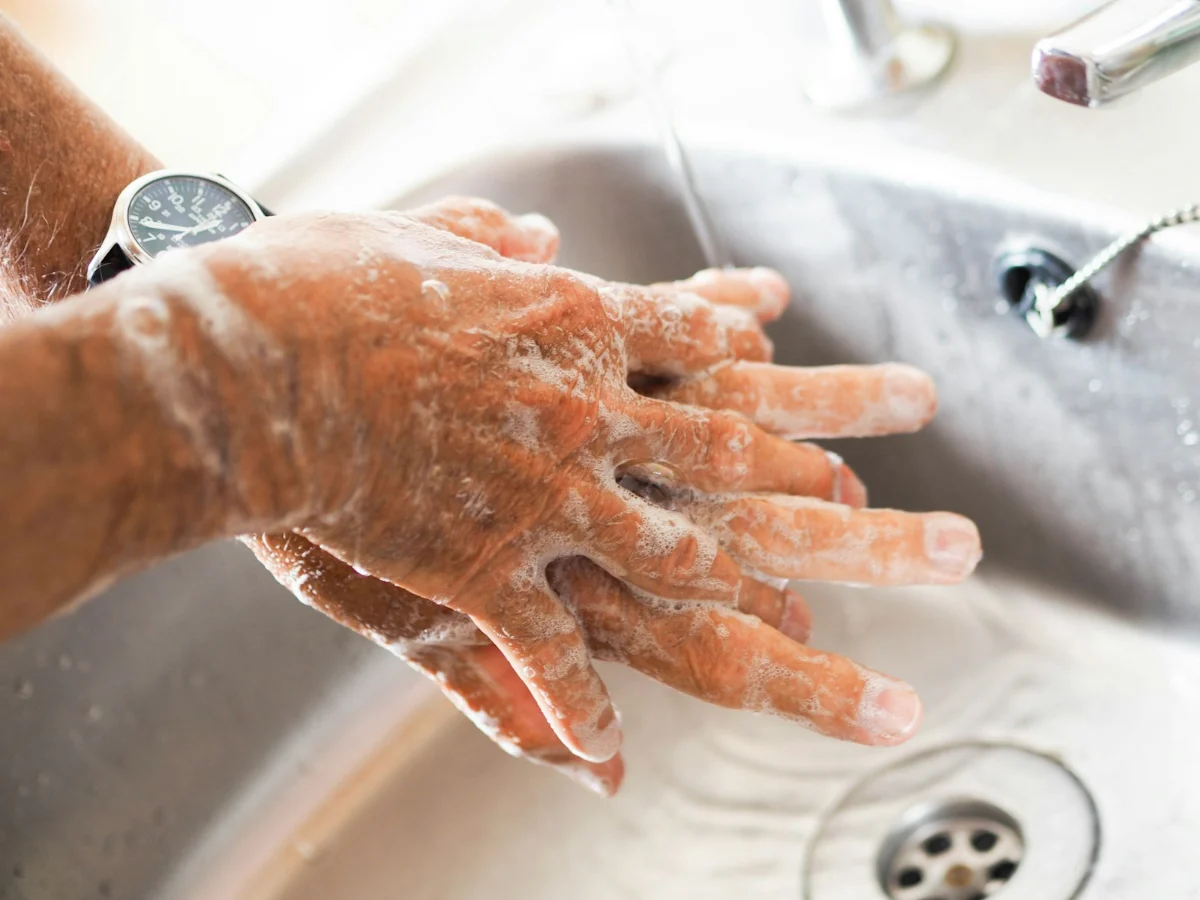
- Wash your hands with warm water and soap for at least 20 seconds before and after handling seed or sprouts (Health Canada).
- Use drinking water to soak and rinse; the FSAI advises rinsing sprouts under running drinking water. Under a boil-water notice, use boiled and cooled water: the City of Cape Town’s notices cover washing fruit and vegetables eaten raw (City of Cape Town, 2023). Our guide to whether tap water is safe to drink in South Africa explains how to boil water under a notice.
- Keep it cool and drained. Rinse and drain at least twice a day, keep the sprouter out of the sun and away from the stove, and add a midday rinse in a hot summer; our sprouting guide has the details.
- Keep sprouts away from raw meat, and from boards, knives and hands that have touched it (FSAI).
- Chill promptly in a sealed container at 4°C or below, in line with the FDA’s 40°F for perishable produce.
- Eat them within a few days. That is Health Canada’s advice for sprouts that aren’t prepackaged; for sprouts bought loose, the FSAI says within two days.
When should you throw a batch away?
Discard sprouts that show mould, slime or dark patches, smell musty or sour after rinsing, have lost their crispness (Health Canada), are past their best-before date, or come from seed or a product under recall.
Those are signs of spoilage. Harmful bacteria are different: the US Department of Agriculture says “you can’t see, smell, or taste these pathogens” (USDA FSIS). A perfect-looking batch can still carry them. If in doubt, cook them or throw them out.
Are microgreens safer than sprouts?
The evidence is thin. Microgreens grow in soil or another medium and are cut above it once the first true leaves appear, leaving the roots behind; sprouts are eaten whole, seed and root included. The FDA classes a crop harvested with true leaves as a non-sprout (FDA, 2019).
In a laboratory comparison, radish seed contaminated with E. coli was grown both ways. The bacteria multiplied in both, but the microgreens carried significantly less E. coli than sprouts from equally contaminated seed (Xiao et al., 2014). That is one laboratory study, and microgreens are not risk-free. A University of Nevada, Reno fact sheet notes that research has found similar background levels of bacteria on sprouts and microgreens, and that microgreen seed can carry pathogens (University of Nevada, Reno, 2020). Microgreens have been recalled, for example over Listeria found in broccoli microgreens in 2018, with no illnesses reported (FDA). The same seed and hygiene rules apply.
What should you do if you feel ill after eating sprouts?
See a doctor or go to a clinic if symptoms are severe. The CDC lists bloody diarrhoea, diarrhoea lasting more than three days, a fever above about 39°C, vomiting so often you can’t keep liquids down, and signs of dehydration such as passing little urine, a dry mouth or dizziness on standing (CDC). It also advises pregnant women with a fever and flu-like symptoms to see a doctor. Get young children, older adults and anyone with weakened immunity checked sooner, and say what you ate.
Frequently asked questions
Are sprouts safe to eat raw?
They carry a known risk. Health Canada advises everyone to cook them; the FDA, CDC and FSAI advise cooking them for children, older adults, pregnant women and people with weakened immune systems.
Can you eat sprouts while pregnant?
Yes, if they are cooked until steaming hot throughout. The FDA, CDC and FSAI all advise pregnant women to avoid raw sprouts.
Does rinsing sprouts remove the bacteria?
Not reliably. The FSA says washing removes much of the bacteria on the surface but not bacteria protected in cracks in the seed coat, and bacteria multiply during sprouting itself. Rinse for freshness; cook for safety.
Which sprouts are the riskiest?
No kind is risk-free. Outbreaks have been traced to alfalfa, clover, bean and fenugreek sprouts, and the FDA’s advice covers sprouts “of any kind”. Raw red kidney beans are a separate problem, a natural toxin, so leave them out of raw sprouting mixes (see the sprouting guide).
How long do home-grown sprouts last in the fridge?
A few days, kept dry and sealed at 4°C or below. Throw them out if they turn slimy, dark or musty.
Are microgreens safe to eat raw?
In one laboratory study they carried significantly less E. coli than sprouts grown from equally contaminated seed, but they are not risk-free. Use seed sold for eating and keep trays and hands clean.
Sources
All opened and checked on 3 Nov 2026 unless noted.
- European Food Safety Authority, Panel on Biological Hazards. “Scientific Opinion on the risk posed by Shiga toxin-producing Escherichia coli (STEC) and other pathogenic bacteria in seeds and sprouted seeds.” EFSA Journal 2011; 9(11): 2424. https://www.efsa.europa.eu/en/efsajournal/pub/2424 (abstract read on the EFSA page; full text read from a copy hosted by the Technical University of Denmark, https://backend.orbit.dtu.dk/ws/files/52965068/nov12%20sprouts.pdf)
- European Food Safety Authority. “EFSA publishes report from its Task Force on the E. coli O104:H4 outbreaks in Germany and France,” 5 July 2011. https://www.efsa.europa.eu/en/news/efsa-publishes-report-its-task-force-e-coli-o104h4-outbreaks-germany-and-france (the linked technical report on Wiley would not open)
- Robert Koch Institute. EHEC O104:H4 Outbreak Germany 2011: Final presentation and evaluation of epidemiological findings, 2011. https://edoc.rki.de/bitstream/handle/176904/163/23NXL3JomOyAA.pdf
- King LA, Nogareda F, Weill FX, et al. “Outbreak of Shiga toxin-producing Escherichia coli O104:H4 associated with organic fenugreek sprouts, France, June 2011.” Clinical Infectious Diseases 2012; 54(11): 1588–94. https://academic.oup.com/cid/article/54/11/1588/450012 (abstract)
- US Food and Drug Administration. Guidance for Industry: Reducing Microbial Food Safety Hazards in the Production of Seed for Sprouting, May 2022. https://www.fda.gov/media/127972/download
- US Food and Drug Administration. “Selecting and Serving Produce Safely.” https://www.fda.gov/food/buy-store-serve-safe-food/selecting-and-serving-produce-safely
- US Code of Federal Regulations. 21 CFR Part 112, Subpart M (sprouts). https://www.ecfr.gov/current/title-21/chapter-I/subchapter-B/part-112/subpart-M
- US Food and Drug Administration. Standards for Produce Safety: Determining Coverage under Subpart M of the Produce Safety Rule, December 2019. https://fda.gov/media/133546/download
- US CDC. “Multistate Outbreak of Salmonella Enteritidis Infections Linked to Bean Sprouts” (2014), archived. https://archive.cdc.gov/www_cdc_gov/salmonella/enteritidis-11-14/index.html
- US CDC. “Multistate Outbreak of Salmonella Reading and Salmonella Abony Infections Linked to Alfalfa Sprouts” (2016), archived, with its advice page. https://archive.cdc.gov/www_cdc_gov/salmonella/reading-08-16/index.html and https://archive.cdc.gov/www_cdc_gov/salmonella/reading-08-16/advice.html
- US CDC. “Outbreak of E. coli Infections Linked to Clover Sprouts” (2020), archived. https://archive.cdc.gov/www_cdc_gov/ecoli/2020/o103h2-02-20/index.html
- US CDC. “E. coli and Salmonella Outbreak Linked to Alfalfa Sprouts,” August 2026, update of 1 Oct 2026. https://www.cdc.gov/ecoli/outbreaks/alfalfa-sprouts-08-26/index.html
- US CDC. “Signs and Symptoms of Food Poisoning.” https://www.cdc.gov/food-safety/signs-symptoms/index.html
- Food Safety Authority of Ireland. “Bean Sprouts.” https://www.fsai.ie/Business-Advice/Running-a-Food-Business/Food-Safety-and-Hygiene/Microbiological-Hazards/Bean-Sprouts
- Health Canada. “Food safety tips for sprouts.” https://www.canada.ca/en/health-canada/services/food-safety-fruits-vegetables/sprouts.html
- UK Food Standards Agency. Sprouts and seeds intended for sprouting: Q&A guidance on the package of EU regulations. https://www.food.gov.uk/sites/default/files/media/document/sprouts-and-seeds-sprouting-guidance.pdf.pdf
- Suslow TV, Harris LJ. Growing Seed Sprouts at Home, ANR Publication 8151, University of California, 2004. https://ucanr.edu/sites/LassenMFP/files/393187.pdf
- Saunders N, Everis L. Use of Treatments to Prevent the Growth of Pathogens on Sprouted Seeds, final report FS101060 for Food Standards Scotland, October 2014. https://www.foodstandards.gov.scot/sites/default/files/migration/downloads/Sprouted_seeds_-_Campden_-_FS101060_-_Final_Report_-_October_2014_%25281%2529.pdf (the section with numerical results for the acid and chlorine soaks could not be read; the summary’s comparison is used)
- Food Standards Scotland. “Use of treatments to prevent the growth of pathogens on sprouted seeds,” 1 March 2016. https://www.foodstandards.gov.scot/science-and-evidence/use-of-treatments-to-prevent-the-growth-of-pathogens-on-sprouted-seeds
- Kim MJ, Dejonghe W, Manohar M, Chen J. “The Efficacy of Calcium Hypochlorite and Peroxyacetic Acid Treatments in Inactivating Enterohemorrhagic Escherichia coli on Alfalfa Seeds and Sprouts.” Microorganisms 2025; 13: 306. https://mdpi-res.com/d_attachment/microorganisms/microorganisms-13-00306/article_deploy/microorganisms-13-00306.pdf
- Xiao Z, Nou X, Luo Y, Wang Q. “Comparison of the growth of Escherichia coli O157:H7 and O104:H4 during sprouting and microgreen production from contaminated radish seeds.” Food Microbiology 2014; 44: 60–3. https://pubmed.ncbi.nlm.nih.gov/25084646/ (PubMed record and the authors’ 2014 IAFP conference abstract, https://iafp.confex.com/iafp/2014/webprogram/Paper6262.html)
- University of Nevada, Reno, Desert Farming Initiative. Microgreens and Produce Safety fact sheet, June 2020. https://naes.agnt.unr.edu/PMS/Pubs/2020-3468.pdf
- US Food and Drug Administration. “Greenbelt Greenhouse Ltd. recalls Greenbelt Microgreens brand microgreens because of possible health risk,” company announcement, 25 April 2018. https://www.fda.gov/safety/recalls-market-withdrawals-safety-alerts/greenbelt-greenhouse-ltd-recalls-greenbelt-microgreens-brand-microgreens-because-possible-health
- National Institute for Communicable Diseases. “Update on EHEC and HUS outbreak in Germany,” 7 June 2011. https://www.nicd.ac.za/update-on-ehec-and-hus-outbreak-in-germany/
- National Institute for Communicable Diseases. “Update on listeriosis, Johannesburg, 22 February 2018.” https://www.nicd.ac.za/update-on-listeriois-johannesburg-22-february-2018/
- City of Cape Town. “Precautionary notice: residents of the deep south advised to boil water before drinking,” 8 March 2023. https://www.capetown.gov.za/Media-and-news/PRECAUTIONARY%20NOTICE%20Residents%20of%20the%20deep%20south%20advised%20to%20boil%20water%20before%20drinking
- US Department of Agriculture, Food Safety and Inspection Service. Kitchen Companion: Your Safe Food Handbook. https://www.fsis.usda.gov/sites/default/files/media_file/2020-12/Kitchen-Companion.pdf