

A 100% fresh milled sourdough spreads flat for four reasons, and in most kitchens more than one is in play at once: the dough is over-fermented rather than under-fermented, the gluten was never fully developed, the bran is cutting the network that did form, and the hydration was judged before the bran had finished drinking. Fix them in that order. The first one accounts for more flat loaves than the other three together.
The counting point most people get wrong is that whole grain flour ferments faster than white flour and has a narrower window in which it is ready. A schedule that works on bread flour will overshoot on fresh milled flour, and an overshot dough has nothing left to hold its shape.
On this page
- Why is fresh milled sourdough flat when the same recipe works with bread flour?
- How do I tell over-proofed from under-proofed?
- How much water does fresh milled flour actually take?
- Should I autolyse, and for how long?
- How much do I need to knead or fold?
- Should I sift the bran out?
- How much levain, and at what temperature?
- A schedule that works
- What about the grain itself?
- The order to change things in
- Frequently asked questions
- Mill your own
Why is fresh milled sourdough flat when the same recipe works with bread flour?
Four things change the moment you mill your own.
The whole kernel brings its own enzymes. White flour is the starch of the endosperm with the germ and the bran removed. A whole grain flour keeps both, and with them the amylase and protease activity that commercial milling strips out. Amylase breaks starch into sugars, which speeds fermentation. Protease degrades protein, which is the gluten you are trying to build. Over a long, warm, acidic bulk ferment this runs the other way from what you want: the dough goes slack, then soupy, and nothing you do at shaping will recover it.
Home bakers run into the same mechanism in an exaggerated form when they add sprouted grain. In a thread running through October 2026 on The Fresh Loaf, one baker put it plainly: sprouting releases amylase, and he has watched dough break down because of it. His fix was tighter temperature control, which is the same fix that works here.
The bran interferes with the gluten. Two separate effects. It dilutes: a kilogram of whole grain flour contains less gluten-forming protein than a kilogram of white flour, because part of its weight is bran and germ. And it disrupts: bran particles sit physically in the way of the protein network forming around them. The dough can feel fine in the bowl and still have far less structural strength than the same hydration in bread flour.
The bran drinks slowly. Bran takes up water over tens of minutes, not seconds. A dough that feels stiff five minutes after mixing will be noticeably slacker half an hour later. People read the early stiffness as “needs more water”, add it, and end up with a dough 5 to 8% wetter than they intended.
The window is narrower. Combine faster fermentation with weaker structure and you get a dough that goes from under-proofed to over-proofed in a shorter span than bread flour does. Several experienced millers describe whole wheat as moving faster and forgiving less. Timing that you could be casual about with white flour becomes the thing you watch.
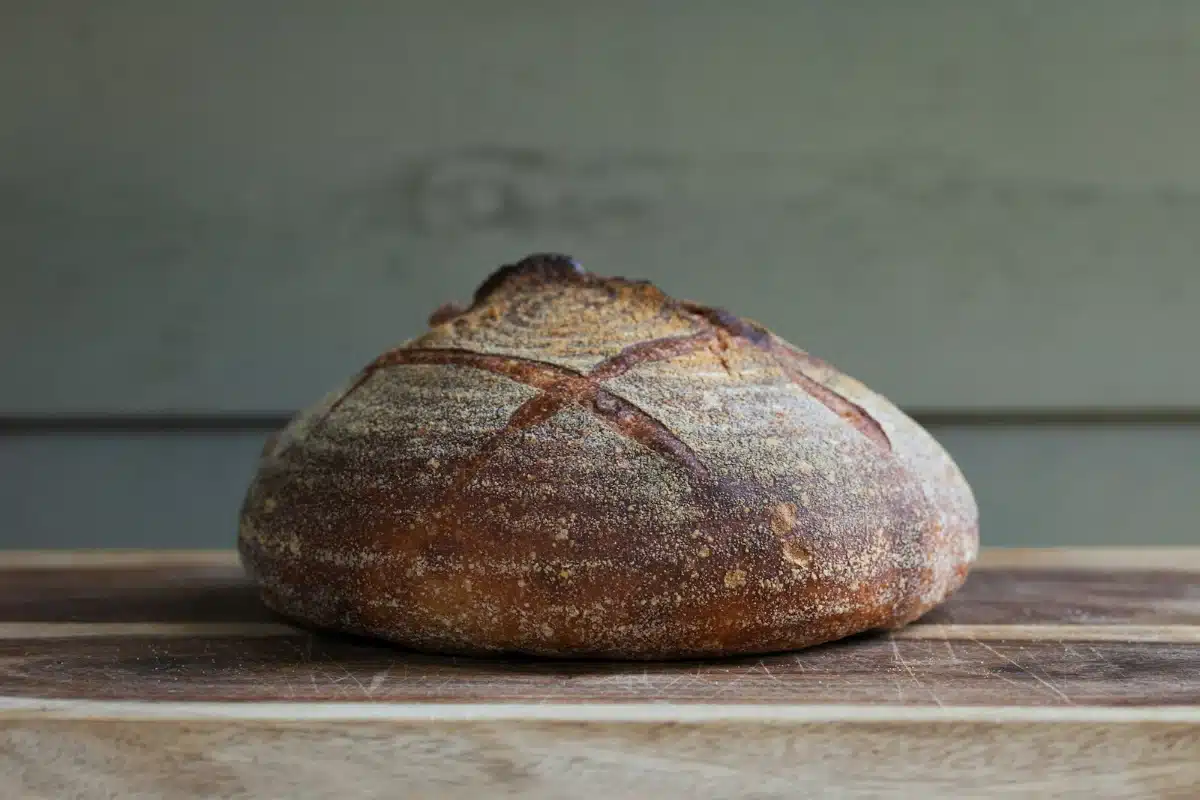
How do I tell over-proofed from under-proofed?
They look different in the finished loaf, and getting this right matters because the fixes are opposite.
| What you got | Reading | What to change |
|---|---|---|
| Dense, tight, small, pale, no ear, crumb close | Under-proofed | Longer bulk, warmer bulk, or more levain |
| Spread wide, flat, crumb open but shapeless or with large irregular tears, slack dough that would not hold a seam | Over-proofed | Shorter bulk, cooler bulk, or less levain |
| Rose well then collapsed in the oven | Over-proofed, usually at the final proof | Bake 20 to 30 minutes earlier |
| Good height, gummy grey crumb | Under-baked or cut too soon | Probe to 96 to 98 °C, cool two hours |
| Dough could be pulled apart with no resistance at the end of bulk | Gluten never developed, or protease broke it down | See the isolation test below |
The last row is the one that sends people in circles. A 2020 thread on The Fresh Loaf describes it exactly: “dough that I can just pull apart with no resistance. There is no connection between the various bits of dough.”
The isolation test. Take a piece of your autolysed flour-and-water mass, before the levain and salt go in, and knead that piece on its own for a few minutes. If it develops some strength, the flour is capable and your starter or your schedule is the problem. If it stays as wet sand and will not come together at all, the flour is the problem: too coarse, too much bran, grain that was damp, or heat damage from milling.
That test, suggested by a baker on the same thread, will save you three failed bakes.
How much water does fresh milled flour actually take?
Less than the internet tells you, and the number matters less than when you judge it.
The common advice is that fresh milled flour wants a lot of water. True up to a point, and the point is lower than most beginners assume. The flat loaves documented on the baking forums are overwhelmingly at 85 to 90% hydration with 100% whole grain and no sifting. The successful ones sit at 75 to 82%.
A formula that one long-time whole grain miller posts repeatedly, and that is a reasonable place to start:
| Ingredient | Amount |
|---|---|
| Fresh milled flour | 450 g |
| Water | 360 g (80%) |
| Salt | 8 g (1.8%) |
| Starter | 8 to 10 g, refreshed every 12 hours for three cycles before use |
Start at 75% if you have never made a 100% whole grain loaf before. You can always add water next time, and a slightly stiff dough that holds its shape teaches you more than a slack one that does not.
Judge the hydration after a rest, never before. Mix flour and water, wait 30 minutes, and then decide. This single habit removes the most common handling error with fresh milled flour.
One technical note that trips people up when they convert recipes. Commercially milled flour is tempered with water before milling, typically to 14 to 15% moisture. Grain you buy whole and mill at home can be drier. Baker’s percentages carried across from a commercial-flour recipe can therefore be a few percent out in either direction, which is another reason to judge by feel after the rest rather than by the number on the page.
Should I autolyse, and for how long?
Yes, and the useful version is more specific than “rest the dough”.
Autolyse the fresh milled flour alone. Flour and water only. No levain, no salt. If you are blending with white flour, keep the white flour out of this stage, because it takes up water faster and leaves the whole grain portion short.
Thirty to ninety minutes is the working range. Long enough for the bran to hydrate and the gluten to begin ordering itself. Beyond about two hours on fresh milled flour you start handing the protease free time, and several of the flat loaves on record used two- and three-hour autolyses.
Add salt with or just after the levain. Salt tightens the dough and slows the enzymes. Holding it back for the whole autolyse is standard practice; holding it back for hours after that is not.
There is a related question about whether the flour should be rested before it is even mixed, which is a different argument with a different answer. We have gone through that evidence separately in should you rest fresh milled flour before baking.
How much do I need to knead or fold?
More than you think, and there is a number attached.
An experienced whole grain baker on The Fresh Loaf puts it at around 300 slap-and-folds for a 100% fresh milled dough. That is not three sets of four folds. It is sustained work, in several sessions, with rests between them.
The practical version:
- After the autolyse, add levain and salt and mix them through.
- Slap and fold for 5 to 8 minutes, or mix 6 to 8 minutes in a stand mixer on low.
- Rest 30 minutes.
- Repeat the slap and fold for another 3 to 5 minutes.
- Then switch to gentle coil folds, three or four of them at 30-minute intervals through the bulk.
Stop when you get a windowpane, and not before. On whole grain flour the windowpane will never be as translucent as it is on white flour. What you want is a piece you can stretch thin enough to see light through before it tears, with visible bran specks in it. If you cannot get there, the diagnosis is low gluten, insufficient mixing, or too much bran, in that order of likelihood.
There is an upper limit. Past the windowpane, further mixing on a bran-heavy dough does more cutting than building. The failure looks distinctive: the dough feels like it is losing strength the longer you work it. If that is what you see, stop mixing and shorten the next bulk instead.
Should I sift the bran out?
It is the most effective single change available, and it is a trade.
Taking the coarsest bran out moves a 100% whole grain dough a long way towards behaving like a high-extraction flour. Milled fine and unsifted, home milled flour is effectively around 95% extraction. One pass through a fairly coarse sieve brings that to roughly 85 to 90%, and the difference in how the dough handles is substantial.
Three ways to use what you take out, all of which keep the nutrition in the loaf:
- Scald it. Pour boiling water over the sifted bran, let it cool, and add it back to the dough. The hot water softens the bran so it does less damage, and the gelatinised starch holds water through the bake.
- Soak it cold, overnight in part of the recipe’s water. Same idea, slower, no cooking.
- Feed it to the levain. The bran goes into the build rather than the final dough, so it is fermented by the time it arrives.
All three are recommended by bakers who have worked through the flat-loaf problem. Sifting and discarding the bran is the fourth option and the one we would not recommend, because the bran is a large part of why you are milling at all. The fibre, phytate and mineral story is covered separately.
Sifting, mesh sizes and what actually comes out at each one are covered in more detail in the SanaStore guide to converting recipes to fresh milled flour.
How much levain, and at what temperature?
Less levain than a white-flour recipe, and a cooler bulk. This is the lever most people never touch, and it is the one that widens the window.
A 2% inoculation, meaning around 8 to 10 g of starter per 450 g of flour, with a bulk of 8 to 10 hours at 26 to 28 °C, gives you a slow, controllable fermentation on a flour that wants to run. Compare that with a typical 20% levain and a three-hour bulk, which on fresh milled flour will frequently overshoot.
Your starter does need to be strong. There is a reason whole grain bakers find their starters livelier: the bran carries both the microbes and the enzyme activity that get a culture going. A thread on The Fresh Loaf in October 2026 describes a starter that sulked on a low-enzyme commercial bread flour and woke up as soon as a little wholegrain rye went into it. If your starter is not reliably doubling within six to eight hours of a feed at room temperature, fix that before you blame the dough. The SanaStore guide to starting a sourdough starter with fresh milled flour covers getting it there.
Watch the dough, not the clock. On fresh milled flour, end the bulk at around 50 to 75% rise rather than a doubling. A dough that has doubled in the bowl has usually gone too far to hold a free-standing shape.
A schedule that works
One loaf, 450 g of fresh milled hard red or hard white wheat, baked in a Dutch oven. Times assume a kitchen at 24 to 26 °C and will stretch in a cold one.
| Step | Time | What you are doing |
|---|---|---|
| Refresh the starter | 3 cycles, 12 h apart | Build it to reliable, fast doubling |
| Mill | 5 min | Fine setting. Cool the flour 10 minutes |
| Autolyse | 45 min | 450 g flour, 340 g water. No salt, no levain |
| Add levain and salt | 5 min | 9 g starter, 8 g salt, and the last 20 g of water |
| Mix | 5 to 8 min | Slap and fold to near-windowpane |
| Rest | 30 min | Covered |
| Mix again | 3 to 5 min | To full windowpane |
| Bulk | 7 to 9 h at 26 °C | Three coil folds in the first two hours. End at 50 to 75% rise |
| Pre-shape | 1 min, then rest 20 min | Loose round, seam down |
| Shape | 2 min | Tight, seam pinched closed |
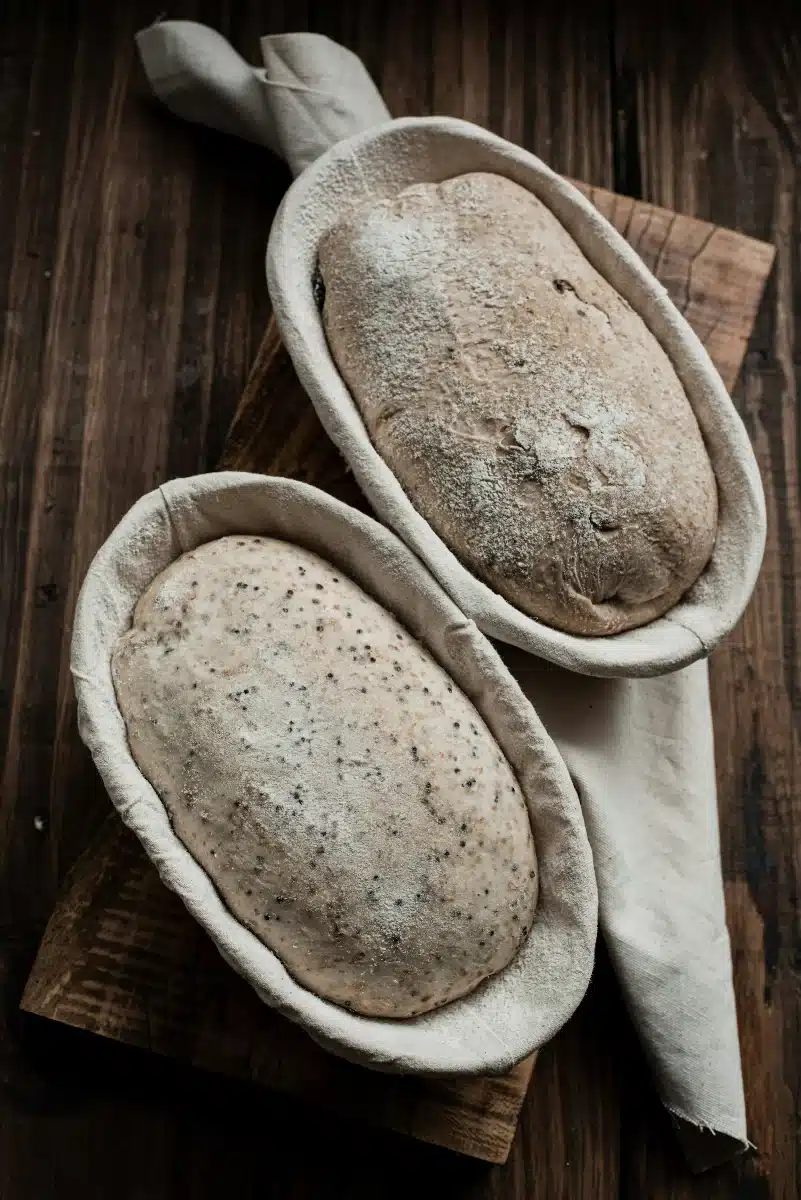
| Retard | 10 to 12 h at 4 °C | In a banneton, covered |
| Bake | 45 min | 240 °C covered for 20 min, 220 °C uncovered for 25 |
| Cool | 2 h minimum | On a rack |
Total hydration 80%. If it spreads, drop to 75% and shorten the bulk by an hour before you change anything else.
Bake it in a tin if the free-standing version keeps defeating you. This is not a concession, it is a sensible intermediate step. A tin holds the dough up while you work on the other variables, and it lets you find out whether your fermentation is right without the shaping being in the way. The everyday fresh-milled sandwich loaf on SanaStore is the tinned version of this problem solved.
What about the grain itself?
Three things about the raw material change the outcome, and all three are invisible once it is flour.
Variety. Bran thickness varies between wheat varieties, so two flours at the same extraction can carry different amounts of bran by weight. Small berries in particular can mean proportionally more bran. If one bag of grain gives you consistently worse loaves than another at the same hydration, the grain is a plausible suspect.
Moisture. Damp grain mills badly, clogs stones and gives inconsistent flour. Grain that has been tempered, meaning deliberately wetted before milling, needs to be used quickly and can mould within weeks. Store grain dry and sealed.
Protein. Hard red and hard white wheats both have the protein to carry a 100% whole grain loaf. Soft wheat does not, and neither do most of the ancient grains on their own. If you are working with spelt, einkorn, khorasan or emmer, start at 25% of the total flour and keep the rest hard wheat until you know how each one behaves. Which grains are available locally is covered in the SanaStore sourcing guide.
How much grain a given week of baking consumes is set out in our guide to how much grain you need for home milling, and storing the grain and the flour so neither goes off has its own article on SanaStore.
The order to change things in
One variable at a time, in this order. Changing three things at once tells you nothing.
- Shorten or cool the bulk. Costs nothing, and it is the most likely culprit.
- Cut the levain to 2% and extend the bulk accordingly.
- Drop the hydration by 5%.
- Mix more, to a real windowpane.
- Sift and scald the coarse bran, adding it back.
- Switch to a tin while you work on the first five.
Most flat loaves are fixed by the first three.
If your interest in milling is the nutrition rather than the crumb, we have been through what fresh milling does and does not change in is fresh-milled flour actually healthier, including the parts of the evidence that do not favour home milling.
Frequently asked questions
Why is my fresh milled sourdough flat?
Most often because it is over-fermented rather than under-fermented. Whole grain flour carries amylase and protease from the germ and bran that white flour does not, so it ferments faster and its protein degrades over a long warm bulk. Added to that, bran dilutes and physically disrupts the gluten network, and it absorbs water slowly, so doughs are often mixed wetter than intended. Shorten or cool the bulk first, then reduce the levain, then drop the hydration by 5%.
What hydration should I use for 100% fresh milled sourdough?
Start at 75 to 80%. The flat loaves documented on baking forums cluster at 85 to 90% with no sifting, while the successful ones sit at 75 to 82%. Judge the dough 30 minutes after mixing rather than immediately, because bran absorbs water slowly and a dough that feels stiff at first will be noticeably slacker half an hour later.
How long should I autolyse fresh milled flour?
Thirty to ninety minutes, with the fresh milled flour and water only. Keep salt, levain and any white flour out of it, because white flour takes up water faster and leaves the whole grain portion short. Beyond about two hours the protease in the whole grain has free time to work on the gluten, and several documented flat loaves used two- and three-hour autolyses.
Why can I not get a windowpane with fresh milled flour?
Three likely causes, in order: not enough mixing, too much bran, or grain with low gluten potential. Test which by kneading a piece of the autolysed flour and water on its own, before levain and salt. If that piece develops strength, the flour is capable and your starter or schedule is at fault. If it stays as wet sand, the problem is the flour. Note that a whole grain windowpane is never as translucent as a white-flour one.
Should I sift the bran out of home milled flour for sourdough?
Sifting out the coarsest bran takes a flour from roughly 95% extraction to around 85 to 90% and makes the dough much easier to handle. Rather than discarding what you sift out, scald it with boiling water and add it back once cool, soak it cold overnight in part of the recipe water, or feed it to the levain. All three keep the nutrition in the loaf while removing most of the damage sharp bran does to the gluten network.
How much starter should I use in a whole grain sourdough?
About 2%, meaning 8 to 10 g of starter per 450 g of flour, with a bulk ferment of 8 to 10 hours at 26 to 28 °C. A smaller inoculation and a longer, cooler bulk widen the window in which the dough is ready, which is the practical problem with a flour that ferments quickly. The starter itself should double reliably within six to eight hours of a feed.
Does whole wheat sourdough have a narrower proofing window?
Yes. Faster fermentation and a weaker gluten network together mean the dough passes from under-proofed to over-proofed in a shorter span than a white-flour dough does. End the bulk at around 50 to 75% rise rather than waiting for a doubling, and bake the final proof earlier than instinct suggests.
Will a tin loaf help while I work this out?
Yes, and it is a sensible intermediate step rather than a concession. A tin supports the dough while you sort out fermentation timing and gluten development, and it lets you judge whether the inside of the loaf is right without the shaping being a confounding variable. Move back to a free-standing loaf once the crumb is consistently good.
Can ancient grains cause a flat loaf?
They can, if they make up too much of the flour. Spelt, einkorn, khorasan and emmer have less gluten-forming strength than hard bread wheat, and einkorn in particular takes very little water. Keep them to about 25% of the total flour, with hard red or hard white wheat making up the rest, until you know how each behaves on its own.
Is my grain the problem rather than my method?
Possibly. Bran thickness varies by wheat variety, so flours at the same extraction can carry different amounts of bran, and small berries often mean proportionally more. Damp grain mills poorly and gives inconsistent flour. If one bag consistently gives worse results than another at identical hydration and timing, suspect the grain.
Mill your own
Sana stone mills are made in Austria. EcoHub is the South African importer, which means the warranty, the spares and the technical support are held here rather than in Europe, and we have been trading since 2012.
- Sana Grain Mill 360 W: 100 g/min, 850 g hopper, 85 mm ceramic-corundum stones, beechwood housing.
- Sana Grain Mill MAX 600 W: 200 g/min, 1,200 g hopper, for baking in volume.
- The full grain mill range
Also on EcoHub: grain mill types explained · should you rest fresh-milled flour · home milling cost in South Africa · phytic acid, sourdough and mineral absorption
Recipes and method, on SanaStore: the 70/30 first loaf · the everyday sandwich loaf · starting a sourdough starter with fresh-milled flour
Sources
The mechanisms described here (enzyme activity in the germ and aleurone, bran dilution of gluten-forming protein, physical disruption of the gluten network by bran particles, slow water uptake by bran) are established cereal science and are stated without numbers attached. The specific figures and techniques come from documented accounts by experienced home millers, and are presented as what those bakers report rather than as measured results.
- The Fresh Loaf, Fresh milled. 100% whole grain. Flat loaf. (2018–19): the 90% hydration failure case, the over-proofed-with-proteolysis diagnosis, the figure of around 300 slap-and-folds, the 450 g formula and the long cool bulk, and the narrower proofing window.
- The Fresh Loaf, Issues with gluten development in fresh-milled sourdough (2020): the no-resistance description, the isolation test, autolysing the fresh-milled portion alone, and commercial tempering to 14–15% moisture.
- The Fresh Loaf, Fresh Milled vs Store Bought Whole Wheat Flour? (2025): sifting and scalding, cold soaking or a bran preferment, and bran thickness varying by variety.
- The Fresh Loaf, Mashing sprouted wheat berries (October 2026): amylase from sprouting breaking dough down, and temperature as the control.
- The Fresh Loaf, Curious problem with a possible answer (October 2026): a starter stalling on low-enzyme bread flour and reviving on wholegrain rye.